
 United States
 United Kingdom
 Canada
 Australia
 New Zealand
 Ireland
Pension buying helps Kospi shrug off the "Intel shock"
Economist Jung Chul-jin explains South Korea's market resilience, then examines the cash demands behind the AI investment boom.
 South KoreaStory of
Why this story? One of MBCNEWS's most watched videos since yesterday, with 364,576 views.
MBCNEWS: The news division of MBC, a publicly owned South Korean broadcaster. 6.2M subscribers and 32B views.
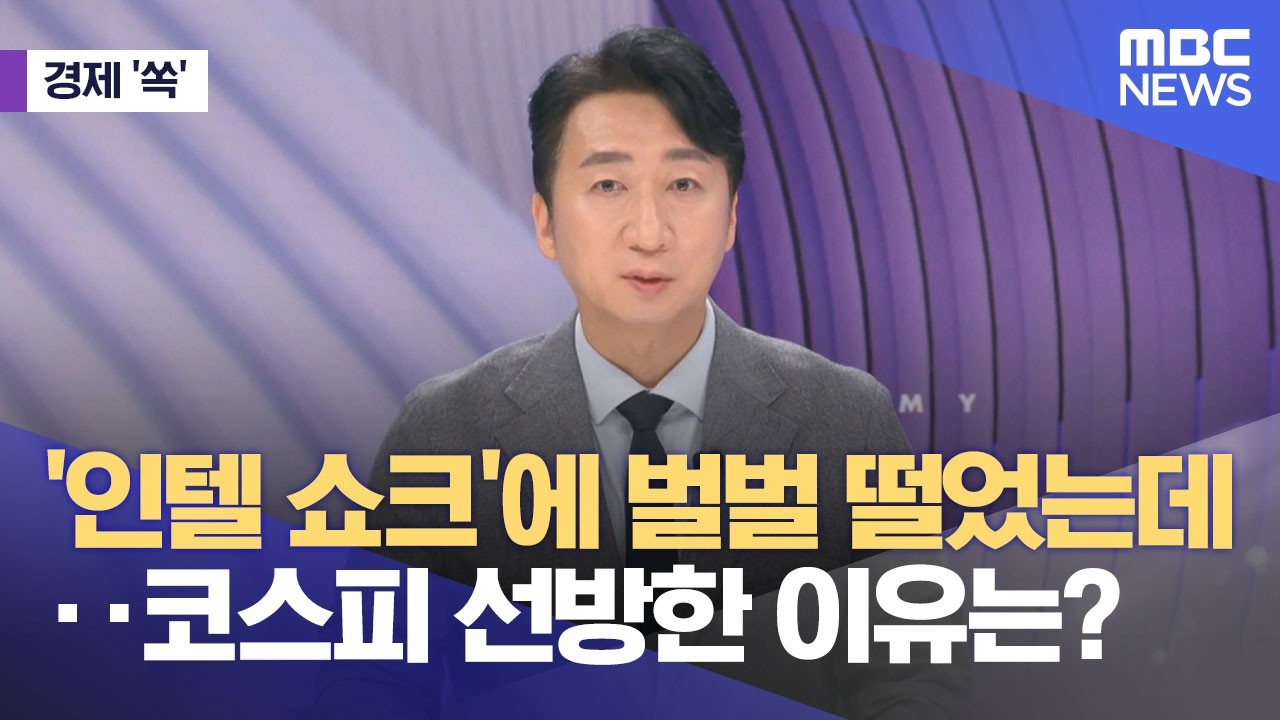 [경제쏙] '인텔 쇼크'에 벌벌 떨었는데‥코스피 선방한 이유는? (2026.11.02/뉴스외전/MBC)
Things we can learn from the video
Press to jump
- 0:22Jung attributes Kospi resilience to pension buying, individual ETF purchases, SK hynix buybacks and earlier futures trading.
- 4:02Intel's weak guidance and rising memory costs are distinguished from the broader debate over AI profitability.
- 6:27Heavy AI spending is squeezing cash flow, with specialist AI cloud providers facing particular financial pressure.
- 9:07Anthropic's potential listing raises questions about customer revenue, processing costs and its prospective credit rating.
- 11:33Higher corporate bond yields and credit spreads illustrate growing financing costs for major AI investors.
- 16:08Korea's export surge depends heavily on semiconductors; Jung closes by urging scrutiny of November's chip figures.
South Korea's Kospi was rising about 3% despite fears that a sharp fall in Intel shares would drag it down. Economist Jung Chul-jin's explanation starts with buyers closer to home: pension funds, individuals buying exchange-traded funds at lower prices, and SK hynix buying back its own shares.
Speaking on South Korea's Munhwa Broadcasting Corporation (MBC), Jung also says Friday's overnight futures trading had already absorbed some of the shock. That helps explain the immediate resilience, but not how to sustain it. He argues that attracting foreign investors back requires appealing company valuations and improvements in corporate governance.
The November 2 discussion is titled "[경제쏙] '인텔 쇼크'에 벌벌 떨었는데‥코스피 선방한 이유는? (2026.11.02/뉴스외전/MBC)", meaning "Fears over the 'Intel shock': why did the Kospi hold up well?"
Jung links Intel's sell-off to disappointing guidance for the next quarter and pressure from rising memory-chip prices. He distinguishes Intel's difficulties from the wider debate over whether enormous AI investments will generate enough revenue. SK hynix, by contrast, makes memory chips, placing it in a different part of the semiconductor business.
The discussion then follows the money behind AI expansion. Jung describes weakening free cash flow at major technology companies as infrastructure spending grows, and particular pressure on specialist AI cloud providers. He also questions arrangements in which a chipmaker invests in a customer that then uses the money to buy its chips.
Anthropic, the company behind Claude, becomes another test case. Jung discusses Wall Street concerns that it could retain a below-investment-grade credit rating even after a stock-market listing, pointing to the limits of its paying customer base and the cost of processing AI requests. He also examines rising bond yields and credit spreads for companies including Oracle and Meta, signs that borrowing is becoming more expensive relative to safer debt.
After considering uncertainty around the US midterms and Iran, Jung returns to Korea's exports. The broadcast projects that annual exports could reach a trillion dollars in November, but he stresses the dependence on semiconductors and the contrast with weak domestic demand. His closing caution is to watch November's chip exports and question whether memory-chip demand may be approaching a peak.
A South Korean semiconductor company that makes DRAM and flash memory chips. It is one of the world’s three largest memory-chip manufacturers, alongside Samsung Electronics and Micron.
More on Wikipedia ›An American artificial intelligence company based in San Francisco that develops Claude, a family of large language models.
More on Wikipedia ›An American multinational technology company headquartered in Austin, Texas. Larry Ellison, one of its co-founders, is its chairman and chief technology officer.
More on Wikipedia ›Published on Trari
Where next?



- Channel
- MBCNEWS
- Subscribers
- 6,210,000
- Channel views, last 7 days
- 146,774,782
- Channel views, pace per day
- 8,447,679 (on a normal day: 14,191,460)
- Video published
- November 2, 2026
- Video views so far
- 364,576 (less than a day online)
- Video views, pace per day
- 381,656
The numbers
The discussion drew about 365,000 views since yesterday, placing it among South Korea's most-watched new news uploads.

💡 Test your knowledge
Intel is known for CPUs. What does CPU stand for?
A CPU is a central processing unit, the processor that executes a computer's instructions.