
College 'parents' and freshers' families: Oxford explains its kinship trees
A Magdalen College short about students adopting new arrivals led eleven uploads timed to the start of term, and a 2,000-year-old way to find primes went up later in the week.
 University of Oxford
Story of
University of Oxford
Story of Why this story? The channel's weekly summary: what went up this week, what is drawing views now, and where the channel stands among similar channels.
 Why students get married and have children at Oxford
Oxford welcomed a new year of students, and it did so with a short that left plenty of viewers baffled. "Why students get married and have children at Oxford" explains college families, a tradition in which older students pair up as "parents" and adopt freshers in the years below to give them a friendly face, advice and support. The clip comes from Magdalen College and was first published in March. It went up again at the end of September and has passed 80,000 views, the most of anything the channel posted this week.
The comments are what make it fun. The most liked one simply confesses total confusion. Further down, current students step in to explain how it works at their own college: in some there are no marriages at all, just friends signing up together to take on new arrivals. Others say their schools do something similar, and one viewer suggests that "siblings" would be the better word.
The rest of the eleven uploads follow the calendar: graduands from Lincoln College walking to the Sheldonian Theatre, a move-in day at Keble, and a short greeting the students arriving in the city. Then came something different. Oxford Mathematics' Prof Robin Wilson explains a method for finding prime numbers that is more than 2,000 years old, and in under two days that video is drawing viewers faster than anything else on the channel.
The channel ran a little above its usual daily pace and added about 1,000 subscribers. Among education and history channels of a similar size, Geo All Day and The Rest Is History are having the big weeks, while Oxford sits comfortably in the middle.
Published on Trari
Read next

What viewers say
I've never been so CONFUSED!
@ALIQUIZZSee it on YouTubeHow brilliantly British it is
@solaimantanvirraj9376See it on YouTubeI think sisters and brothers are more appropriate than “parents”.
@justinleemillerSee it on YouTube
Public comments from the video's page on YouTube
Is this your channel?
Share the story with your audience: in a community post, in your channel's description or on your socials. The text and the badge are ready.

You may use the picture, the badge, and link it to this story.
The videos drawing views on University of Oxford right now
 POV: You’ve just graduated from Oxford University 🎓25,644 views · 2026-10-01
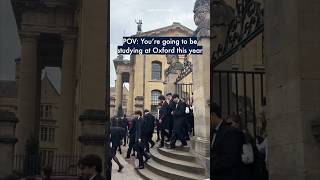 Life when you study at Oxford University23,831 views · 2026-10-04
 How to find prime numbers using a 2,000-year-old method22,575 views · 2026-10-05
 Graduands on their way to their Oxford graduation 🎓16,456 views · 2026-10-03
 The maths behind an Oxford mathematician’s favourite mug ☕️9,006 views · 2026-10-01
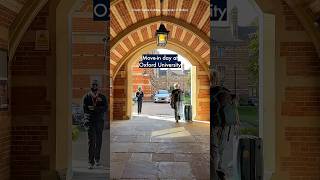 Move-in day at Oxford University6,420 views
- Channel
- University of Oxford
- Subscribers
- 510,000 ▲ 1,000 this week
- Channel views, last 7 days
- 420,900
- Videos published this week
- 11
- Video published
- September 30, 2026
- Video views so far
- 81,583
- Views on its first day
- 27,487
The numbers
Here is how the University of Oxford's channel moved over the past seven days.

💡 Test your knowledge
The ancient method for finding prime numbers is known as a 'sieve'. Which Greek scholar is it named after?
The Sieve of Eratosthenes is named after the Greek scholar Eratosthenes of Cyrene, who lived in the third century BC.
