
 United States
 United Kingdom
 Canada
 Australia
 New Zealand
 Ireland
Minnesota's winter outlook looks beyond El Niño to the polar vortex
FOX 9's Cody Matz and climatologist Kenny Blumenfeld connect extraordinary rainfall with the atmospheric changes that could influence cold and snow.
 FOX 9 Minneapolis-St. Paul
Story of
Why this story? The video opened at a pace of 79,084 views a day, 28 times a normal first day on this channel (2,872).
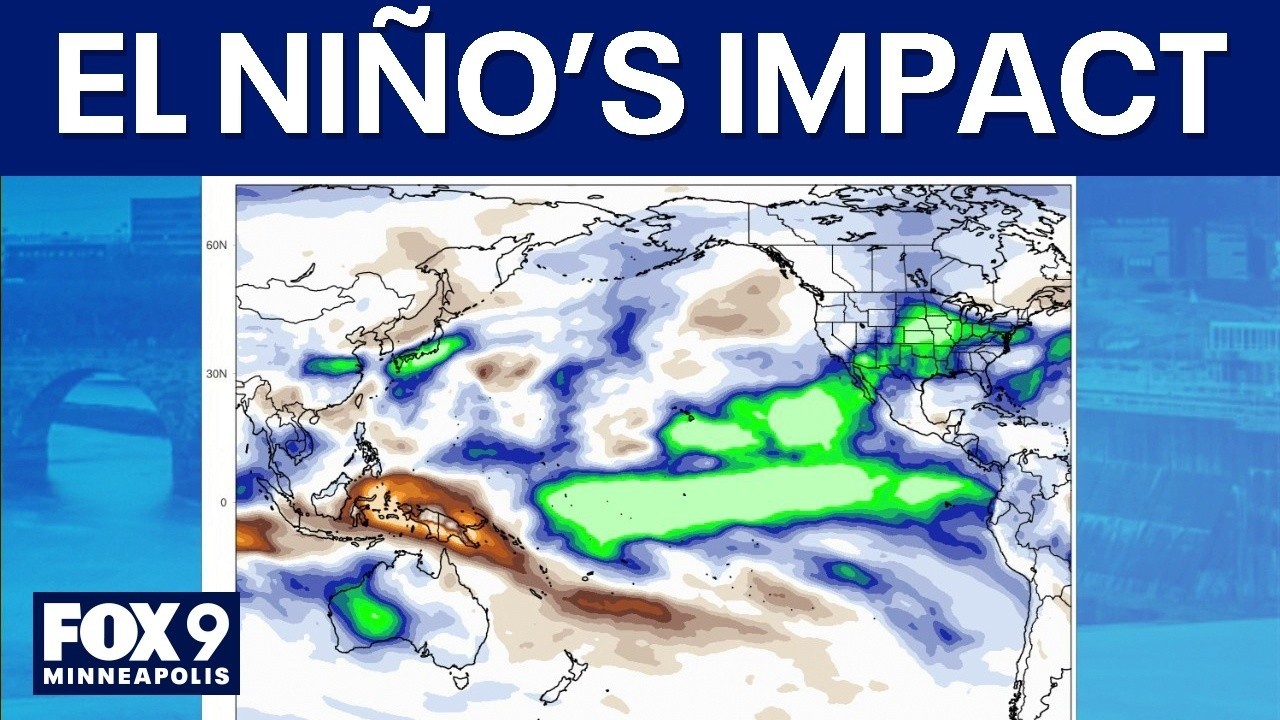 How El Niño and the polar vortex could shape this winter
Things we can learn from the video
Press to jump
- 1:14Blumenfeld links warming in the tropical Pacific to exceptional atmospheric moisture.
- 2:05Minnesota's recent rainfall may represent its wettest November storm, Blumenfeld says.
- 8:21An atmospheric animation traces moisture flowing across the equator and into the central United States.
- 10:37A diagram distinguishes the stratospheric polar vortex from its lower-atmosphere counterpart.
- 14:17The winter outlook turns to sudden stratospheric warming and its possible effects on cold and snowfall.
"This looks like the wettest November storm Minnesota has ever recorded," Kenny Blumenfeld tells FOX 9 meteorologist Cody Matz. It's a striking starting point for a winter discussion that reaches from the tropical Pacific to the atmosphere high above the Arctic.
Blumenfeld, a senior climatologist at Minnesota's Department of Natural Resources, links powerful El Niño conditions to exceptional atmospheric moisture. He and Matz compare the recent rainstorm's moisture footprint with the historic Halloween Blizzard, a reminder that a huge precipitation event doesn't necessarily arrive as snow.
Their interview, "How El Niño and the polar vortex could shape this winter," drew about 57,000 views in its first 13 hours, already far beyond the few thousand typical of the station's regular uploads on their first day.
The winter-outlook part comes later. Using a diagram, Blumenfeld distinguishes the polar vortex in the stratosphere from its lower-atmosphere counterpart. The discussion then turns to sudden stratospheric warming, which can disrupt the vortex and influence patterns of cold and snowfall across North America and Europe. Matz says such a warming event is happening now.
This isn't a snowfall total or a date for the next cold snap. It's an explanation of why El Niño alone doesn't settle Minnesota's winter prospects, a point Matz also explores in the station's separate upload, "El Niño may not prevent a cold, snowy Minnesota winter."
Minnesota’s state agency responsible for conserving and managing natural resources, including wildlife, forests, minerals, parks and recreational trails.
More on Wikipedia ›Published on Trari
Where next?


What viewers say
My kind of nerdiness
Thank you ❤@BdebweSee it on YouTubeNice recharge for those river systems
@KennethStaeheliSee it on YouTubeIf you go into SSW, it really helps to discuss large atmospheric gravity waves and their role.
@s2y0r1u2sSee it on YouTube
1 more comment
You should include North Dakota along with Minnesota ❤❤❤❤
@BluesMan4U-g6kSee it on YouTube
Public comments from the video's page on YouTube
 Is this your channel?For the channel's owners and team: a ready picture and text for your audience
Share the story with your audience. Everything is ready:
For an Instagram story or a WhatsApp status
For a community post or your channel's description
- Channel
- FOX 9 Minneapolis-St. Paul
- Subscribers
- 846,000 ▲ 3,000 this week
- Channel views, last 7 days
- 6,106,593
- Channel views, pace per day
- 589,075 (on a normal day: 821,051)
- Video published
- November 7, 2026
- Video views so far
- 57,059 (less than a day online)
- Video views, pace per day
- 79,084
The numbers
The interview has already drawn far more views than FOX 9's usual first day for a regular video, with only part of its opening day complete.

💡 Test your knowledge
El Niño involves unusually warm water in the tropical region of which ocean?
El Niño is associated with unusually warm surface waters in the central and eastern tropical Pacific.