
 United States
 United Kingdom
 Canada
 Australia
 New Zealand
 Ireland
Texas's one-party era may be over, Forest Wilder argues
The Texas Monthly writer sees a newly competitive state, but warns that Democratic victories leave difficult governing choices ahead.
 CBS TEXAS
Story of
Why this story? The video opened at a pace of 38,769 views a day, 18 times a normal first day on this channel (2,140).
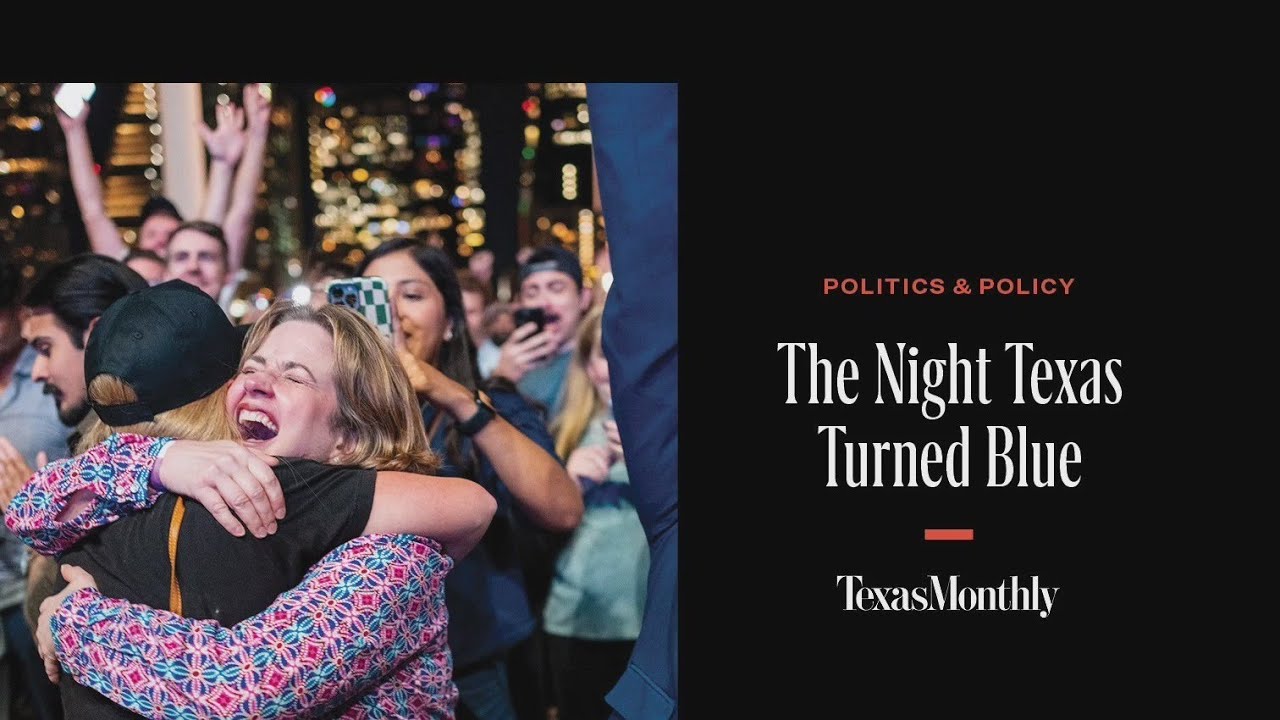 The night Texas turned blue / Texas Monthly
Things we can learn from the video
Press to jump
- 0:41Wilder places Texas's Democratic gains within a broader national swing, arguing the shift was especially pronounced in Texas.
- 1:42Democratic gains extended across voter groups, rural areas and Republican suburban strongholds, including Collin and Denton counties.
- 3:07Wilder argues that Republican one-party dominance has likely ended, describing Texas as at least a purple state.
- 4:23Democrats face campaign promises on public education and data centers, with a Republican-held Senate constraining their agenda.
- 5:47Texas Republicans face an internal choice between moderation and continuing with MAGA-aligned politics, Wilder says.
Gina Hinojosa will face a Republican-held state Senate. That constraint sits at the heart of Forest Wilder's post-election analysis for CBS TEXAS: Democrats have won major races, but turning those victories into policy is another task entirely.
Speaking with anchor Madison Sawyer in "The night Texas turned blue / Texas Monthly," Wilder argues that the result goes beyond a change in the governor's office. He points to Democratic gains across different voter groups, rural areas and Republican suburban strongholds, including Collin and Denton counties.
His conclusion is more cautious than the video's title might suggest. Rather than declaring Texas reliably Democratic, he describes it as at least a purple state, where Republicans can no longer assume the dominance they have enjoyed for decades.
The interview drew roughly 39,000 views in its first day, compared with about 2,100 for a usual regular upload on CBS TEXAS. It follows the station's coverage of Hinojosa's victory and Texans' reactions, moving the discussion from who won to what the result changes.
Wilder identifies public education and data centers as issues on which incoming Democrats must deliver campaign promises while working around the Republican Senate. "Not to say that campaigning is easy, but governing is even harder," he says.
He also describes a Republican debate over whether to moderate or lean further into MAGA-aligned politics. In Wilder's reading, the election has made Texas more competitive, not settled its political identity for good.
A Democratic politician and lawyer who is Texas’s governor-elect. She has served in the Texas House of Representatives since 2017, representing the 49th district.
More on Wikipedia ›The upper chamber of the Texas Legislature. It meets at the State Capitol in Austin to consider laws, budgets and other state business.
More on Wikipedia ›Published on Trari
Where next?



 Is this your channel?For the channel's owners and team: a ready picture and text for your audience
Share the story with your audience. Everything is ready:
For an Instagram story or a WhatsApp status
For a community post or your channel's description
- Channel
- CBS TEXAS
- Subscribers
- 579,000 ▲ 4,000 this week
- Channel views, last 7 days
- 7,835,593
- Channel views, pace per day
- 602,823 (on a normal day: 900,289)
- Video published
- November 7, 2026
- Video views so far
- 39,883 (less than a day online)
- Video views, pace per day
- 39,790
The numbers
The election interview drew far more first-day views than a usual CBS TEXAS regular upload. Its comment section was also substantially busier.

💡 Test your knowledge
Which pair of suburban counties does Wilder cite when discussing Democratic gains?
Wilder names Collin and Denton counties as traditional Republican suburban strongholds where Democrats gained ground.