
 United States
 United Kingdom
 Canada
 Australia
 New Zealand
 Ireland
CBC tests Trump's reading of B.C.'s Conservative victory
Lien Yeung's analysis separates a historic party win from evidence of a Trump-style shift, pointing instead to turnout and provincial political traditions.
 CBC British Columbia
Story of
Why this story? The video opened at a pace of 105,738 views a day, 19 times a normal first day on this channel (5,604).
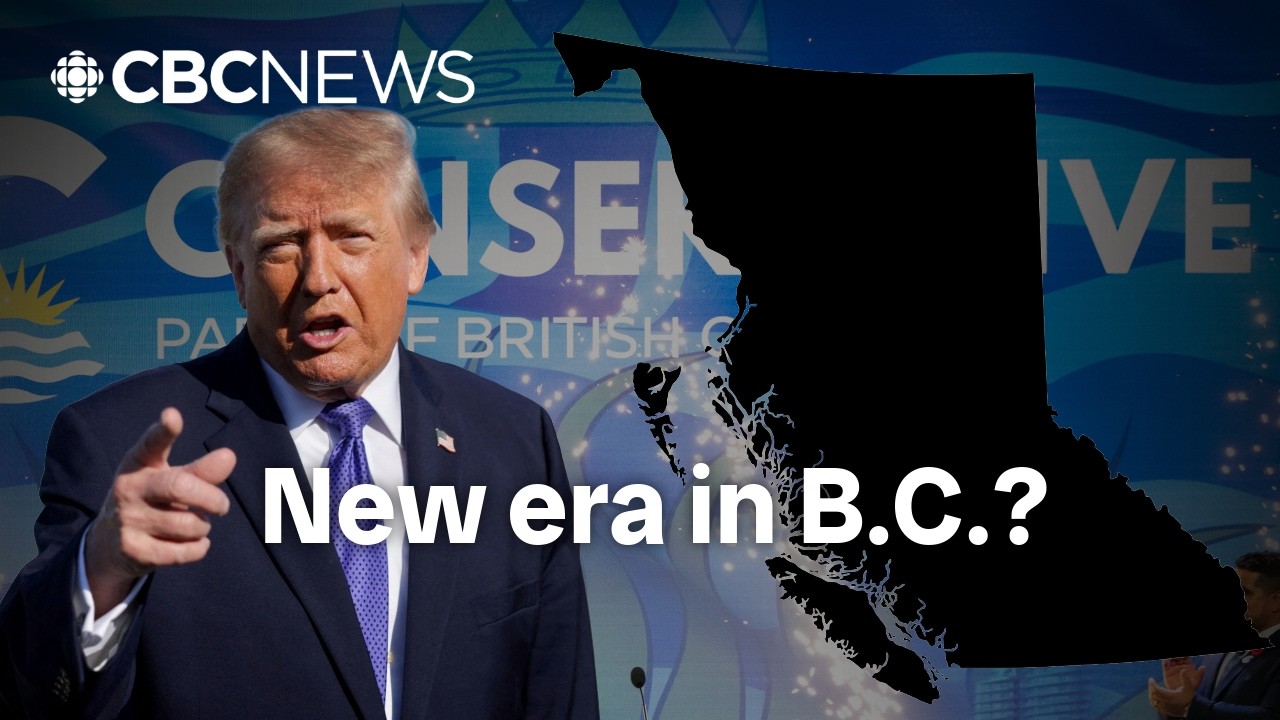 Trump says Conservatives are gaining ground in Canada. Is B.C. proof?
Things we can learn from the video
Press to jump
- 0:00Trump congratulates Doerkson and presents the B.C. result as evidence of growing Canadian conservatism.
- 1:08Conservatives won a large seat majority despite receiving fewer votes than in the previous election.
- 1:50Edana Beauvais attributes much of the result to disillusioned NDP voters staying home.
- 2:26David Black contrasts American populism with B.C.'s traditionally business-centered conservatism.
- 3:04Yeung places the Conservative victory within B.C.'s longer history of center-right coalition governments.
- 4:55Yeung concludes that the result does not necessarily demonstrate a Trump-style ideological transformation.
Donald Trump congratulated Lorne Doerkson and celebrated British Columbia's Conservative victory as a sign that conservatism is gaining ground in Canada. CBC's Lien Yeung asks whether the election actually supports that interpretation.
Her report, "Trump says Conservatives are gaining ground in Canada. Is B.C. proof?", drew about 75,000 views in thirteen hours, already far beyond the channel's usual full-day audience for a regular video.
The central distinction is between winning seats and persuading more people to vote Conservative. Yeung reports that the party secured a large majority despite receiving fewer votes than in the previous provincial election. Simon Fraser University political scientist Edana Beauvais points to disillusioned New Democratic Party voters staying home rather than switching sides.
There is also a question of what the Conservative label means. Royal Roads University's David Black describes B.C.'s conservative tradition as predominantly business-centered, while strategist Ken Boessenkool sharply distinguishes traditional Canadian conservatism from Trump's politics.
The report puts the party's historic return to government alongside the decades when Social Credit and the BC Liberals represented center-right coalitions. A different party name in office does not, Yeung concludes, necessarily establish a dramatic ideological turn beyond familiar provincial politics.
Doerkson's own response keeps the focus local. After showing his past criticism of Trump, the report includes his pledge: "And I assure you that my commitment, my dedication, is to British Columbia."
British Columbia’s premier-designate and interim leader of its Conservative Party. First elected to the provincial legislature as a BC Liberal in 2020, he joined the Conservatives in 2024.
More on Wikipedia ›Canada’s westernmost province and its third-largest by population. Its capital is Victoria, and its largest city is Vancouver.
More on Wikipedia ›The Conservative Party of British Columbia is a provincial political party, commonly called the BC Conservatives. It is separate from the province’s New Democratic Party.
More on Wikipedia ›British Columbia’s centre-left, social democratic party, affiliated with the federal New Democratic Party. It forms the provincial opposition to the Conservative government.
More on Wikipedia ›Published on Trari
Where next?


 Is this your channel?For the channel's owners and team: a ready picture and text for your audience
Share the story with your audience. Everything is ready:
For an Instagram story or a WhatsApp status
For a community post or your channel's description
- Channel
- CBC British Columbia
- Subscribers
- 160,000 ▲ 1,000 this week
- Channel views, last 7 days
- 2,248,201
- Channel views, pace per day
- 96,222 (on a normal day: 249,823)
- Video published
- October 31, 2026
- Video views so far
- 75,071 (less than a day online)
- Video views, pace per day
- 105,738
The numbers
The report had already drawn many times CBC British Columbia's usual first-day views before its first day was complete.

💡 Test your knowledge
Which party does the report identify as part of B.C.'s long history of center-right government?
The report names Social Credit and the BC Liberals as the center-right coalitions that governed B.C. for decades.