
 United States
 United Kingdom
 Canada
 Australia
 New Zealand
 Ireland
German youth protest organizer quits over movement's direction, ZDF reports
A nationwide day of largely peaceful demonstrations brings demands over housing, schools and conscription, alongside disputes about tactics and political influence.
 GermanyStory of
Why this story? One of ZDFheute Nachrichten's most watched videos since yesterday, with 698,892 views.
ZDFheute Nachrichten: The news division of ZDF, a German public broadcaster. 1.9M subscribers and 2B views.
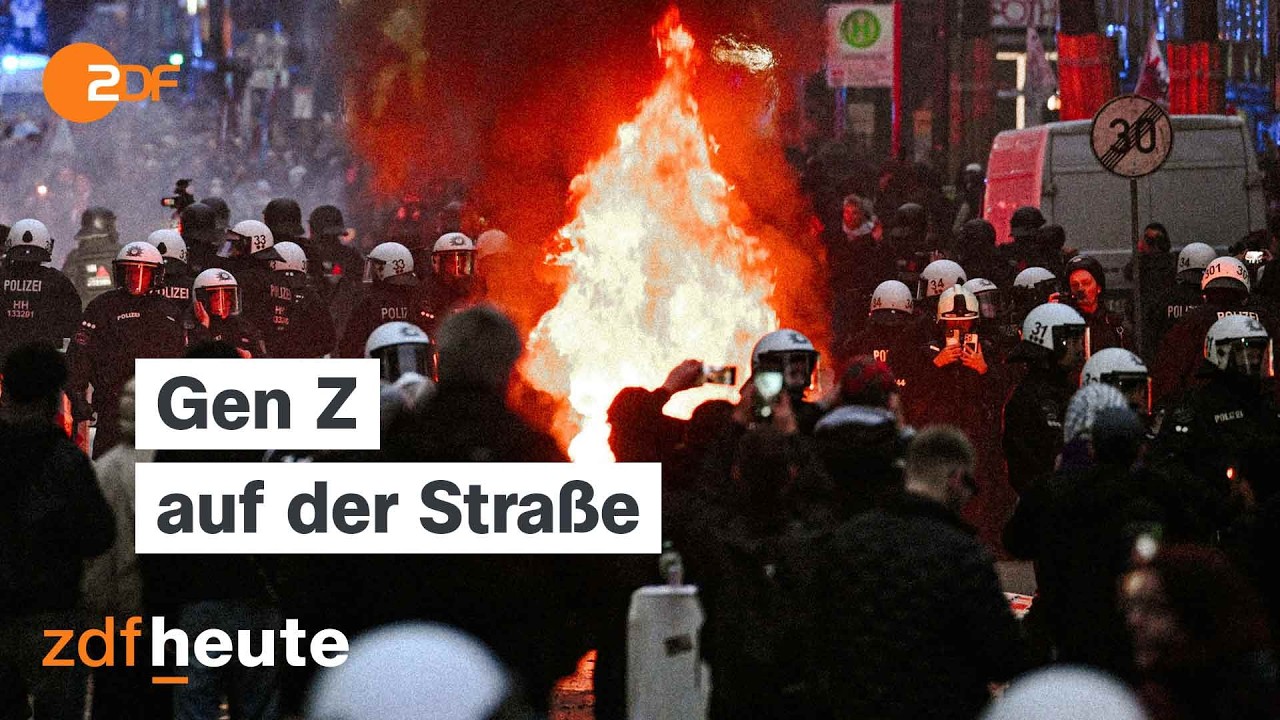 Gen Z auf der Straße | ZDFspezial
Things we can learn from the video
Press to jump
- 1:28Demonstrators call for better education, affordable living and opposition to compulsory military service.
- 5:09Berlin police describe a largely peaceful situation and say their communication-led approach has worked.
- 7:18City reports detail police injuries in Cologne and later confrontations in Frankfurt, Stuttgart and Hamburg.
- 22:07Florian Staudt argues that successful mobilization needs clearer demands and a route into political dialogue.
- 28:57Hendrik Hansen says extremist groups in Munich were linking protesters' grievances to their own agendas.
- 31:52The host presents a co-organizer's resignation statement citing disagreements over the movement's goals and protest methods.
A co-organizer of Germany's "Gen Z regelt" protests has stepped down, warning that groups gathering under the movement's name disagree about its aims and methods, according to a televised special on the demonstrations.
The resignation, presented near the end of the report, exposes a question running through the broadcast: how can a movement mobilizing young people around many grievances turn that turnout into political influence while maintaining its peaceful approach?
Germany's public broadcaster Zweites Deutsches Fernsehen (ZDF), through its ZDFheute Nachrichten channel, reports on Saturday's demonstrations in more than 30 cities. The special, "Gen Z auf der Straße | ZDFspezial" ("Gen Z takes to the streets"), combines local reporting with interviews about what brought participants out and where the movement might go.
Young demonstrators describe unaffordable housing, rising living costs, schools awaiting renovation and opposition to compulsory military service. Climate protection and redistribution also feature. One participant stresses that the purpose is to demonstrate peacefully for their rights, not to damage property.
The broadcast describes the protests as largely peaceful, while documenting incidents in several cities. In Berlin, police spokesman Jörn Iffländer says a strategy based on communication had worked despite isolated incidents and firecrackers. A separate demonstration in Prenzlauer Berg is being dispersed during the live report.
Correspondents report injured police officers and hundreds of demonstrators contained by police in Cologne; evening fireworks and firecrackers after a peaceful daytime march in Frankfurt; and confrontations involving pepper spray or tear gas in Stuttgart. In Hamburg, the reporter says the demonstration was dissolved following arson incidents and firecracker throwing.
Protest researcher Florian Staudt praises the mobilization but argues for clearer demands and political dialogue. He also warns against treating every demonstrator as suspect. A wider European segment features writer Jagoda Marinić discussing alienation from institutions and the opportunity protests offer young people to become politically visible.
Extremism researcher Hendrik Hansen offers a more skeptical assessment. Drawing on his observations in Munich, he says extremist groups were using young people's dissatisfaction to advance their own agendas. He questions whether such broad demands can sustain a successful movement, contrasting them with the more focused campaigning of Fridays for Future. The organizer's resignation gives that disagreement over direction a concrete expression.
German novelist, journalist, TV host and podcaster who writes and speaks about identity, migration, citizenship and integration.
More on Wikipedia ›International student movement whose participants skip Friday classes to demand political action on climate change and a transition from fossil fuels to renewable energy.
More on Wikipedia ›Published on Trari
Where next?



- Channel
- ZDFheute Nachrichten
- Subscribers
- 1,890,000
- Channel views, pace per day
- 1,113,368 (on a normal day: 1,424,701)
- Video published
- October 31, 2026
- Video views so far
- 698,892 (less than a day online)
- Video views, pace per day
- 1,517,810
The numbers
The special drew about 699,000 views since yesterday, placing it among Germany's most-watched new news videos.
