
 United States
 United Kingdom
 Canada
 Australia
 New Zealand
 Ireland
Israel's polling puzzle lies at the threshold, Rettig Gur argues
The Free Press's election livestream examines how small parties and mutual distrust can complicate the search for a governing majority.
 The Free Press
Story of
Why this story? The video opened at a pace of 86,031 views a day, 14 times a normal first day on this channel (6,288).
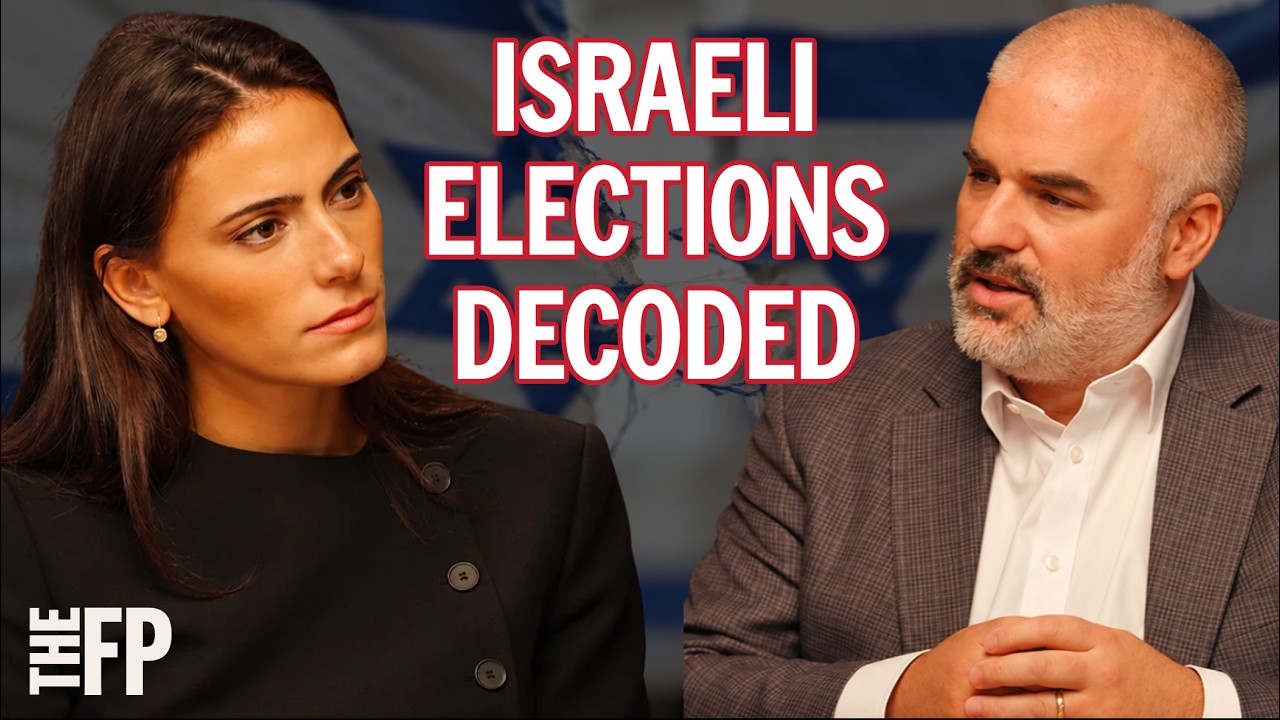 Israel's Election Decoded: Live with Haviv Rettig Gur
Things we can learn from the video
Press to jump
- 5:01Rettig Gur compares exit-poll discrepancies with Britain's "shy Tory" voting phenomenon.
- 8:29He explains minority-government possibilities and why seat totals alone do not settle who can govern.
- 11:08The discussion distinguishes Arab-majority parties and examines Ra'am's potential role in forming a government.
- 21:13Mutual distrust blocks a possible Eisenkot-Likud rotation arrangement, Rettig Gur argues.
- 32:01Small parties crossing the electoral threshold can change parliamentary arithmetic even when polling captures the broader blocs.
- 42:21Rettig Gur argues that online antisemitism and regional security threats are pushing younger Israelis rightward.
"All the action is at the threshold," Haviv Rettig Gur tells Maya Sulkin, offering a way into Israel's bewildering election arithmetic. Pollsters can get the broad political blocs roughly right, he explains, while uncertainty over which small parties enter parliament changes the seats available to form a government.
That distinction comes well into "Israel's Election Decoded: Live with Haviv Rettig Gur," a nearly hour-long Free Press discussion that had drawn about 63,000 views in its opening thirteen hours, already far beyond the channel's usual first-day audience for regular videos.
Sulkin begins with a blunt assessment of the preliminary results: "The takeaway was pretty much Bibi hasn't won, but the opposition clearly lost." Rettig Gur spends the conversation unpacking why those two things can coexist, rather than treating the party standings as a settled verdict on who will govern.
His explanation moves from exit-poll misses to the political choices behind the seat totals. He compares voters reluctant to disclose their preferences with Britain's "shy Tory" phenomenon, and argues that Iran was central to Netanyahu's closing campaign message.
The harder obstacle, in his account, is trust. A rotation arrangement between Gadi Eisenkot and Likud may offer a theoretical route forward, but distrust blocks it. Fear of another election can narrow leaders' room to negotiate rather than encourage compromise.
Rettig Gur also distinguishes among the Arab-majority parties, examining Mansour Abbas's Ra'am and the conditions for cooperation. The conversation treats those parties as separate political actors with different positions, not a single interchangeable source of coalition seats.
Israeli politician and leader of the Yashar party, who was Netanyahu's main challenger in the 2026 election. He previously headed the Israel Defense Forces.
More on Wikipedia ›Arab-Israeli politician who leads Ra'am and represents it in Israel's parliament, the Knesset.
More on Wikipedia ›An Islamist, conservative party in Israel led by Mansour Abbas. It joined Israel's governing coalition in 2021.
More on Wikipedia ›Published on Trari
Where next?


 Is this your channel?For the channel's owners and team: a ready picture and text for your audience
Share the story with your audience. Everything is ready:
For an Instagram story or a WhatsApp status
For a community post or your channel's description
- Channel
- The Free Press
- Subscribers
- 483,000 ▲ 1,000 this week
- Channel views, last 7 days
- 1,157,509
- Video published
- October 28, 2026
- Video views so far
- 63,081 (less than a day online)
- Video views, pace per day
- 86,031
The numbers
The livestream had already exceeded The Free Press's usual full-day views for regular videos within its opening thirteen hours. Comments also passed the channel's usual first-day total.

💡 Test your knowledge
Which country's "shy" conservative voters does Rettig Gur invoke when discussing exit polls?
Rettig Gur compares the polling discrepancy with Britain's "shy Tory" phenomenon.