
 United States
 United Kingdom
 Canada
 Australia
 New Zealand
 Ireland
Michigan elects first Muslim U.S. senator, NDTV reports
Siddharth Prakash uses India's Rajya Sabha to explain the Senate, then examines the campaign behind Abdul El-Sayed's victory.
 IndiaStory of
Why this story? One of NDTV India's most watched videos since yesterday, with 662,436 views.
NDTV India: The Hindi news channel of NDTV, controlled by the Adani group since 2022. 27M subscribers and 35B views.
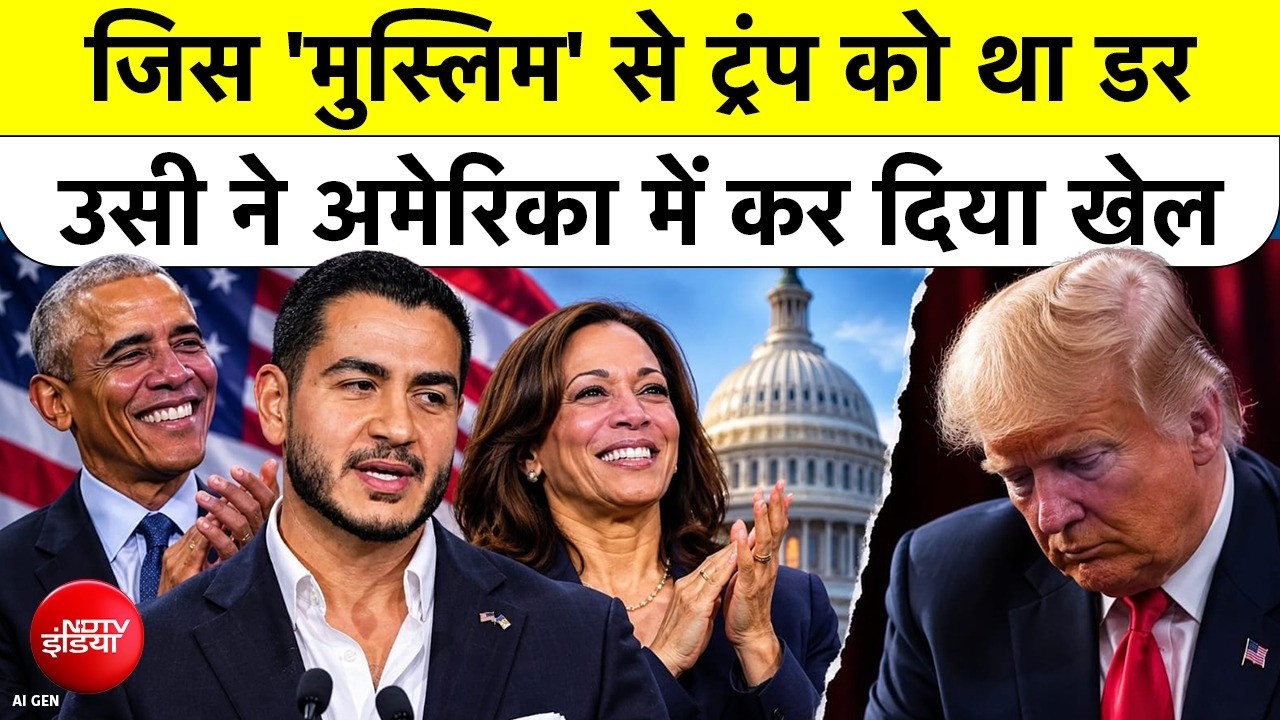 US Mid Term Elections: Abdul El-Sayed बने पहले Muslim Senator, Trump की हार | Siddharth Prakash
Things we can learn from the video
Press to jump
- 0:11Prakash reports that Michigan has elected Abdul El-Sayed as the first Muslim U.S. senator.
- 0:44Senators serve six-year terms, with staggered elections, explained through a comparison with India's Rajya Sabha.
- 2:01The report contrasts Trump's campaign attacks with El-Sayed's focus on inflation and gasoline prices.
- 2:57Prakash describes AIPAC spending and Haley Stevens' opposition, followed by prominent endorsements and Medicare for All.
- 4:18The analysis connects Democratic congressional victories with dissatisfaction over the economy and foreign conflicts.
- 5:03Prakash recounts Trump's argument that Republican candidates would have done better with him on the ballot.
Abdul El-Sayed's Michigan victory gives the United States its first Muslim senator-elect, India's Hindi-language news channel NDTV India reports. Presenter Siddharth Prakash places the Democrat's defeat of Republican Mike Rogers at the center of an explanation of both the American election system and the campaign's political divisions.
For Indian viewers, Prakash begins with a familiar reference point: the Rajya Sabha, India's upper house. U.S. senators serve six-year terms, with roughly a third of the chamber's seats coming up for election every two years. El-Sayed, an epidemiologist and former Wayne County health director, won the seat being vacated by Democrat Gary Peters, who did not seek reelection. His victory therefore kept a Democratic-held seat rather than flipping a Republican one.
The report then turns to the campaign. Prakash recounts Donald Trump's attacks on El-Sayed's Muslim identity and contrasts them with the Democrat's emphasis on inflation and gasoline prices. He also relays El-Sayed's response that Trump would not need to remember his full name after the election: he could simply call him senator.
Prakash describes spending against El-Sayed by the pro-Israel lobbying group AIPAC and opposition within his own party from Haley Stevens. He sets those obstacles alongside backing from Barack Obama, Kamala Harris, Bernie Sanders and Alexandria Ocasio-Cortez, and El-Sayed's support for Medicare for All.
The closing section widens the picture to Democrats' congressional victories. Prakash attributes Republican losses to public dissatisfaction with the economy and foreign conflicts, then recounts Trump's post-election argument that Republican candidates would have performed better had the president himself been on the ballot. The report presents Michigan as a particularly pointed example of a candidate succeeding despite Trump's campaigning against him.
An American epidemiologist and politician who is Michigan's U.S. senator-elect.
More on Wikipedia ›A Republican who represented Michigan's 8th district in the U.S. House from 2001 to 2015. He previously worked as an FBI agent and chaired the House Intelligence Committee from 2011 to 2015.
More on Wikipedia ›The American Israel Public Affairs Committee is a U.S. lobbying group that promotes policies strengthening ties between the United States and Israel.
More on Wikipedia ›Published on Trari
Where next?



- Channel
- NDTV India
- Subscribers
- 27,200,000 ▲ 100,000 this week
- Channel views, last 7 days
- 379,035,412
- Channel views, pace per day
- 86,386,711 (on a normal day: 40,334,719)
- Video published
- November 4, 2026
- Video views so far
- 662,436 (less than a day online)
- Video views, pace per day
- 839,229
The numbers
The report drew about 662,000 views since yesterday, placing it among India's most-watched new news videos.

💡 Test your knowledge
How long is a full term in the U.S. Senate?
U.S. senators serve six-year terms, with elections staggered across three groups of seats.