
 United States
 United Kingdom
 Canada
 Australia
 New Zealand
 Ireland
Carney's budget pairs business deductions with grocery relief
CBC's breakdown examines the government's independence pitch, household assistance and opposition criticism of rising borrowing.
 CBC News: The National
Story of
Why this story? One of CBC News: The National's most watched videos since yesterday, with 88,096 views.
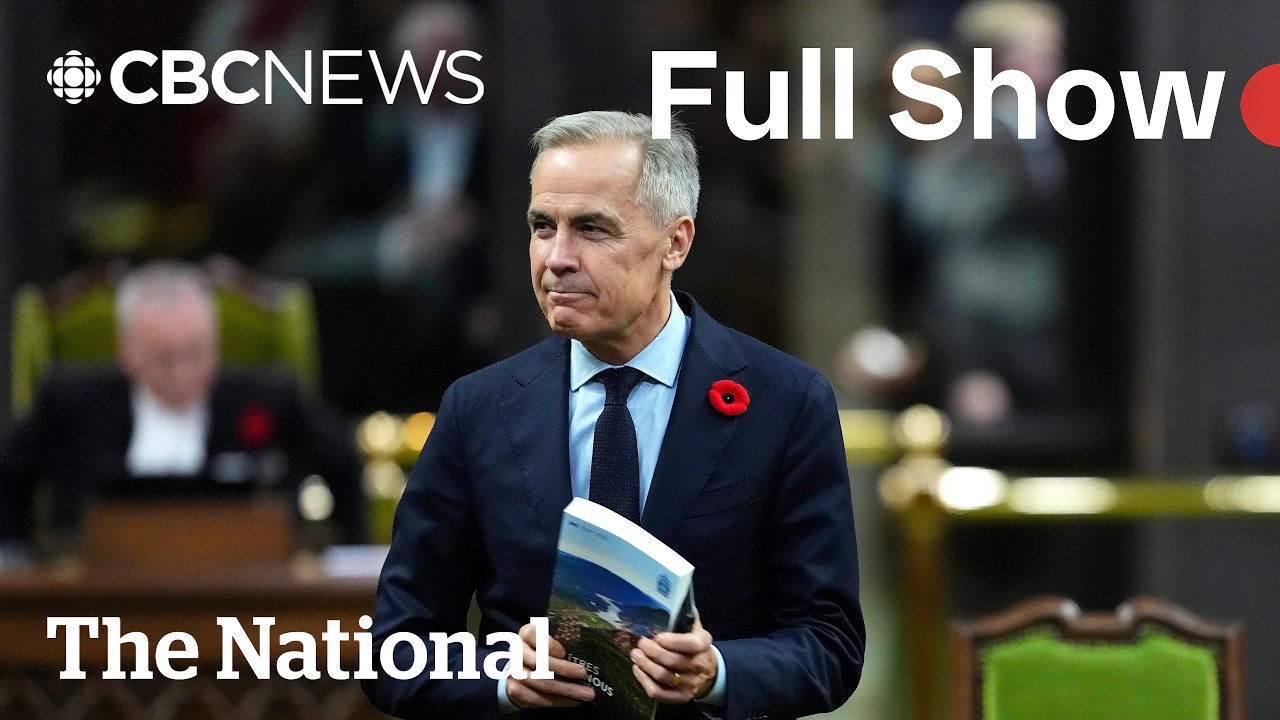 CBC News: The National | Breaking down the 2026 federal budget
Things we can learn from the video
Press to jump
- 1:00The budget frames investment and cost-of-living assistance as steps toward greater Canadian independence.
- 2:12Champagne presents business-investment deductions alongside increased federal borrowing.
- 4:29Household measures include a grocery-benefit top-up, housing initiatives and gas-tax pauses; stamp prices increase.
- 24:18At Issue weighs the spending strategy, with Coyne questioning intervention intended to make government visibly involved.
- 36:20The panel considers whether Canada should conclude U.S. trade talks promptly or delay; Coyne favors waiting.
Business investment gets a tax incentive; households get grocery-benefit relief. CBC News: The National examines how Mark Carney's federal budget tries to support both long-term economic growth and Canadians facing immediate costs.
The government's stated goal is greater independence and sovereignty. Finance Minister François-Philippe Champagne presents expanded deductions for business investment alongside a deficit of roughly $62 billion for the coming fiscal year, according to CBC's report.
The household measures include a one-time grocery-benefit top-up worth half the regular benefit, housing initiatives and pauses on gas taxes. CBC also notes an increase in stamp prices, a smaller expense moving in the opposite direction.
The opposition's objections come from different directions. NDP leader Avi Lewis questions why the business deductions have no equivalent for people's phone bills, rent or mortgages. Conservative leader Pierre Poilievre calls the plan a costly credit-card budget that Canadians cannot afford. Rosemary Barton examines the political risk of asking voters to accept more borrowing in pursuit of longer-term gains.
The broadcast returns to those choices in its At Issue discussion, weighing whether the spending meets Canada's economic needs. Andrew Coyne argues that some measures amount to government intervention for the sake of being visibly involved.
Trade adds another uncertainty. Later, the panel considers whether Canada should finalize a U.S. agreement promptly or wait as the political landscape changes following Democratic congressional victories. Coyne favors waiting, linking the budget's promise of greater independence to a negotiation whose timing remains disputed.
Canada's prime minister and Liberal Party leader since 2025. He previously headed the central banks of Canada and England.
More on Wikipedia ›Canada's minister of finance and national revenue since 2025. He is a Liberal Party politician.
More on Wikipedia ›Canadian politician and filmmaker who has led the New Democratic Party (NDP) since 2026.
More on Wikipedia ›Leader of Canada's Conservative Party and the Official Opposition since 2022.
More on Wikipedia ›Published on Trari
Where next?


 Is this your channel?For the channel's owners and team: a ready picture and text for your audience
Share the story with your audience. Everything is ready:
For an Instagram story or a WhatsApp status
For a community post or your channel's description
- Channel
- CBC News: The National
- Subscribers
- 2,210,000 ▲ 10,000 this week
- Channel views, last 7 days
- 7,820,312
- Channel views, pace per day
- 430,233 (on a normal day: 1,029,565)
- Video published
- November 6, 2026
- Video views so far
- 88,096 (less than a day online)
- Video views, pace per day
- 95,862
The numbers
The budget-led broadcast drew about 88,000 views since yesterday, the largest audience among CBC News: The National's new uploads.

💡 Test your knowledge
Who presents the federal budget as finance minister in CBC's report?
Champagne presents the budget's investment deductions and fiscal plan in the broadcast.