
 United States
 United Kingdom
 Canada
 Australia
 New Zealand
 Ireland
US voting largely smooth despite ballot problems, ARD correspondent reports
The German election-night broadcast pairs an account from Washington with voters' concerns and a ballot cast aboard the International Space Station.
 GermanyStory of
Why this story? One of tagesschau's most watched videos since yesterday, with 560,394 views.
tagesschau: The main news programme of ARD, Germany's public broadcasters, on air since 1952. 2.3M subscribers and 2.5B views.
 Machtwechsel in den USA: So lief die historische Midterm-Wahlnacht
Things we can learn from the video
Press to jump
- 0:00Early projections indicate Republican losses in the House and Democratic gains in the Senate.
- 6:12Voter interviews highlight living costs, healthcare and data centres; Anil Menon shows his voting space aboard the ISS.
- 7:53Jörg Schönenborn examines congressional returns and exit polls, including Democratic gains across several Republican-held states.
- 12:56Anna Planken contrasts costly election campaigns with Americans' accounts of rising prices.
- 15:47Torben Börgers describes voting as largely smooth despite ballot problems, then reports on Trump's response.
- 18:46The programme leaves election coverage for a report on an international award for Waldkliniken Eisenberg in Thuringia.
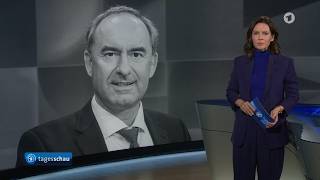
Ballot problems did not define the US election day, according to Washington correspondent Torben Börgers. His assessment in Germany's tagesschau, the ARD public broadcaster's news service, is that voting went largely smoothly, despite glitches involving ballots.
That account comes well into a broadcast whose title, "Machtwechsel in den USA: So lief die historische Midterm-Wahlnacht" ("Power shift in the US: How the historic midterm election night unfolded"), promises a record of the night's changing political picture. It begins with early projections of Republican losses in the House and Democratic gains in the Senate, rather than a final declaration of control of both chambers.
The programme moves from a short news bulletin into ARD's Morgenmagazin, hosted by Sven Lorig, Anna Planken and Peter Großmann. Its election coverage starts after the German weather forecast, so viewers looking specifically for the US results need to skip several minutes.
Reporter Verena Bünten's film brings the voting experience down to individual Americans. Astronaut Anil Menon shows the room aboard the International Space Station that doubles as his voting booth. Back on Earth, interviews put living costs, healthcare and data centres among the issues concerning voters.
In the studio, election analyst Jörg Schönenborn works through House and Senate returns, including Democratic gains in North Carolina, South Carolina, Ohio and Texas, alongside exit-poll findings. Planken then contrasts expensive campaigns with citizens' accounts of rising prices.
Börgers's Washington dispatch follows, covering the conduct of the vote, ballot difficulties and Donald Trump's response. Together, the segments preserve the morning's progression: early projections, a widening picture of Democratic gains, and reporting on how the election itself unfolded.
Published on Trari
Where next?


- Channel
- tagesschau
- Subscribers
- 2,270,000
- Channel views, last 7 days
- 27,364,719
- Channel views, pace per day
- 6,587,796 (on a normal day: 2,405,417)
- Video published
- November 4, 2026
- Video views so far
- 561,226 (less than a day online)
- Video views, pace per day
- 560,392
The numbers
The broadcast drew roughly 560,000 views since yesterday, making it one of Germany's most-watched news videos over that period.

💡 Test your knowledge
Which astronaut shows his voting space aboard the ISS in this broadcast?
Anil Menon appears in the voter report showing the room that also serves as his voting booth.