
 United States
 United Kingdom
 Canada
 Australia
 New Zealand
 Ireland
Vance's public war verdict exposes tensions after Republican defeat
A Japanese report examines the unusual vice-presidential intervention, pressure on Hegseth and Tokyo's reassurance over the U.S. alliance.
 JapanStory of
Why this story? One of 日テレNEWS's most watched videos since yesterday, with 921,257 views.
日テレNEWS: The news division of Nippon TV, a Japanese commercial television network. 3.4M subscribers and 6.3B views.
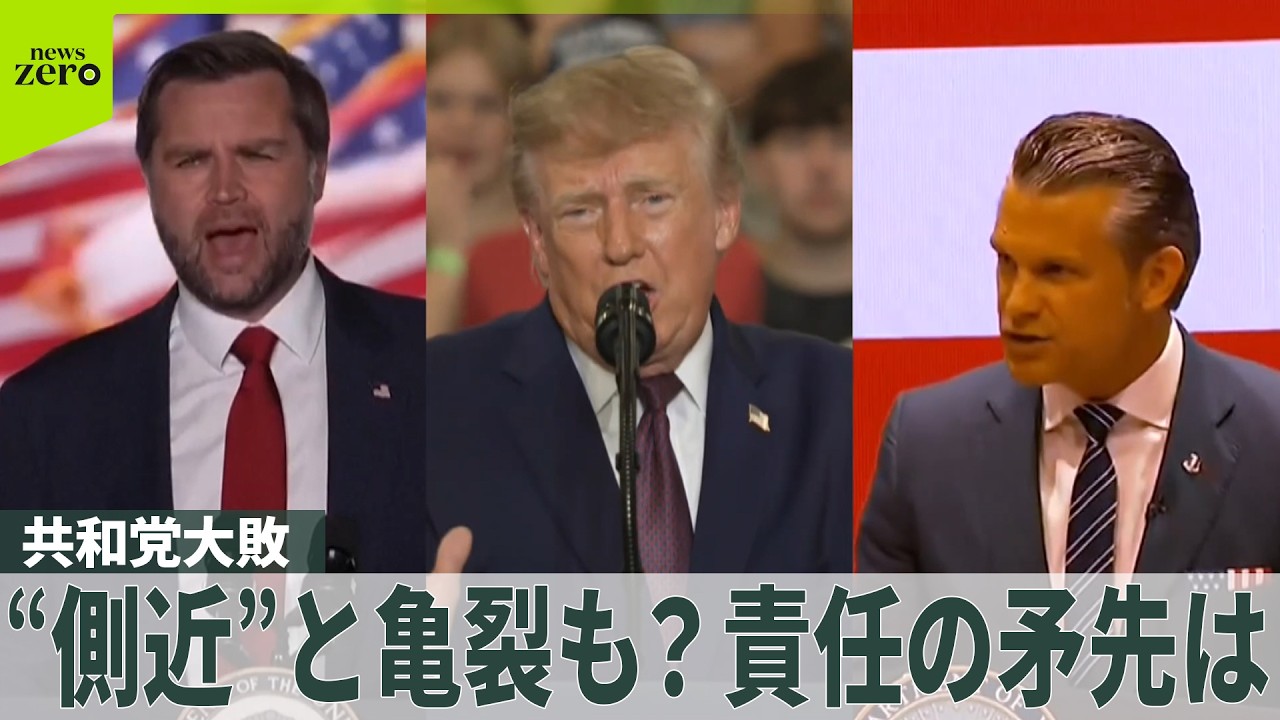 【中間選挙で大敗】“トランプ節”一転「敗因はイランとの戦闘」認める 政権内で早くも「責任の押し付け合い」
Things we can learn from the video
Press to jump
- 0:41Trump acknowledges that gasoline prices linked to the Iran conflict hurt Republicans.
- 1:11Trump argues that his own presence on the ballot would have produced a Republican victory.
- 2:08Vance blames the war on X; Wilson later describes public vice-presidential dissent as unusual.
- 4:33The report examines pressure on Hegseth and whether he could become a scapegoat for the election losses.
- 5:32Anonymous White House sources describe falling morale and internal disagreement over Middle East policy.
- 7:20Takaichi reaffirms the U.S.-Japan alliance as a pillar of Japanese diplomacy and security.
JD Vance's decision to blame the Iran war publicly for Republican election losses puts an internal administration disagreement into view. In Japan's Nippon Television news service, NTV News, the vice president's intervention becomes a central question: how unusual is it for a president's own deputy to speak this way?
Reporter Fumi Kobayashi takes that question to Matthew Wilson, an associate professor at Southern Methodist University in Texas. Wilson describes public dissent by a sitting vice president as unusual. Donald Trump, however, says Vance's post on X was fine.
The report contrasts Trump's combative pre-election exchanges with reporters with his acknowledgment afterward that the conflict's effect on gasoline prices hurt Republicans. "I think it's largely true because it drove the gasoline up a little bit short-term," he says.
That acknowledgment does not extend to accepting that voters rejected him personally. Trump argues that Republicans would have won had he been on the ballot, pointing to his rally crowds. "We weren't able to transfer the love to candidates," he says.
The broadcast then examines whether Defense Secretary Pete Hegseth could become a scapegoat for the defeat. It presents reporting about pressure surrounding his position and cites anonymous White House sources describing falling morale and disagreements over Middle East policy. These are accounts of internal tensions, not an announcement that Hegseth is leaving.
The closing scenes bring the consequences beyond Washington. People in Tehran burn banners depicting Trump, Hegseth and Israeli leaders. In Tokyo, Prime Minister Sanae Takaichi reaffirms that the U.S.-Japan alliance remains a central pillar of Japan's diplomacy and security, a message of continuity as the report depicts an administration arguing over its electoral setback.
The Republican vice president of the United States. He previously served as a U.S. senator for Ohio from 2023 to 2025.
More on Wikipedia ›The U.S. secretary of defense since 2025. He is an Army veteran and former television personality.
More on Wikipedia ›Japan's prime minister and leader of the Liberal Democratic Party since October 2025. She is the first woman to hold either position.
More on Wikipedia ›Published on Trari
Where next?



- Channel
- 日テレNEWS
- Subscribers
- 3,380,000
- Channel views, last 7 days
- 72,224,745
- Channel views, pace per day
- 12,859,057 (on a normal day: 6,762,867)
- Video published
- November 5, 2026
- Video views so far
- 921,257 (less than a day online)
- Video views, pace per day
- 1,254,614
The numbers
The report drew about 920,000 views since yesterday, the largest total among the new videos on Japan's leading news channels.

💡 Test your knowledge
At which university does the report's expert Matthew Wilson teach?
Reporter Fumi Kobayashi interviews Southern Methodist University associate professor Matthew Wilson in Texas.