
 United States
 United Kingdom
 Canada
 Australia
 New Zealand
 Ireland
Economic grievance and Hanson loyalty: unpacking One Nation's vote
Guardian Australia's Back to Back Barries identifies four voter groups, arguing that winning them back requires more than a single message.
 Guardian Australia
Story of
Why this story? One of Guardian Australia's most watched videos since yesterday, with 18,320 views.
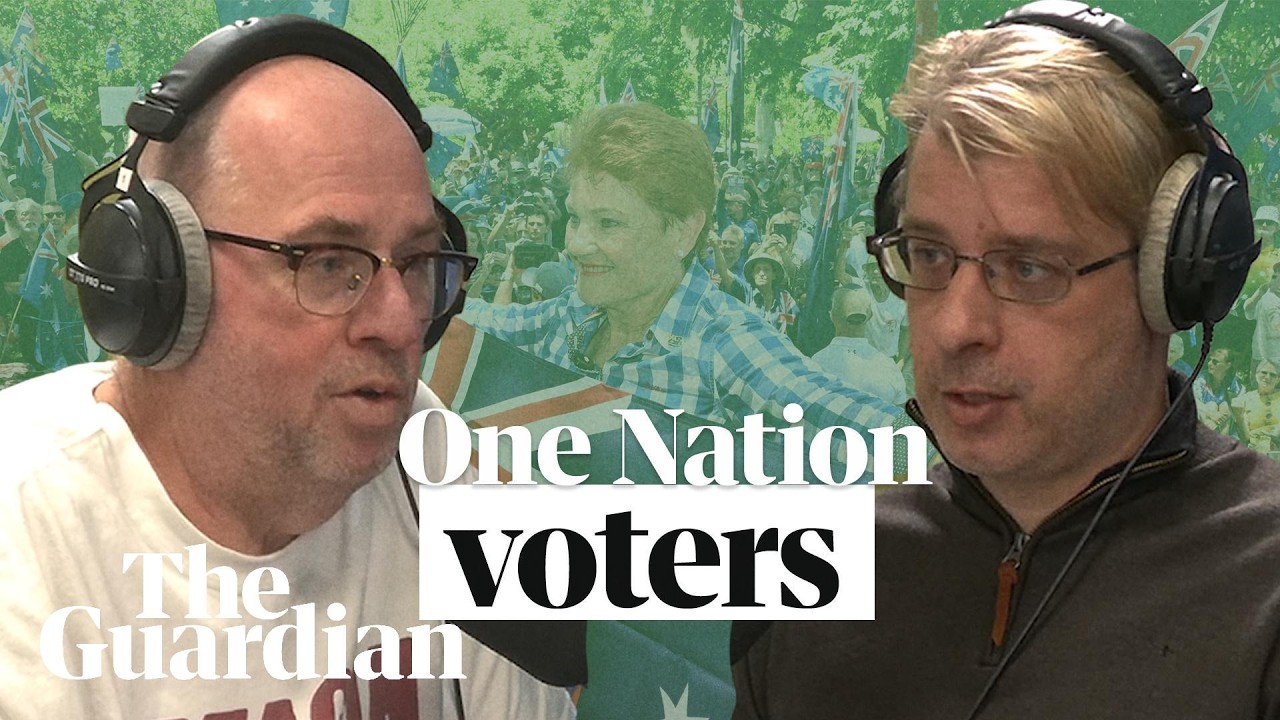 Back to Back Barries: Dissecting the One Nation voting blocks
Things we can learn from the video
Press to jump
- 2:44Ratcliffe describes "Red Meat" voters as driven by cultural conservatism, opposition to immigration and Australia-first nationalism.
- 6:55The "Precariats" connect One Nation support to economic insecurity and regional decline, rather than cultural grievance alone.
- 11:51"Triple Haters" reject Labor, the Coalition and the Greens; "Hanson Enthusiasts" are introduced at 14:09.
- 21:49The pair argue that economic improvement could reduce One Nation's appeal, but cost-of-living relief risks adding to inflation.
- 25:34Ratcliffe explains sampling quotas covering regions, age, gender and education in Accent Research's polling.
- 28:23A listener questions metropolitan project spending against rural healthcare needs, prompting discussion of regional distrust.
One Nation's supporters do not all arrive at the party for the same reason, political scientist Shaun Ratcliffe argues: some prioritise immigration and cultural issues, others economic insecurity, and others Pauline Hanson herself.
In Guardian Australia's Back to Back Barries, Ratcliffe joins Tony Barry, filling in for Barrie Cassidy, to explain those distinctions and what they mean for Australia's major parties. The episode drew roughly 18,000 views since yesterday.
Their breakdown starts with the group they call "Red Meat": voters Ratcliffe describes as culturally conservative, opposed to immigration and drawn to Australia-first nationalism. He distinguishes them from the "Precariats", whose support he connects to financial pressure, regional decline and a sense that political and business leaders do not work in their interests.
A third group, the "Triple Haters", rejects Labor, the Liberal-National Coalition and the Greens. The fourth, "Hanson Enthusiasts", responds to what supporters perceive as Hanson's directness, consistency and authenticity. "She sounds like a real person, and for a lot of voters, they appreciate that," Ratcliffe says.
The practical question is how other parties might regain those voters' trust. Barry and Ratcliffe argue that better economic conditions could weaken One Nation's appeal, while acknowledging that delivering relief is difficult: policies intended to ease living costs can themselves add to inflation.
The discussion also moves beyond voter labels. Ratcliffe explains how Accent Research uses sampling quotas across geography, age, gender and education. A listener's question about rural healthcare versus metropolitan spending then brings the conversation back to a grievance running through the episode: whether people outside major cities believe government resources reach them fairly.
An Australian right-wing to far-right political party founded and led by Pauline Hanson.
More on Wikipedia ›Leader of One Nation and a senator representing Queensland since 2016. She previously served in Australia's House of Representatives.
More on Wikipedia ›Australia's main centre-left, social democratic party. It has held federal government since the 2022 election.
More on Wikipedia ›An Australian centre-right alliance whose main members are the Liberal and National parties. It is Labor's main rival and last held federal government from 2013 to 2022.
More on Wikipedia ›An Australian left-wing environmentalist party. As of 2025, it ranked third nationally by vote share and fourth by elected representation.
More on Wikipedia ›Published on Trari
Where next?


 Is this your channel?For the channel's owners and team: a ready picture and text for your audience
Share the story with your audience. Everything is ready:
For an Instagram story or a WhatsApp status
For a community post or your channel's description
- Channel
- Guardian Australia
- Subscribers
- 166,000 ▲ 4,000 this week
- Channel views, last 7 days
- 3,685,528
- Channel views, pace per day
- 892,229 (on a normal day: 373,195)
- Video published
- November 6, 2026
- Video views so far
- 18,320 (less than a day online)
- Video views, pace per day
- 23,993
The numbers
This episode was Guardian Australia's most-watched new upload since yesterday, drawing roughly 18,000 views.

💡 Test your knowledge
Which institution is Australia's central bank?
The Reserve Bank of Australia is the country's central bank, whose interest-rate decisions feature in the discussion.