
 United States
 United Kingdom
 Canada
 Australia
 New Zealand
 Ireland
Canada's tax deduction hinges on investment businesses haven't already planned
Andrew Chang explains the immediate benefit for companies and the harder question of whether it will generate enough new economic activity.
Why this story? One of CBC News's most watched videos since yesterday, with 41,121 views.
CBC News: The news division of the CBC, Canada's public broadcaster. 4.8M subscribers and 3.4B views.
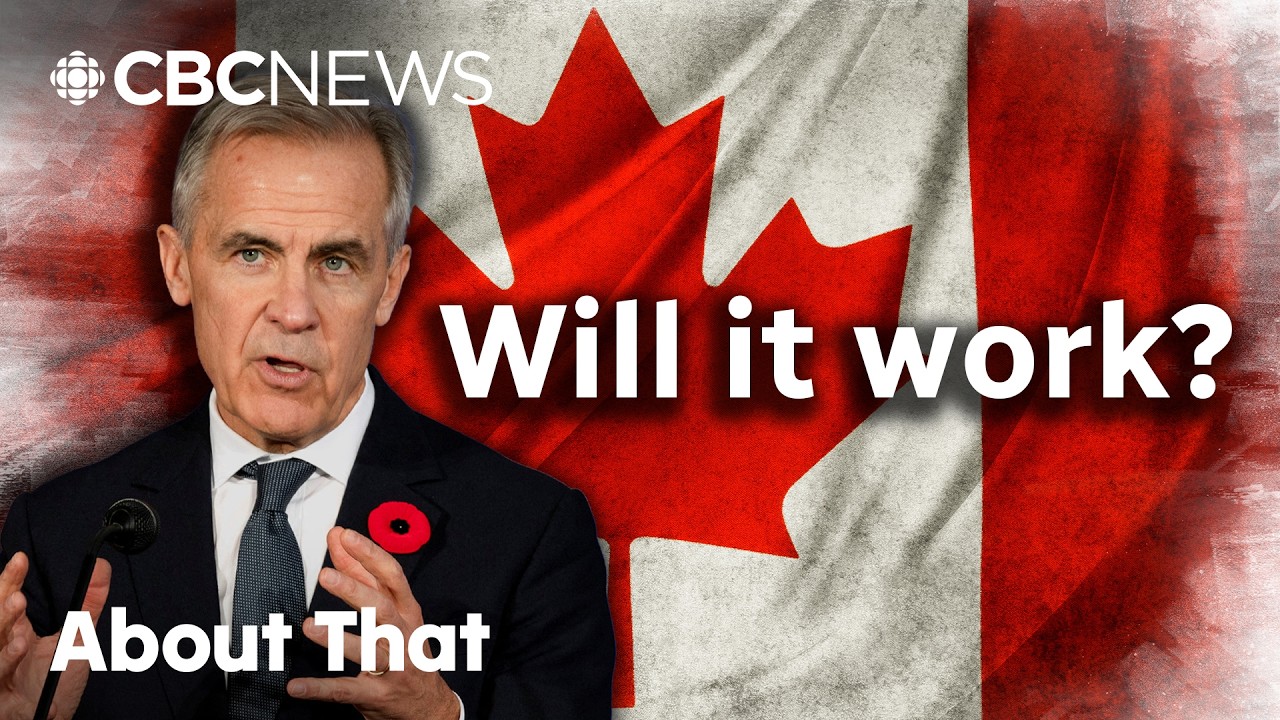 Will Canada’s $36B gamble fix its productivity problem? | About That
Things we can learn from the video
Press to jump
- 0:00Chang links Canada's productivity gap with the United States to insufficient investment in machinery and equipment.
- 2:15A hypothetical lathe purchase illustrates immediate full expensing instead of deductions spread over years.
- 5:54Earlier tax savings give companies money to reinvest sooner, illustrating the time value of money.
- 7:48Chang cites a projected $36 billion revenue shortfall over five years, then presents the government's expected economic gains.
- 10:07The central risk is rewarding purchases companies already planned rather than encouraging additional investment.
Will businesses buy more equipment, or simply get a tax break on purchases they would have made anyway? That is the central uncertainty in Canada's Productivity Mega Deduction, examined by Andrew Chang for Canada's Canadian Broadcasting Corporation (CBC) News.
The measure, unveiled in the federal government's 2026 budget, aims to address weak business investment in machinery and equipment. Chang presents that shortfall as a key reason Canada trails the United States in productivity.
Prime Minister Mark Carney and Finance and National Revenue Minister François-Philippe Champagne promote the deduction as a major overhaul of business incentives. Its basic attraction is timing: qualifying businesses can deduct the full cost of capital purchases immediately rather than spreading deductions over years.
Chang makes the mechanism concrete with a hypothetical company buying a Swiss lathe. The deduction reduces the income on which the company pays tax; it does not mean the government reimburses the entire purchase price. Receiving the tax benefit sooner leaves the business with money it can put back into operations and expansion earlier.
That acceleration comes with a public cost. Citing the Parliamentary Budget Officer, Chang puts the estimated reduction in government tax revenue at $36 billion over five years. Economist Moshe Lander describes the trade-off as accepting larger deficits today in the hope of smaller deficits or surpluses later.
The government's answer is a forecast of up to $22 billion in additional annual economic output and tens of thousands of jobs after a decade. Those are projected gains, not results already achieved.
University of Toronto economist Joseph Steinberg expects the policy to stimulate investment. But the discussion with journalist Peter Armstrong and economist Armine Yalnizyan returns to whether the spending will genuinely be additional. A deduction that changes a company's purchasing decision has a different economic payoff from one that merely rewards a decision already made.
Canada’s annual federal budget outlines planned government spending, expected revenue and economic forecasts. It is presented by the finance minister in the fall.
More on Wikipedia ›Canada’s prime minister and Liberal Party leader since 2025. He previously led the Bank of Canada and the Bank of England.
More on Wikipedia ›A Liberal politician who has served as Canada’s minister of finance and national revenue since 2025. He represents Saint-Maurice—Champlain in Parliament.
More on Wikipedia ›Published on Trari
Where next?



- Channel
- CBC News
- Subscribers
- 4,780,000
- Channel views, last 7 days
- 17,256,505
- Channel views, pace per day
- 2,048,657 (on a normal day: 2,427,866)
- Video published
- November 7, 2026
- Video views so far
- 41,121 (less than a day online)
The numbers
The explainer drew about 41,000 views since yesterday.

💡 Test your knowledge
Which minister presents the business-incentive overhaul alongside Mark Carney in this report?
Champagne appears in Parliament praising the overhaul as finance and national revenue minister.