
 United States
 United Kingdom
 Canada
 Australia
 New Zealand
 Ireland
Apple's storage upgrade gets costlier to make, not to buy
An AI-driven flash-memory squeeze is eroding Apple's margins and giving suppliers more bargaining power, according to reporting cited by YTN.
 South KoreaStory of
Why this story? One of YTN's most watched videos since yesterday, with 629,298 views.
YTN: South Korea's first 24-hour news channel, on air since 1995. 5.4M subscribers and 23B views.
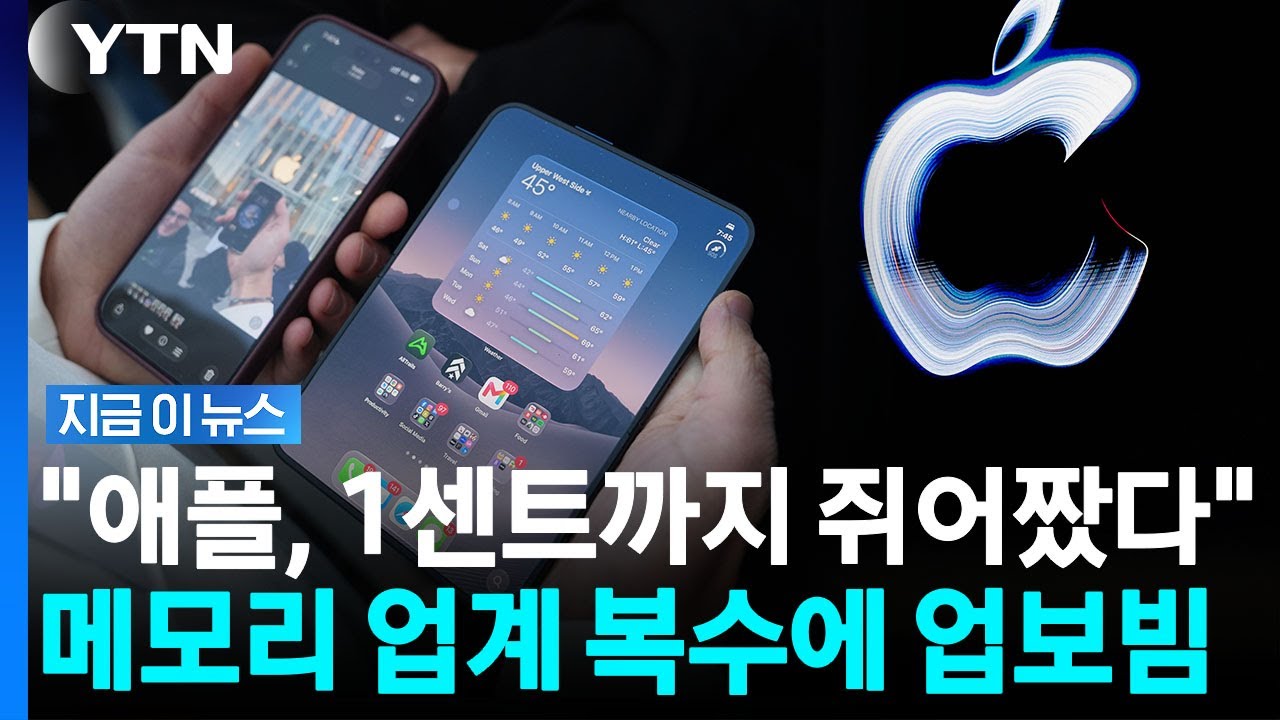 '슈퍼 갑' 애플에 역공 시작…피눈물 흘리던 메모리 업체들의 반격 [지금이뉴스] / YTN
Things we can learn from the video
Press to jump
- 0:00Citing the Wall Street Journal, the report says AI data-center demand is strengthening flash-memory suppliers' bargaining position.
- 0:23Microsoft, Amazon, Meta and Google together now buy twice Apple's flash-memory volume, according to estimates cited.
- 1:00Apple's estimated cost for a storage upgrade rises from $15 to $66, while the consumer surcharge remains $200.
- 1:43Meta, Microsoft and Amazon reportedly accept higher prices in return for long-term supply commitments.
- 2:01The report describes Apple's past pricing demands and audits, before presenting its response about valuing longstanding partnerships.
The extra storage still costs the iPhone buyer $200. But the memory inside that upgrade has become much more expensive for Apple, according to a report on South Korea's YTN (Yonhap Television News), citing The Wall Street Journal.
The report estimates that adding 256GB of storage cost Apple $15 for last year's iPhone 17 Pro, compared with $66 for this year's iPhone 18 Pro. The retail price difference between the lower- and higher-capacity versions remained unchanged. That comparison illustrates the report's central point: suppliers once dependent on Apple's enormous orders have other customers willing to pay more.
Those customers are building AI data centers. Citing market researcher TechInsights, the report says Microsoft, Amazon, Meta and Google together now buy twice as much flash memory as Apple. Two years earlier, Apple bought nearly twice their combined volume. Flash-memory prices have risen fivefold over the past year, the report says.
For suppliers including Japanese memory manufacturer Kioxia, the change brings both higher prices and greater leverage. Meta, Microsoft and Amazon have agreed to pay more in exchange for long-term supply commitments, according to the report. It says Apple is expected to spend substantially more on flash storage this year while buying a similar quantity to last year.
The second half examines how Apple previously used its purchasing power. Citing the Journal's reporting, the narrator describes contracts requiring suppliers to give Apple their lowest prices and allow accounting audits to check compliance. The report also recounts late-night negotiations, meetings arranged so competing suppliers encountered one another, and refusals to take delivery when prices fell, leaving manufacturers holding inventory.
The Journal characterizes the changed relationship as suppliers' revenge. Apple, in its response carried by the report, says it deeply values its longstanding partnerships. Executive chairman Tim Cook compares the memory-price surge to a once-in-a-century flood.
The report does not describe an additional $200 price increase caused by the shortage. Its specific iPhone comparison shows an existing storage surcharge becoming less profitable for Apple.
A Japanese memory and data-storage group based in Tokyo. Its main operating subsidiary makes NAND flash memory, solid-state drives and related storage products.
More on Wikipedia ›Apple’s executive chairman since September 2026. He previously served as its chief executive from 2011 to August 2026.
More on Wikipedia ›Published on Trari
Where next?



- Channel
- YTN
- Subscribers
- 5,420,000
- Channel views, pace per day
- 31,463,097 (on a normal day: 7,889,055)
- Video published
- October 30, 2026
- Video views so far
- 629,298 (less than a day online)
- Video views, pace per day
- 698,846
The numbers
The report drew about 630,000 views since yesterday, making it one of South Korea's most watched new news videos.

💡 Test your knowledge
Which company owns WhatsApp?
WhatsApp is one of Meta's communication services, alongside platforms including Facebook and Instagram.