
 United States
 United Kingdom
 Canada
 Australia
 New Zealand
 Ireland
El-Sayed brings historic Senate win back to grocery bills
On The View, Michigan's senator-elect argues that progressive policies and kitchen-table concerns belong in the same conversation.
 The View
Story of
Why this story? The video opened at a pace of 1,116,689 views a day, 14 times a normal first day on this channel (77,750).
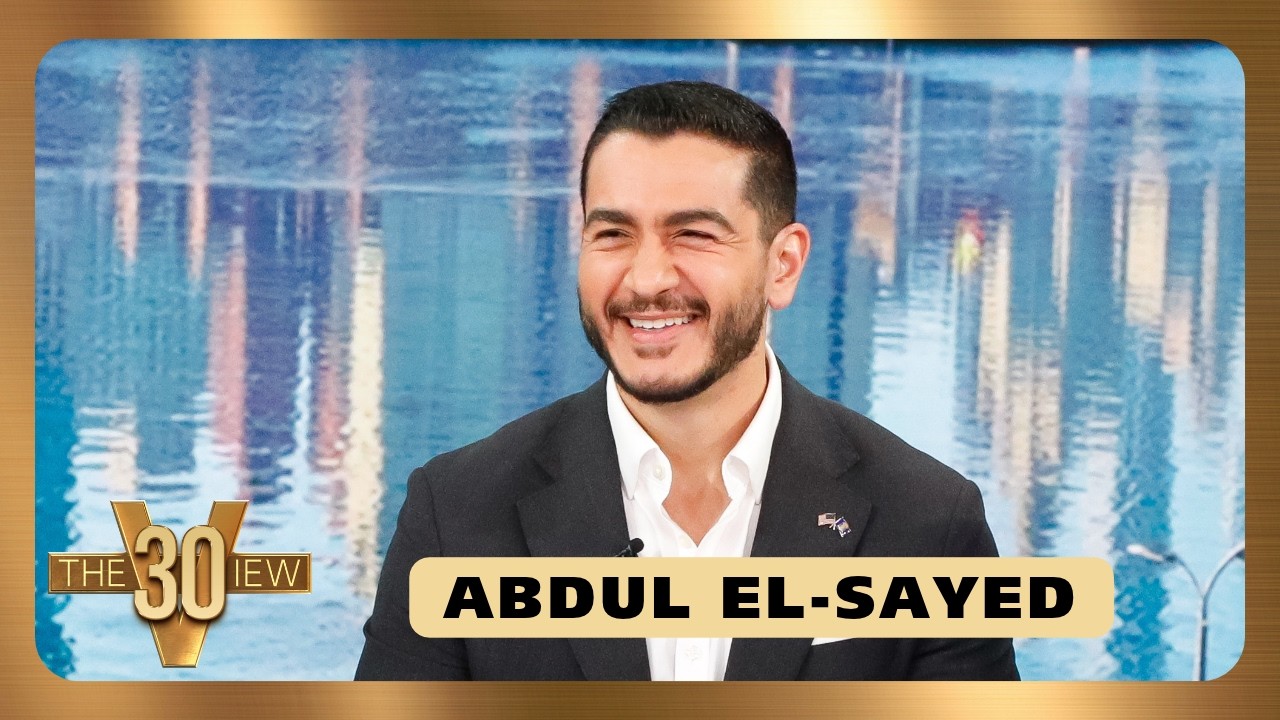 Abdul El-Sayed Reacts To Becoming First Muslim Elected To U.S. Senate | The View
Things we can learn from the video
Press to jump
- 1:25El-Sayed describes his victory as support for a welcoming America, then emphasizes healthcare and wages.
- 3:07He argues that identity-based campaign attacks substituted for answers on gas, groceries and healthcare.
- 4:16Asked about working with hostile colleagues, he puts public service ahead of political retribution.
- 5:19He attributes Democratic turnout to working-class frustration over affordability and endless foreign wars.
- 7:38He presents curbing corporate monopolies and universal healthcare as practical responses to everyday affordability.
"They weren't attacking me. They were attacking the idea of an America big enough for me," Abdul El-Sayed tells Whoopi Goldberg on The View.
Introduced as the first Muslim elected to the U.S. Senate, the Michigan Democrat accepts the significance of that milestone, then repeatedly returns to healthcare, wages and the cost of getting by. His interview drew nearly 700,000 views in ten hours, already far beyond the show's usual first-day audience for a regular video.
The most revealing policy exchange comes when Alyssa Farah Griffin asks whether Democrats should turn toward centrist kitchen-table issues or lean into progressive policies. El-Sayed rejects the distinction: curbing corporate monopolies and ensuring universal healthcare, he argues, are ways of tackling everyday affordability, not distractions from it.
Sunny Hostin also asks how he intends to work with Senate colleagues who made anti-Muslim statements during the campaign. His answer puts public service ahead of settling scores: "It is not about politicians. It is about the public we serve."
Asked by Joy Behar to explain the Democratic turnout, he points to working-class frustration with living costs and endless foreign wars. He argues that politics needs to be treated as consequential decisions about people's lives, rather than entertainment.
The interview sits within a broader run of election coverage drawing unusually large audiences for The View, including Hostin's reaction to the results and the full November 5 broadcast. Here, though, El-Sayed's central argument is specific: universal healthcare and action against concentrated corporate power are his answers to the affordability question.
Published on Trari
Where next?


 Is this your channel?For the channel's owners and team: a ready picture and text for your audience
Share the story with your audience. Everything is ready:
For an Instagram story or a WhatsApp status
For a community post or your channel's description
- Channel
- The View
- Subscribers
- 1,730,000 ▲ 10,000 this week
- Channel views, last 7 days
- 5,685,792
- Channel views, pace per day
- 1,859,725 (on a normal day: 625,818)
- Video published
- November 5, 2026
- Video views so far
- 696,238 (less than a day online)
- Video views, pace per day
- 1,116,689
The numbers
The interview passed the channel's usual full-day audience within its opening hours. The full broadcast and Sunny Hostin's election-reaction Short also drew unusually strong starts for their respective formats.

💡 Test your knowledge
Who asks El-Sayed whether Democrats should move toward the center or embrace progressive policies?
Farah Griffin poses that question before El-Sayed argues that progressive policies address kitchen-table concerns.