
 United States
 United Kingdom
 Canada
 Australia
 New Zealand
 Ireland
Brooks proposes a Trump deal: Miller and Hegseth out, negotiations in
PBS NewsHour's post-midterm discussion pairs a prescription for Democrats with a warning that their new majority is only borrowed.
 PBS NewsHour
Story of
Why this story? The video opened at a pace of 532,431 views a day, 19 times a normal first day on this channel (27,879).
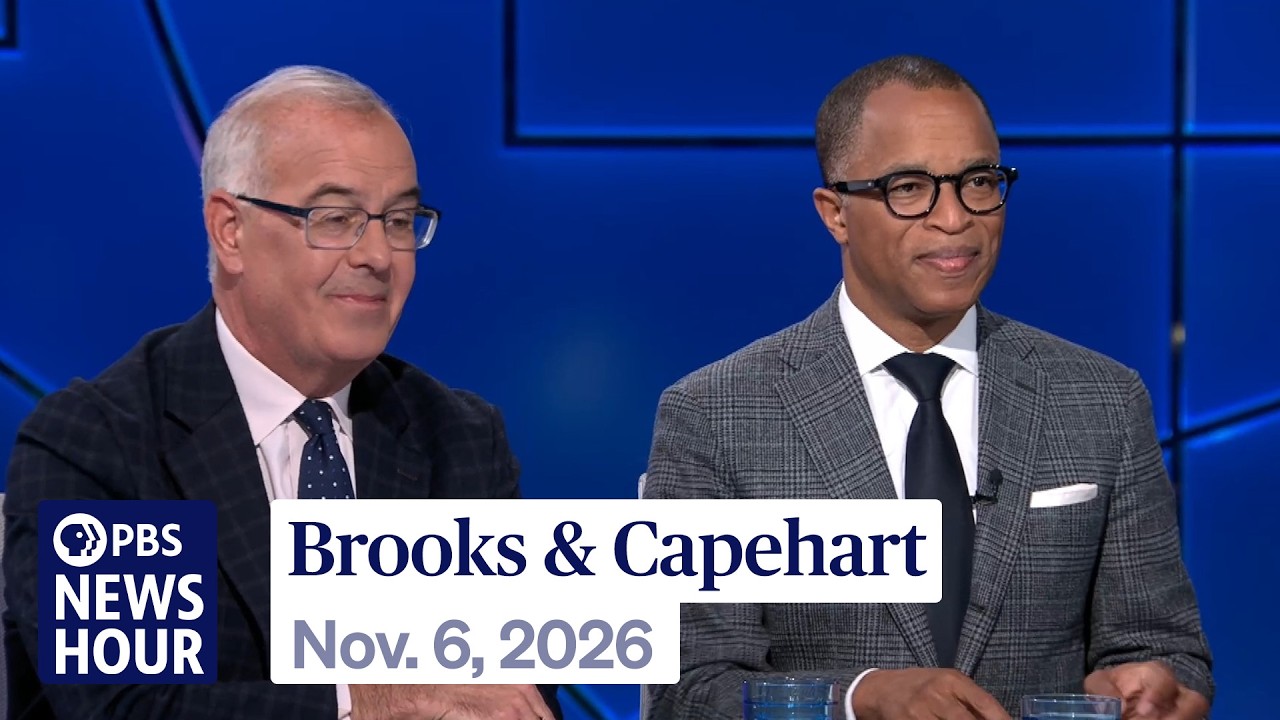 Brooks and Capehart on Trump’s White House shakeup and fallout from the midterms
Things we can learn from the video
Press to jump
- 0:19Miller replaces Wiles as chief of staff; Brooks interprets the choice as a turn toward loyalty.
- 2:02Capehart argues Miller's appointment rejects voters' message and urges moderate Senate Republicans to push back.
- 5:54Brooks proposes negotiations with Trump in exchange for Miller and Hegseth leaving.
- 6:47The panel considers Schumer and Jeffries's leadership, stressing that Democrats must earn voters' continued trust.
- 10:04Brooks argues Republicans lack a clear identity as the discussion turns to rebuilding the party.
"This is a rental, not an ownership, this majority," David Brooks tells Geoff Bennett and Jonathan Capehart. Democrats may have won control of Congress, but Brooks argues they should treat that result as a temporary mandate, not a lasting realignment.
The PBS NewsHour discussion moves beyond who won to what either party can do with the result. Its sharpest proposal comes from Brooks: Democratic leaders should offer President Trump negotiations in exchange for the departure of Stephen Miller and Defense Secretary Pete Hegseth.
That suggestion follows Trump's decision to replace Susie Wiles with Miller as White House chief of staff. Brooks reads the appointment as a turn toward an ultimate loyalist. Capehart sees it as a rejection of the message voters delivered, and looks to moderate Senate Republicans to push back.
On Hegseth, Bennett raises Republican Representative Thomas Massie's push for an impeachment vote amid controversy over the Iran war. Capehart calls for the defense secretary to appear at the Capitol and explain himself to Congress and the public.
The segment drew an estimated 530,000 first-day views, compared with roughly 28,000 for a usual regular upload on the channel. PBS's separate discussion of international reactions, its full November 6 broadcast and an interview with former Senator Jeff Flake also drew unusually large audiences.
Bennett's questions about Chuck Schumer and Hakeem Jeffries bring the conversation back to the Democrats' responsibilities. Capehart argues that the party must earn the trust voters have given it. Brooks's warning is similar: holding a majority does not mean owning the electorate.
American political adviser who became White House deputy chief of staff for policy and homeland security adviser in 2025. He also served as a senior adviser during Trump's first administration.
More on Wikipedia ›U.S. defense secretary since 2025. He is an Army veteran and former television personality.
More on Wikipedia ›Republican political consultant and lobbyist who served as White House chief of staff from 2025 to 2026. She was the first woman to hold the job.
More on Wikipedia ›Democratic U.S. senator from New York who has led the Senate Democrats since 2017. He served as Senate majority leader from 2021 to 2025.
More on Wikipedia ›Democratic U.S. representative from New York who has led the House Democrats since 2023.
More on Wikipedia ›Published on Trari
Where next?


 Is this your channel?For the channel's owners and team: a ready picture and text for your audience
Share the story with your audience. Everything is ready:
For an Instagram story or a WhatsApp status
For a community post or your channel's description
- Channel
- PBS NewsHour
- Subscribers
- 5,410,000 ▲ 10,000 this week
- Channel views, last 7 days
- 14,396,478
- Channel views, pace per day
- 2,660,330 (on a normal day: 1,884,906)
- Video published
- November 7, 2026
- Video views so far
- 591,015 (less than a day online)
- Video views, pace per day
- 431,029
The numbers
The Brooks and Capehart segment drew a much larger first-day audience than PBS NewsHour's usual regular upload. Other post-election discussions also had strong starts.

💡 Test your knowledge
Whom does Stephen Miller replace as chief of staff in this discussion?
The panel discusses Trump's decision to replace Susie Wiles with Stephen Miller.