
 United States
 United Kingdom
 Canada
 Australia
 New Zealand
 Ireland
Iran's retaliation warning meets a skeptical view of Gulf diplomacy
LiveNOW from FOX pairs a statement attributed to Mojtaba Khamenei with reporting on Qatari mediation and an analyst's doubts about its prospects.
 LiveNOW from FOX
Story of
Why this story? 1,459,247 views so far, and here is what is inside it.
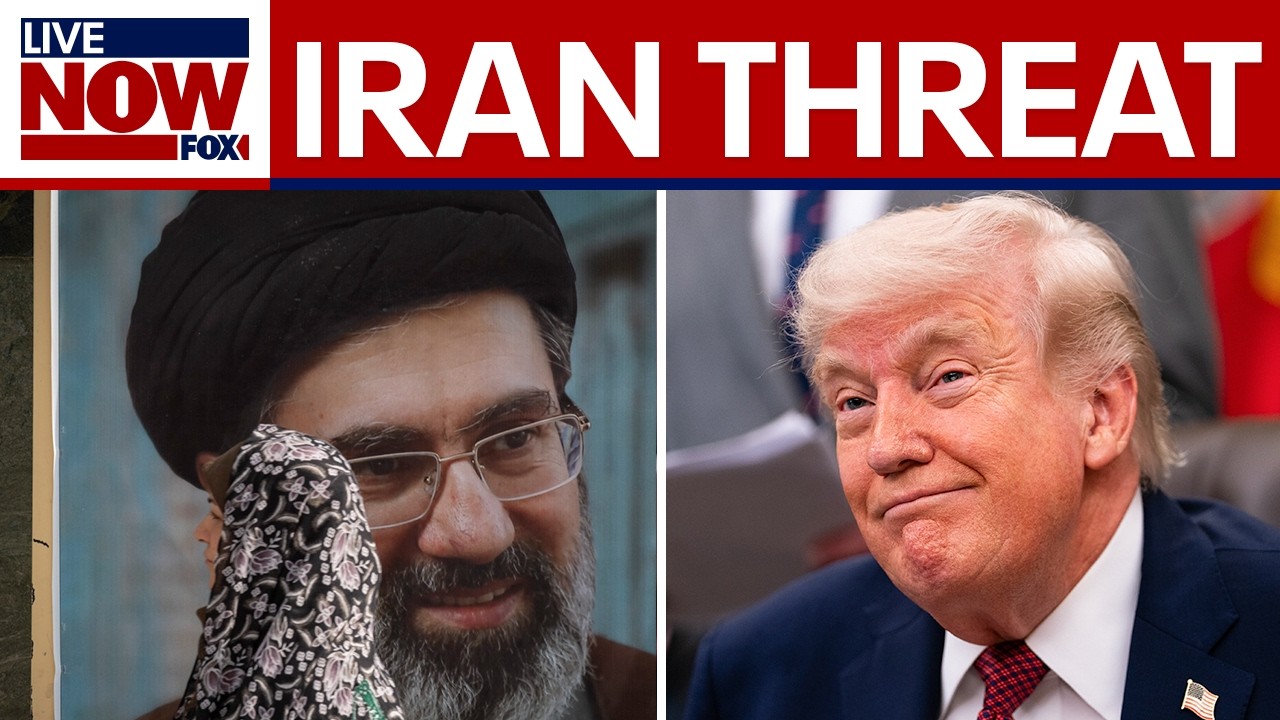 Iran's supreme leader issues new threat against US
Things we can learn from the video
Press to jump
- 0:43A post attributed to Khamenei threatens unrestricted retaliation if military or terrorist attacks on Iran resume.
- 1:39Breslow cites Axios reporting on Qatari talks in Tehran intended to prevent further escalation.
- 2:20Sayeh argues that revenge drives Iran's leadership and that earlier diplomatic exchanges failed to moderate its conduct.
- 5:35Sayeh assesses Qatar's and Pakistan's mediation roles, arguing that blockades and sanctions have reduced Iran's leverage.
- 8:31The discussion turns to Israeli politics and energy facilities as possible targets of further U.S.-Israeli action.
- 10:11The interview ends and Breslow turns to a live map of maritime traffic through the Strait of Hormuz.
Josh Breslow brings a social media post onto the screen: a warning attributed to Iran's Supreme Leader Mojtaba Khamenei promising an immediate, geographically unrestricted response if attacks on Iran resume. That condition matters. The statement presented in LiveNOW from FOX's October 31 segment threatens retaliation, rather than announcing a new attack.
Breslow places it alongside Axios reporting on lengthy talks by Qatari mediators in Tehran aimed at preventing further military escalation. The interview that follows asks whether diplomacy can restrain the conflict, and what leverage the negotiators actually have.
Janatan Sayeh, an analyst at the Foundation for Defense of Democracies, offers a skeptical answer. He argues that revenge drives the Iranian leadership's decisions and points to earlier backchannel exchanges that, in his assessment, failed to produce moderation. He also argues that naval blockades and economic sanctions have weakened Iran's bargaining position around the Strait of Hormuz.
Breslow returns to the Axios report's warning about possible retaliatory strikes across the Gulf if mediation fails. Sayeh examines Qatar's and Pakistan's roles, then discusses Israel's political situation and energy facilities as possible targets of further U.S.-Israeli action. These are assessments of what could happen, not reports that those strikes have occurred.
The segment has drawn about 1.5 million views over five days. Its closing image shifts from statements and analysis to a live maritime-traffic map of the Strait of Hormuz, the shipping passage central to the discussion.
Iranian politician and Shia cleric who has been Iran’s supreme leader since 2026. He is the son of former supreme leader Ali Khamenei.
More on Wikipedia ›A country on a peninsula in the Persian Gulf, with its only land border adjoining Saudi Arabia. Its capital is Doha.
More on Wikipedia ›Published on Trari
Where next?


 Is this your channel?For the channel's owners and team: a ready picture and text for your audience
Share the story with your audience. Everything is ready:
For an Instagram story or a WhatsApp status
For a community post or your channel's description
- Channel
- LiveNOW from FOX
- Subscribers
- 5,640,000 ▲ 10,000 this week
- Channel views, last 7 days
- 18,416,620
- Channel views, pace per day
- 5,742,250 (on a normal day: 2,059,661)
- Video published
- October 31, 2026
- Video views so far
- 1,459,247 (5 days online)
- Video views, pace per day
- 2,619 (on a normal day: 342,792)
The numbers
The segment's views have accumulated over five days. Its audience size is context here, rather than an unusually fast start for the channel.

💡 Test your knowledge
Which city is Qatar's capital?
Doha is Qatar's capital, the country whose mediation efforts feature in the segment.