
Can a Russian saboteur called Ivan be trusted? "Shadowmen" tests his story
Marcin Mamon follows him from Astana to Istanbul to a polygraph in Georgia, then puts the question to his Ukrainian handler.
 BBC World Service
Story of
Why this story? The video opened at a pace of 165,191 views a day, 20 times a normal first day on this channel (8,217).
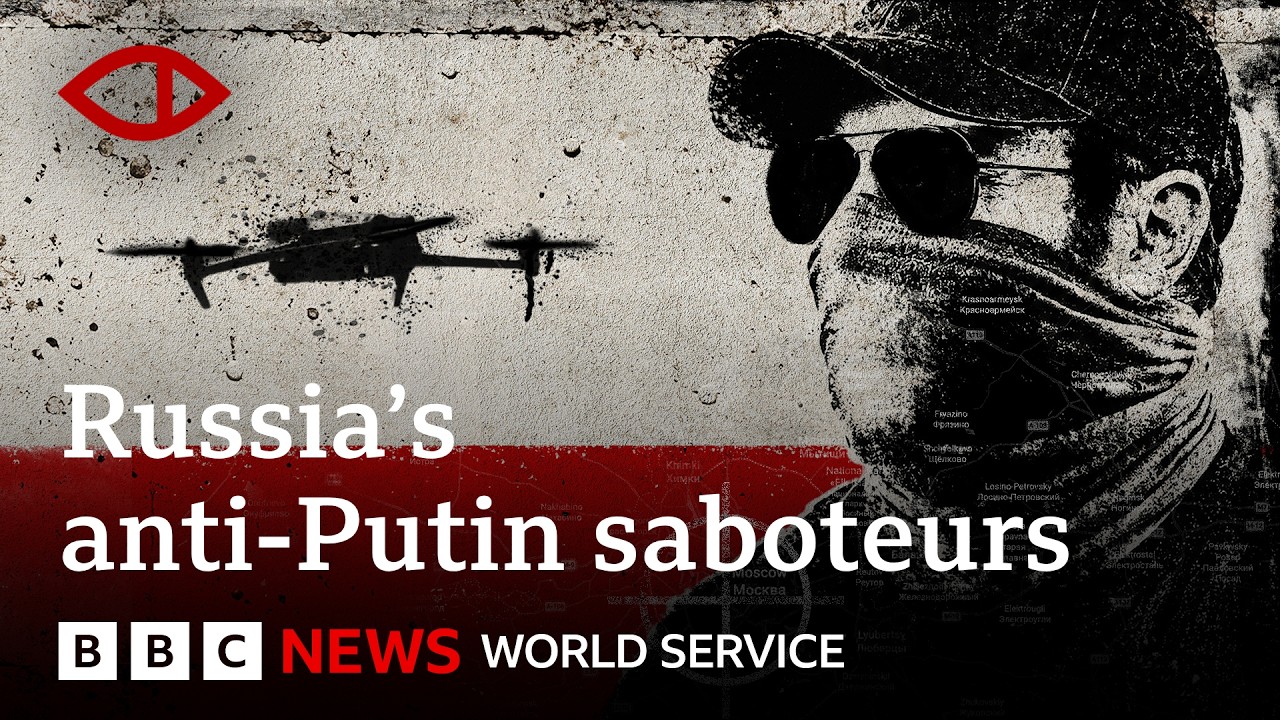 Shadowmen: Russian operatives who say they're sabotaging Putin’s war – BBC World Service Docs
Things we can learn from the video
Press to jump
- 0:01Marcin Mamon introduces footage sent by Ivan, a Russian who says he works near military airfields for Ukraine.
- 9:17In Warsaw, handler Foma discusses getting operatives into sensitive Russian sites, including the Kapotnaya oil refinery.
- 21:07In Chișinău, Russian recruits wait to cross into Ukraine before Denis Sokolov arranges a minivan.
- 36:14Operation Spiderweb sends 150 drones at Russian airfields, and Ivan says his colleagues took part.
- 45:30In Georgia, Ivan undergoes polygraph tests with Ukrainian intelligence and explains his surveillance rules.
- 52:45Ivan's masked handler confirms his intelligence work and admits double agents remain a persistent risk.
Ivan is not his name. The Russian at the center of BBC World Service's documentary Shadowmen appears with his face anonymized by AI and his voice supplied by an actor. Over two years he trades messages and meetings with Polish journalist Marcin Mamon. He calls himself a Russian patriot who wants Putin's government gone, and he says helping Ukraine win is the way to get there.
The film follows that relationship across a wide map. In Astana, Kazakhstan, Ivan goes over his scouting of an aircraft plant near Kazan. In Istanbul he proposes to his girlfriend on camera ("Do you want to spend your life with me?"). In Georgia he sits polygraph tests for Ukrainian intelligence. In between he goes silent for months, then sends a Christmas message to say he is safe. When Ukraine launches Operation Spiderweb against Russian airfields on June 1, 2025, Ivan says colleagues of his took part.
Ivan is one thread among several. In Warsaw, exiled journalist Tatyana Kosinova and anthropologist Denis Sokolov arrange for anti-Putin volunteers to reach Ukraine, while Kosinova's own son fights on the Ukrainian side. Another anonymized handler, Foma, coaches an operative in Moscow by video call. "When you go to the target, don't take a phone," he tells him. Near the front at Pokrovske, Mamon meets Denis Kapustin, known as White Rex, commander of the Russian Volunteer Corps.
The title's question gets a careful answer rather than a neat one. Late in the film, Ivan's masked Ukrainian handler confirms his intelligence work, but says double agents remain a constant risk.
The documentary drew around 165,000 views in its first day, about twenty times the channel's usual start for a regular video. Comments arrived roughly thirty times faster than usual. Many dwell on the risks these men take, and several viewers who follow the war note how little has been made about people working behind the lines.
Published on Trari
Where next?


 Is this your channel?For the channel's owners and team: a ready picture, text and badge for your audience
Share the story with your audience. Everything is ready:
For an Instagram story or a WhatsApp status
For a community post or your channel's description
For your website

You may use the picture, the badge, and link it to this story.
- Channel
- BBC World Service
- Subscribers
- 2,240,000 ▲ 10,000 this week
- Channel views, last 7 days
- 4,290,832
- Channel views, pace per day
- 553,655 (on a normal day: 534,238)
- Video published
- October 18, 2026
- Video views so far
- 218,463 (2 days online)
- Video views, pace per day
- 201,028
The numbers
A long investigative film that drew far more viewers, and far more comments, in its first day than BBC World Service's documentaries usually do.
