
Eisenkot's government pledge rests on unresolved coalition arithmetic
A Turkish election-night panel contrasts Likud's party lead with opposition bloc projections, while Bağcı questions how much a change of government would alter security policy.
 TurkeyStory of
Why this story? One of SÖZCÜ Televizyonu's most watched videos since yesterday, with 103,593 views.
SÖZCÜ Televizyonu: The news channel of the opposition-leaning Turkish newspaper Sözcü, since 2021. 2.3M subscribers and 3B views.
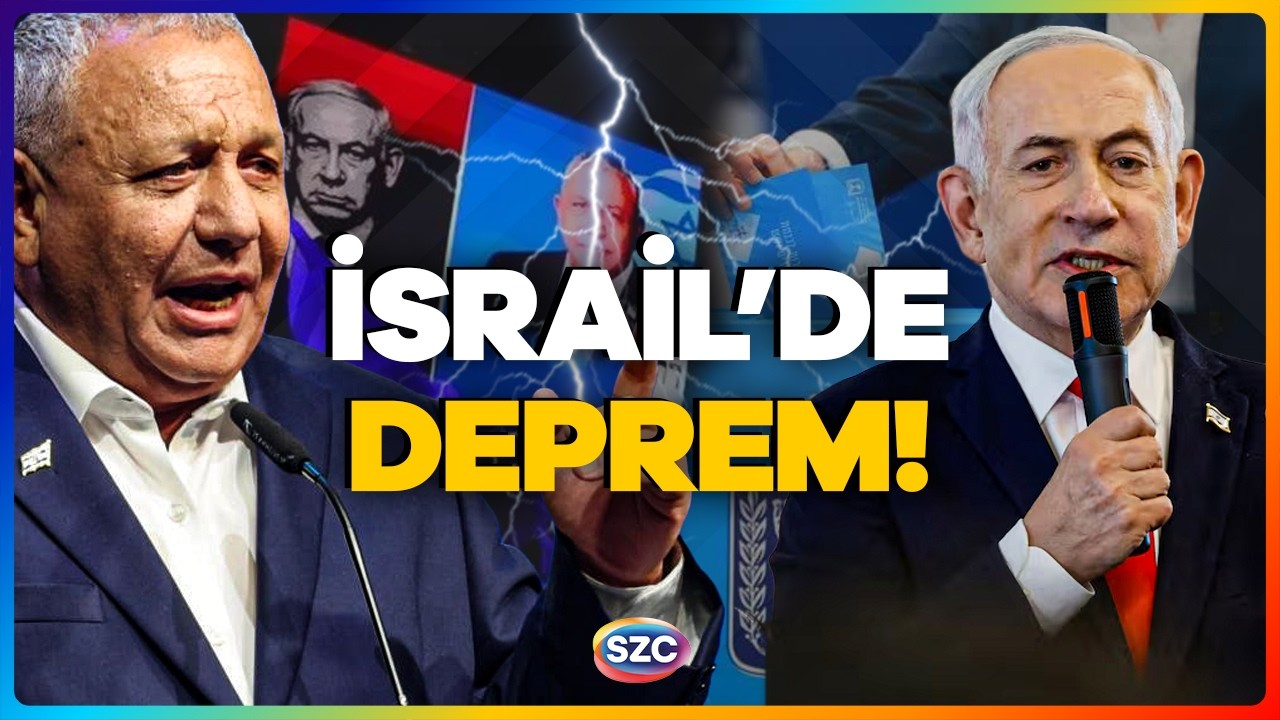 Netanyahu İçin Yolun Sonu Göründü! Eisenkot'tan Zafer İlanı! LİKUD DEPREMİ YAŞIYOR!
Things we can learn from the video
Press to jump
- 0:18Erbaş relays Lapid's election response and Eisenkot's social media message challenging Netanyahu.
- 1:31Tatari separates Likud's party lead from coalition strength and identifies Arab parties as pivotal.
- 4:01Bağcı argues that war fatigue and international pressure help explain Netanyahu's electoral difficulties.
- 7:11Bağcı expects possible changes in rhetoric and international relations, but no major departure in security policy.
Gadi Eisenkot's pledge to form a government appears on screen, but the projections alongside it leave the central question unresolved: where would the governing majority come from?
Turkey's SÖZCÜ Televizyonu examines that gap in an election-night discussion hosted by Pınar Erbaş. One on-screen headline cites Channel 12 reporting Benjamin Netanyahu's Likud ahead as a party. Another cites Channel 11 putting Eisenkot's bloc at 53 seats and Netanyahu's at 50. Those are different measures of electoral strength, and neither bloc projection amounts to a parliamentary majority.
Foreign news editor Burak Tatari explains why the distinction matters. Israel has always been governed through coalitions, he says, so finishing first as a party does not settle who can govern. His analysis puts Arab parties in a pivotal position in negotiations. Erbaş also relays statements from former prime minister Yair Lapid and a social media message from Eisenkot presenting the result as a rejection of Netanyahu.
Political scientist Hüseyin Bağcı, joining remotely from Middle East Technical University, interprets the election picture as reflecting exhaustion with war and existing conditions in Israeli society. He also argues that international opposition to Israeli policies has become unusually widespread. These are his assessments, rather than findings established by the election projections.
Bağcı's final distinction concerns what an Eisenkot government might actually change. He does not expect a major departure from Israel's underlying security policies. Instead, he sees greater scope for a different tone and different international relationships: a potential change in how Israel deals with the world, without an equivalent break in its security approach.
Israeli general and politician who leads the Yashar party. A former military chief, he was the main challenger to Benjamin Netanyahu in the 2026 election.
More on Wikipedia ›A major right-wing political party in Israel, founded in 1973 as an alliance of several right-wing parties.
More on Wikipedia ›Israel's opposition leader and head of the centrist Yesh Atid party. He served as prime minister from July to December 2022.
More on Wikipedia ›Published on Trari
Where next?


- Channel
- SÖZCÜ Televizyonu
- Subscribers
- 2,320,000
- Channel views, pace per day
- 1,248,364
- Video published
- October 27, 2026
- Video views so far
- 148,707 (2 days online)
- Video views, pace per day
- 103,551 (on a normal day: 113,687)
The numbers
The election discussion drew about 104,000 views since yesterday.

💡 Test your knowledge
Which party is led by Yair Lapid?
Lapid has led the centrist Yesh Atid party since its creation in 2012.