
 United States
 United Kingdom
 Canada
 Australia
 New Zealand
 Ireland
Shafikul Garden's guava tutorial leaves the failed cuttings in
Rope-wrapped branches produce roots, but an aloe-and-sand setup dries out in a tutorial drawing far more views than usual.
 Shafikul Garden
Story of
Why this story? The video opened at a pace of 72,200 views a day, 13 times a normal first day on this channel (5,470).
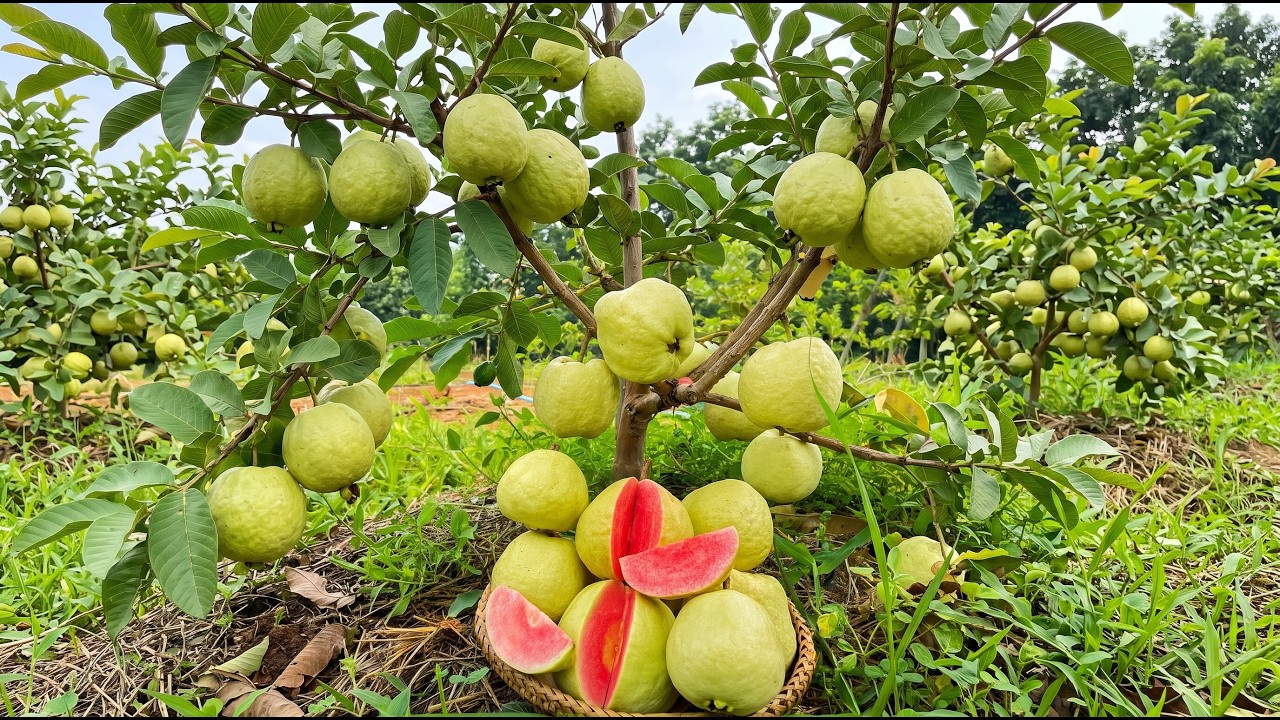 🔴LIVE:🍐Grow Guava Trees Faster at Home | Step-by-Step Live!
Things we can learn from the video
Press to jump
- 0:26The presenter removes bark and scrapes the cambium before preparing branches for a comparison of two rope materials.
- 8:11After a month, the narrator identifies denser roots in black cotton rope than in natural jute.
- 16:14A drilled branch enclosed in a soil-filled plastic cup reveals roots and is separated for potting.
- 23:03Aloe-treated cuttings in a covered sand-filled bottle have dried out without rooting after 25 days.
- 32:18Both flower-extract water-layering setups reveal roots after 50 days; the branches are cut off and potted.
- 51:22A plain-water and turmeric-water comparison begins; the narrator later reports better rooting in plain water.
The plastic-bottle cover comes off, and the guava cuttings underneath are dry. There are no roots to celebrate. "Our experiment failed completely, and the cuttings have lost their moisture and are completely dry," Shafikul Garden's narrator says.
That unsuccessful attempt sits among several propagation experiments in a tutorial that reached roughly 68,000 views before its first full day was over, running about thirteen times the channel's usual first-day pace for longer videos.
The upload, billed as a step-by-step live demonstration, moves through preparations and later reveals of root growth. Its central distinction is simple: cuttings are removed before rooting, while air-layered branches remain attached to the parent tree until they have roots of their own.
The opening experiment compares natural jute rope with black cotton rope, each wrapped around a prepared section of branch and enclosed in plastic. When the coverings come off a month later, the presenter identifies denser roots in the cotton setup, specifically under the conditions of that test.
Elsewhere, the materials get more elaborate: flower extracts, bamboo sticks, aloe vera and modified drinking cups all appear. Yet a later comparison gives the less elaborate option its moment. The narrator reports better root formation in plain water than in turmeric water.
Guava propagation is familiar territory for Shafikul Garden, whose most-watched regular upload also centers on the fruit tree. Here, the useful contrast is within the tutorial itself: rooted branches ready for pots, alongside cuttings that never make it that far.
Published on Trari
Where next?


 Is this your channel?For the channel's owners and team: a ready picture and text for your audience
Share the story with your audience. Everything is ready:
For an Instagram story or a WhatsApp status
For a community post or your channel's description
- Channel
- Shafikul Garden
- Subscribers
- 4,090,000
- Channel views, last 7 days
- 2,758,908
- Channel views, pace per day
- 554,287 (on a normal day: 387,583)
- Video published
- November 4, 2026
- Video views so far
- 67,684 (less than a day online)
- Video views, pace per day
- 72,200
The numbers
The guava tutorial's early views are well above Shafikul Garden's usual first-day pace for longer uploads.

💡 Test your knowledge
Which rope produced denser roots in Shafikul Garden's opening guava experiment?
The narrator identifies black cotton rope as producing denser roots under the conditions of this experiment.