
 United States
 United Kingdom
 Canada
 Australia
 New Zealand
 Ireland
Pilot Debrief examines storm-radar limits in Florida Learjet crash
Hoover reconstructs the crew's weather encounters and final communications while distinguishing possible explanations from an established cause.
 Pilot Debrief
Story of
Why this story? 1,122,805 views so far, and here is what is inside it.
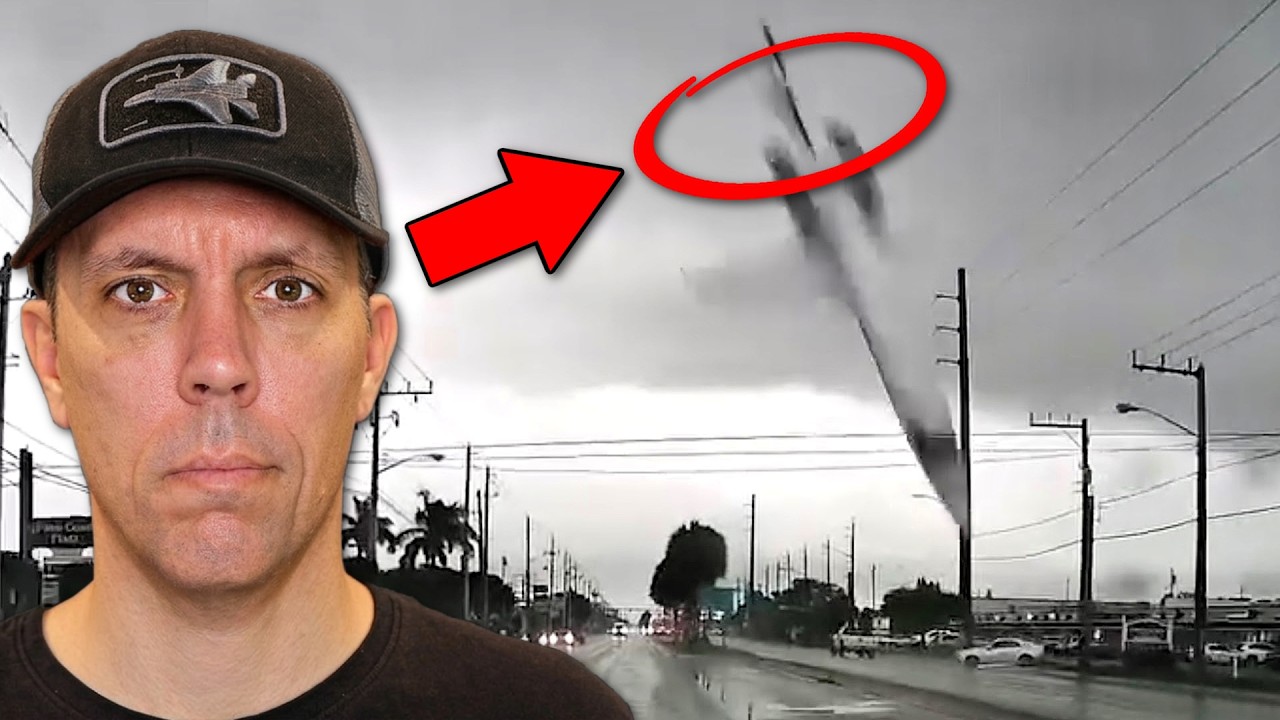 The Learjet Plane Crash Was Worse Than We Thought!
Things we can learn from the video
Press to jump
- 0:00Hoover warns about distressing online audio and explains his decision not to play it.
- 3:24Camera artifacts distort the dashcam image; Hoover also discusses an unconfirmed possibility that the horizontal stabilizer was missing.
- 14:06Radar overlays and controller communications trace the aircraft's routing around regional storms.
- 21:43Composite radar imagery does not necessarily represent the weather at the aircraft's flight altitude.
- 23:36The final communications include a climb request and reports of ice and moderate turbulence before the emergency.
- 35:40Hoover outlines the wreckage, recorders and transcripts investigators will examine; the cause remains unknown.
A storm map can show heavy precipitation without telling you exactly what an aircraft encountered at cruising altitude. That distinction is central to Hoover's Pilot Debrief analysis of the Learjet crash that killed nine people in Palm Beach County.
Using radar overlays, flight animations and radio transcripts, he follows the Bahamas-bound jet's route through an area of storms. The crew reported ice and moderate turbulence and requested a climb. An emergency declaration followed, then a rapid descent.
Hoover explains that composite radar imagery can be misleading when used to judge weather at a particular flight altitude. His reconstruction puts the weather advisories, heading changes and climb clearance into sequence, rather than treating a single radar image as an explanation for the crash.
He also examines the widely circulated dashcam footage. Camera shutter artifacts can distort the aircraft's appearance, he explains. Separately, he identifies signs that he believes suggest the horizontal stabilizer may have been missing, explicitly noting that this has not been confirmed. Structural failure, spatial disorientation and an aerodynamic stall remain possibilities he discusses, not findings.
The video has reached more than a million views, but its purpose is an early reconstruction, not a completed accident investigation. Hoover notes that he normally prefers to work from a full docket of evidence. He chooses not to play the distressing online audio, instead reading relevant communications.
His closing discussion turns to the wreckage, recorders and transcripts investigators will examine. "Nobody knows the real cause for why this happened at this point," he says.
Published on Trari
Where next?


 Is this your channel?For the channel's owners and team: a ready picture and text for your audience
Share the story with your audience. Everything is ready:
For an Instagram story or a WhatsApp status
For a community post or your channel's description
- Channel
- Pilot Debrief
- Subscribers
- 1,080,000 ▲ 10,000 this week
- Channel views, last 7 days
- 3,088,099
- Channel views, pace per day
- 1,519,802 (on a normal day: 400,199)
- Video published
- November 2, 2026
- Video views so far
- 1,122,805 (less than a day online)
- Video views, pace per day
- 2,001,081
The numbers
The extended analysis has reached more than a million views. Here are the video's audience figures.
