
 United States
 United Kingdom
 Canada
 Australia
 New Zealand
 Ireland
Captain Steeeve weighs ice and a thunderstorm in the Palm Beach Learjet crash
The retired airline captain replays the crew's radio calls line by line and explains what severe icing can do to a wing, while noting that no official cause has been determined.
 Captain Steeeve
Story of
No. 10 on the daily chartNo. 2 on the News chart
Why this story? The video opened at a pace of 4,334,974 views a day, 13 times a normal first day on this channel (336,674).
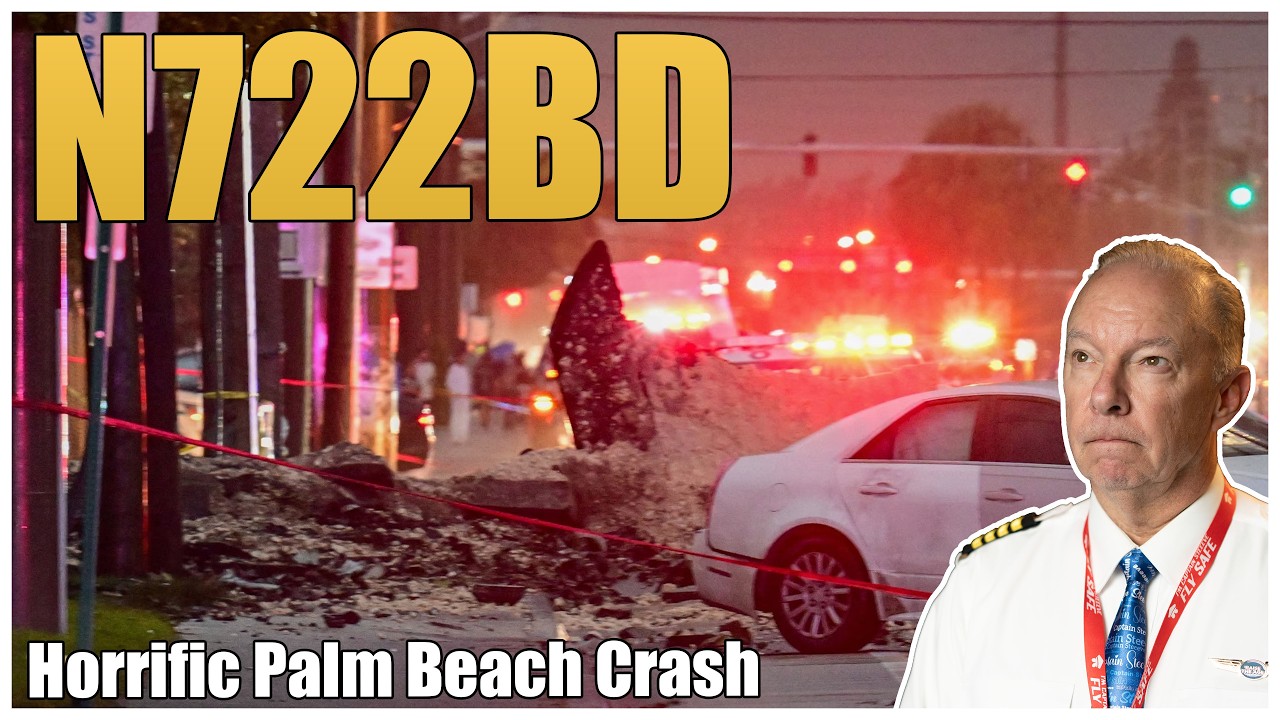 Understanding the Learjet Crash in Palm Beach | Captain Steeeve
Things we can learn from the video
Press to jump
- 0:17The flight: a Learjet 60 from Austin, Texas, to the Bahamas with nine people aboard.
- 1:27A warning before the dashcam footage and the co-pilot's distress audio.
- 7:29The radio calls replayed line by line, with altitude swings, radar storm cells and extreme temperatures.
- 12:59FAA rules require aircraft to stay at least 20 nautical miles away from thunderstorms.
- 15:28The four icing categories, and how supercooled large droplets can change a wing and cause a stall.
- 20:00Why the jet looked like a missile from the ground, a recap of known facts, and a closing reflection.
Captain Steeeve's recent uploads have mostly followed flights that ended safely at the gate: an Emirates A380 sent back to approach at JFK, a Delta 767 returning with an engine overheat, a Saudia crew calling for security over an unruly passenger. His latest is about a flight that did not end that way.
"Understanding the Learjet Crash in Palm Beach | Captain Steeeve" examines the November 1 crash of a Learjet 60 flying from Austin, Texas, to the Bahamas. All nine people aboard died. The video passed about 1.75 million views in its first seven hours. His regular videos usually draw around 340,000 in a full first day.
He warns viewers before showing two dashcam clips and playing the distress audio. He then replays the crew's transmissions one at a time, next to weather radar showing the flight path crossing severe thunderstorm cells near West Palm Beach. In those calls, the crew reports moderate turbulence, temperatures far below freezing, and altitude swings of several hundred feet. Captain Steeeve treats those swings as a warning sign: "If you can't maintain altitude plus or minus 700 feet, you don't really have full aircraft controllability."
From there he turns to the rules and the physics. "The FAA requires aircraft to avoid thunderstorms by 20 nautical miles or more," he says. He goes through the four FAA icing categories and explains how supercooled large droplets can change a wing's shape until it stalls. Near the end, he explains why witnesses on the ground thought the descending jet looked like a missile. The video's description says plainly that the NTSB investigation is ongoing and that his discussion of possible factors is not a conclusion about the cause.
Comments arrived more than ten times faster than on one of his usual first days. Many viewers write about the air traffic controller who stayed on the frequency with the crew, and about the co-pilot who kept reporting what was happening. Others say a weather delay looks different to them now. Captain Steeeve closes the video by turning to the families, and mentions that he prayed with his producer before signing off.
Published on Trari
Where next?



 Is this your channel?For the channel's owners and team: a ready picture and text for your audience
Share the story with your audience. Everything is ready:
For an Instagram story or a WhatsApp status
For a community post or your channel's description
- Channel
- Captain Steeeve
- Subscribers
- 1,240,000 ▲ 20,000 this week
- Channel views, last 7 days
- 2,423,712
- Channel views, pace per day
- 200,610 (on a normal day: 521,625)
- Video published
- November 2, 2026
- Video views so far
- 1,750,152 (less than a day online)
- Video views, pace per day
- 4,334,974
The numbers
A first day far beyond this channel's usual, and a comment section to match.
