
Home is a motorhome, but finding somewhere to park is harder
Young Israelis show how they work and live on wheels, trading apartment life for mobility, mechanical problems and encounters with parking inspectors.
 Israel
Why this story? One of כאן | חדשות - תאגיד השידור הישראלי's most watched videos since yesterday, with 36,591 views.
כאן | חדשות - תאגיד השידור הישראלי: The news division of Kan, Israel's public broadcaster. 806K subscribers and 1.8B views.
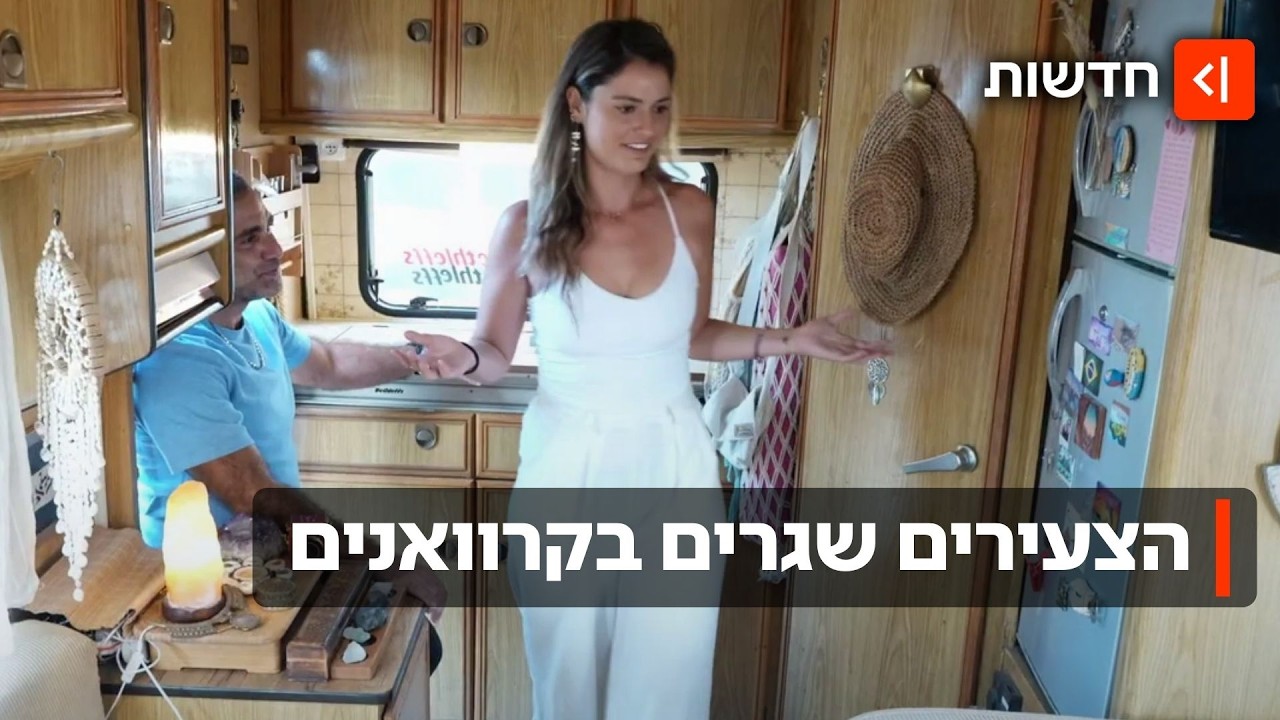 חיים על גלגלים: הצעירים שהפסיקו לרדוף אחרי דירה - ועברו לאוטוקרוואן
Things we can learn from the video
Press to jump
- 1:10Nissim's weekend-trip Fiat Ducato became her permanent home, which she calls Dreamy.
- 2:07Remote digital-marketing work lets Nissim earn a living from the motorhome.
- 3:49An electrical fault strands Sameach in Hadera, but his vehicle still provides his home.
- 5:03Sameach explains his move during engineering studies and his later volunteer work with the vehicle.
- 8:29A residents-only beach barrier introduces the parking restrictions; Bora then describes repeated removals by inspectors.
- 10:16Anan's converted truck contains a spacious shower, kitchen and large television, illustrating another version of vehicle-based living.
Peleg Nissim bought an old Fiat Ducato for weekend trips. It became her permanent home, complete with a sign welcoming visitors to the "Dreamy Hotel" and a Richard Clayderman cassette playing inside.
Nissim works remotely in digital marketing. For her, living beside nature offers something apartment life was missing. But the freedom to move does not always include permission to stop.
That tension runs through reporter Peleg Netanel's feature for Israel's Kan News, part of the Israeli Public Broadcasting Corporation. Its title translates as "Life on wheels: The young people who stopped chasing an apartment and moved into motorhomes." Rather than following vacationers, it meets working people who have made vehicles their everyday homes.
In Hadera, a coastal city north of Tel Aviv, industrial and management engineer Sagi Sameach is stuck in a parking lot with an electrical fault. He shows the vehicle's interior and explains that being immobilized does not leave him without a home: he is already inside it. He moved into a motorhome while studying, after career military service, and describes using it for volunteer work in communities near Gaza and in northern Israel after the war began.
The practical obstacles become clearer when Nissim reaches a beach entrance reserved for local residents. She describes the lack of clear rules and designated parking facilities. Another motorhome resident, Daniel Bora, recounts being repeatedly moved on by inspectors. An Ashdod municipal sign shown in the report explicitly prohibits placing motorhomes or caravans there.
The homes themselves vary considerably. Bar manager Niv Anan has converted an entire truck into living quarters with a spacious shower, kitchen and large television. He explains that he sees this as his way of life for the coming years, not a temporary excursion.
Viewers raise questions about dedicated sites with water, electricity and sewage connections, as well as whether this arrangement can work for families over the long term. The report finishes with a smaller distinction between mobility and access: Nissim reaches the beach on foot.
Published on Trari
Where next?



- Channel
- כאן | חדשות - תאגיד השידור הישראלי
- Subscribers
- 806,000 ▲ 1,000 this week
- Channel views, last 7 days
- 8,056,272
- Channel views, pace per day
- 1,634,620 (on a normal day: 1,096,545)
- Video published
- October 24, 2026
- Video views so far
- 143,172 (3 days online)
- Video views, pace per day
- 36,583 (on a normal day: 84,324)
The numbers
The report drew about 37,000 views since yesterday, placing it among Israel's most-watched news uploads over that period.

💡 Test your knowledge
Which instrument is Richard Clayderman best known for playing?
Richard Clayderman is a French pianist known for instrumental recordings including "Ballade pour Adeline."