
Caller challenges Praud's own bias after his France Info critique
A dispute over Sarah Knafo's interview becomes an argument about whether public funding creates different obligations for journalists.
 France
Why this story? One of Europe 1's most watched videos since yesterday, with 176,770 views.
Europe 1: A French radio station on air since 1955, owned by the Bolloré family's media group. 2.3M subscribers and 2B views.
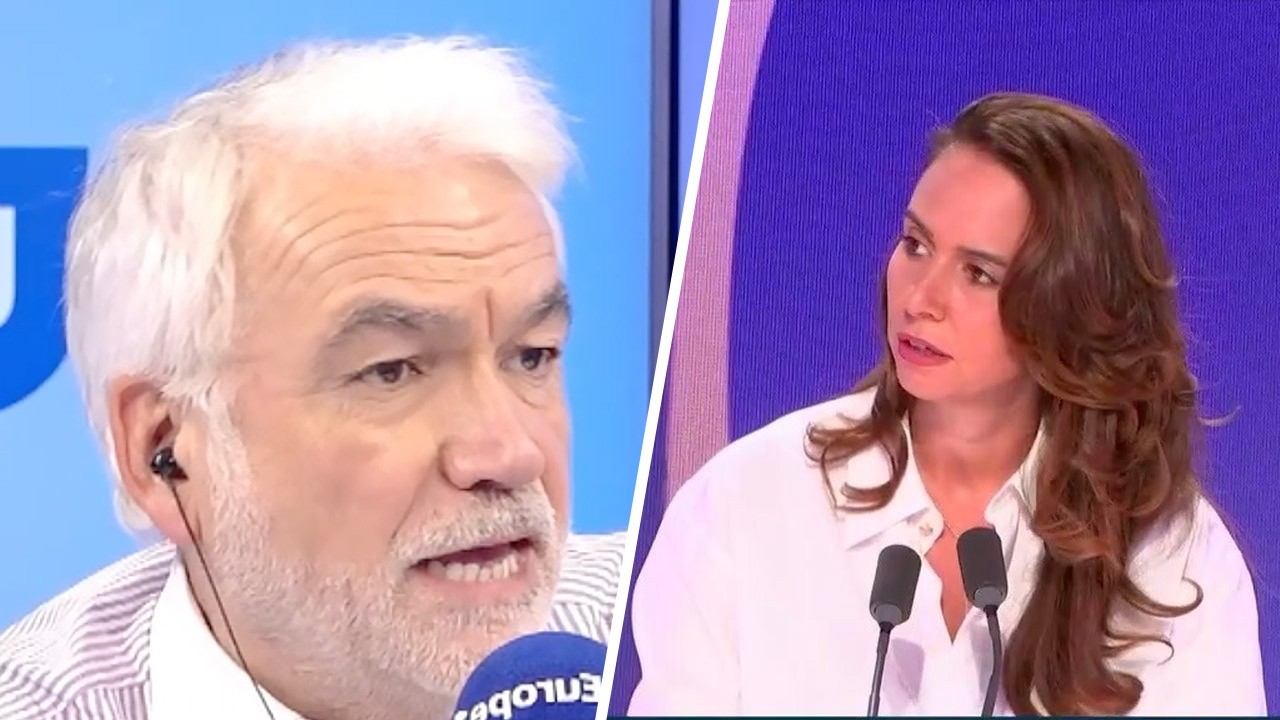 Pascal Praud contre les journalistes de France Info : “Ce sont des militants d’extrême gauche”
Things we can learn from the video
Press to jump
- 0:10France Info interviewers press Knafo about her posts and events in Trappes; she objects to their approach.
- 2:37Praud accuses the public-service journalists of ideological activism rather than impartial questioning.
- 6:36Caller Jean-Philippe challenges Praud's own right-wing bias; Praud distinguishes private-sector pay from public funding.
- 12:15Praud and Jean-Philippe dispute the political positioning of National Rally and La France Insoumise.
- 21:20Caller Éric urges Praud to invite ordinary citizens rather than the same political and communications professionals.
- 24:16Éric opposes politics as a lifelong profession; Praud argues that public administration requires experienced practitioners.
Jean-Philippe, a caller from Le Mans, agrees that Sarah Knafo's France Info interview was badly handled. But he challenges Pascal Praud on a separate point: doesn't Praud bring a right-wing bias to his own broadcasts?
That exchange shifts a radio segment on France's Europe 1 from criticism of another newsroom into a debate about impartiality, public money and who gets heard. Praud's answer is that his pay comes from the private sector, a distinction he treats as central to his criticism of public broadcasting.
The segment opens with excerpts from Knafo's October 28 interview with Simon Le Baron and Audrey Tison. Knafo is a member of the European Parliament for Reconquête, the far-right party founded by Éric Zemmour. The interviewers press her about her social media posts and events in Trappes, west of Paris.
In the excerpts, Knafo accuses the presenters of authoritarian behavior and preventing her from speaking. An interviewer raises Zemmour's court convictions. She also challenges the presenters to condemn what she calls anti-white racism.
Praud characterizes the questioning as ideological activism rather than journalism, accusing the interviewers of belonging to the far left. That is his assessment of their conduct. France Info is part of France's public broadcasting system, and he argues that taxpayers should not finance journalism he considers politically partisan.
Jean-Philippe's objection leads to a longer exchange about the political positioning of National Rally and La France Insoumise. A second caller, Éric, argues that portraying the right as unacceptable still influences the wider public, before turning his criticism toward the program's guest choices: Praud may have changed the conversation, he says, without changing who gets invited to speak.
Praud acknowledges the difficulty of hearing from the so-called silent majority and says he favors substantial individual interviews over group debates that descend into shouting. The closing disagreement concerns professional politicians: Éric argues that politics should be public service rather than a lifelong career; Praud responds that governing requires experienced people who understand public administration.
A French politician and member of Reconquête, elected to the European Parliament in 2024. She sits with the Europe of Sovereign Nations group.
More on Wikipedia ›A French rolling-news radio network operated by the public broadcaster Radio France, with involvement from France Télévisions.
More on Wikipedia ›A French far-right political party founded in 2021 by Éric Zemmour, who remains its leader.
More on Wikipedia ›A French far-right politician, writer and former television pundit. He finished fourth in the first round of France's 2022 presidential election.
More on Wikipedia ›A French far-right, nationalist party formerly called the National Front. It advocates sharp reductions in immigration and has been the largest single opposition party in the National Assembly since 2022.
More on Wikipedia ›Published on Trari
Where next?


- Channel
- Europe 1
- Subscribers
- 2,300,000
- Channel views, pace per day
- 401,798
- Video published
- October 28, 2026
- Video views so far
- 176,770 (less than a day online)
- Video views, pace per day
- 262,645
The numbers
The segment drew about 177,000 views since yesterday.

💡 Test your knowledge
In which legislature does Sarah Knafo serve?
Knafo was elected to the European Parliament for Reconquête in 2024.