
Trappes debate separates suspect's political history from proof of motive
Amaury Bucco and Karim Maloum disagree over how to interpret the suspect's background, while questioning the publication of unverified investigative details.
 France
Why this story? One of Europe 1's most watched videos since yesterday, with 35,007 views.
Europe 1: A French radio station on air since 1955, owned by the Bolloré family's media group. 2.3M subscribers and 2B views.
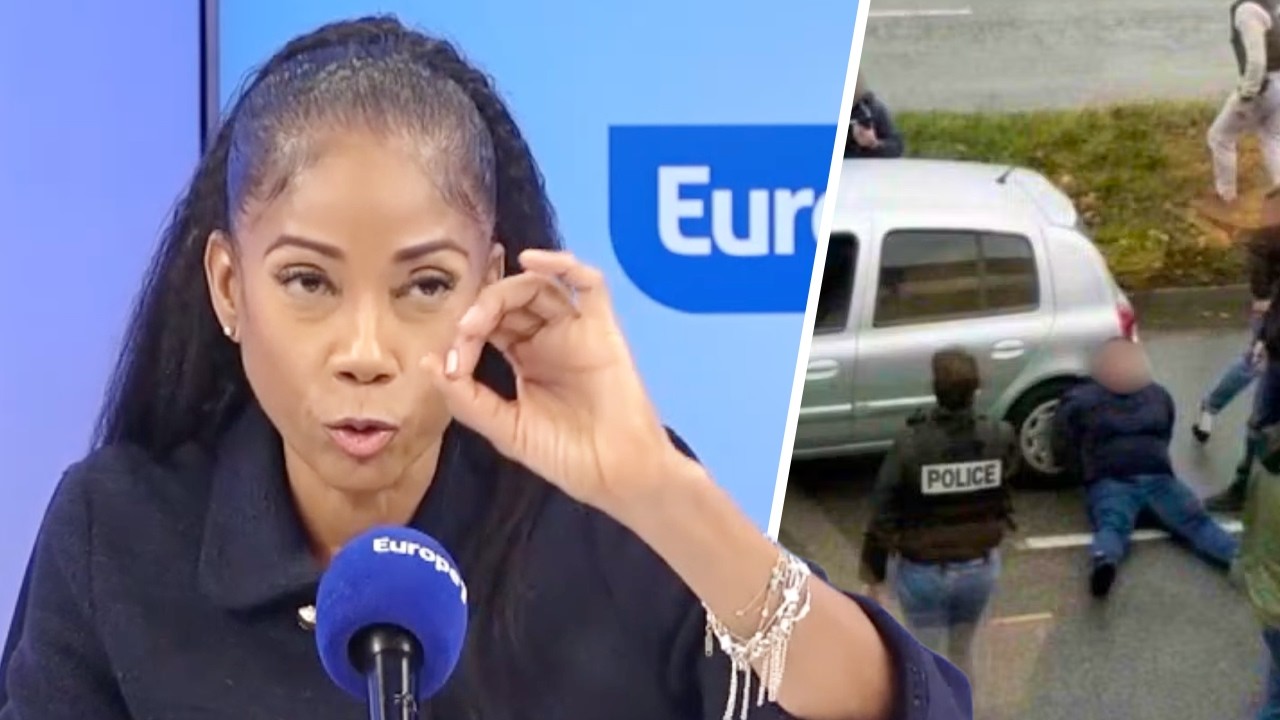 "Un petit Blanc de banlieue" : le profil du suspect de l’attentat de Trappes
Things we can learn from the video
Press to jump
- 0:43Bucco describes a reported trajectory from left-wing activism toward the far right, alongside insecurity and delinquency.
- 2:35The panel discusses books reportedly found at the suspect's home and his psychiatric condition.
- 5:25Maloum argues that terrorism has an ideological dimension even when mental illness or drug use is involved.
- 10:00The journalists dispute police leaks and unverified reporting, including the refuted claim about National Rally leaflets.
- 11:28A prosecutor's recording explains that police custody resumed following a psychiatric examination.
A reported shift from left-wing activism toward the far right does not settle the argument over the Trappes attack suspect's motives. In a discussion on France's Europe 1 radio station, journalist Amaury Bucco outlines that political trajectory, while fellow journalist Karim Maloum argues that terrorism necessarily has an ideological or political dimension, even when mental illness or drug use is involved.
Host Christine Kelly leads the discussion about the attack in Trappes, in the western outskirts of Paris. Bucco describes the suspect as a 39-year-old with a history of financial insecurity and delinquency, and says he was active on the left during the 2010s before moving toward the far right. These are the journalist's account of the suspect's background, not a judicial finding about the attack's motive.
The panel also discusses a Quran, a Bible and a copy of Mein Kampf reportedly found at his home, alongside a reported diagnosis of schizophrenia. Later, an audio excerpt from the anti-terrorism prosecutor explains that questioning resumed after a psychiatric examination found no symptoms of acute decompensation. That assessment concerns the suspect's condition during police custody; it does not resolve the ideological questions debated in the studio.
Bucco examines the speed with which anti-terrorism prosecutors took up the case and the significance of a possible racist motive. Maloum rejects the idea that psychiatric problems would necessarily exclude a political explanation.
Their disagreement becomes sharper over police leaks and media reporting, including a refuted assertion that National Rally leaflets were found in the suspect's vehicle. Maloum criticizes political and media figures for manipulating public opinion; Bucco emphasizes his work with police reports.
The upload is titled "\"Un petit Blanc de banlieue\" : le profil du suspect de l'attentat de Trappes", meaning "'A little white guy from the suburbs': The profile of the Trappes attack suspect." Its substantive discussion turns on a different question: which details establish a motive, and which remain background information or unverified assertions.
Trappes is a commune in the Yvelines department of northern France, about 27 kilometres west of central Paris, in the city's outer suburbs.
More on Wikipedia ›National Rally is a French far-right, nationalist party formerly called the National Front. It has been the largest parliamentary opposition party in the National Assembly since 2022.
More on Wikipedia ›Published on Trari
Where next?


- Channel
- Europe 1
- Subscribers
- 2,300,000
- Video published
- October 27, 2026
- Video views so far
- 35,007 (less than a day online)
- Video views, pace per day
- 40,587
The numbers
The discussion drew about 35,000 views since yesterday.
