
Marseille caller challenges media coverage in Praud's public-order debate
A listener's account of his old neighborhood turns into an argument about how suburbs are portrayed, before the discussion moves to social media restrictions.
 France
Why this story? One of Europe 1's most watched videos since yesterday, with 49,474 views.
Europe 1: A French radio station on air since 1955, owned by the Bolloré family's media group. 2.3M subscribers and 2B views.
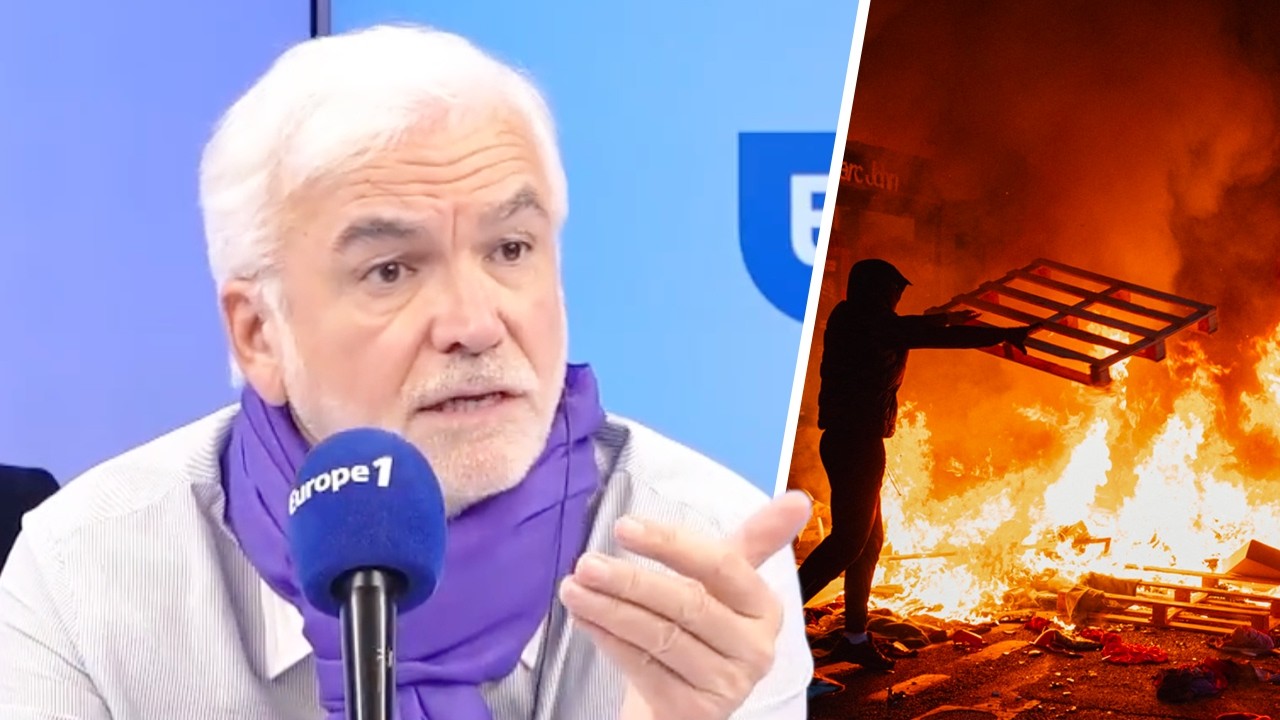 Pascal Praud se clashe avec un auditeur : “Vous avez inventé la mauvaise foi, vous !”
Things we can learn from the video
Press to jump
- 3:52Macron discusses maintaining public order without invoking a state of emergency.
- 5:08Police union representative Stanislas Gaudon calls for tougher sanctions against people who attack officers.
- 7:06Kamel describes changes in Marseille's Bellevue neighborhood, where he grew up.
- 12:35Kamel argues that media coverage should show suburban successes as well as problems.
- 16:27Praud challenges the contrast between Kamel's bleak account and his criticism of negative reporting.
- 20:00Macron's criticism of social media prompts debate about bans, regulation, anonymity and the organization of unrest.
Kamel describes a Marseille neighborhood he barely recognizes, then challenges journalists for showing only the darker side of places like it. Host Pascal Praud sees a contradiction: hasn't the caller just painted the same bleak picture himself?
That exchange anchors a filmed radio discussion from France's Europe 1, broadcast on Pascal Praud et vous. The episode addresses public order following demonstrations on October 17 and 24, combining presidential remarks, a police union representative's demands and a listener's account of neighborhood change.
Kamel, a truck driver from Marseille, recalls growing up in the city's Bellevue neighborhood. He describes what he considers its deterioration, including a police station he says is now barricaded, and deplores a loss of order and social diversity. But he also wants coverage of local successes, rather than an unrelentingly negative portrayal of the suburbs.
Around sixteen minutes into the clip, Praud challenges him over the contrast between those two arguments. The host's accusation of bad faith supplies the upload's title, but the conversation ranges well beyond their disagreement.
Earlier, the program plays French President Emmanuel Macron discussing the management of demonstrations without resorting to a state of emergency. Stanislas Gaudon, a national delegate for the Alliance Police nationale union, argues that the government's measures do not address underlying problems. He calls for tougher judicial treatment of people who attack police officers.
The final stretch turns to online platforms. In an audio excerpt, Macron argues that social media damages democracies by polarizing debate and encouraging violence. Praud agrees with the diagnosis but presses its implications: if platforms pose that danger, he argues, political consistency would require banning or suspending them.
Studio participants consider stricter regulation and ending online anonymity. Gaudon says platforms enable last-minute coordination of attacks and looting, and argues that an existing penalty barring participation in demonstrations is underused. He closes by defending police officers' daily work and criticizing La France Insoumise over its position on provisions governing police use of weapons.
A French police union formed in 1995 through the merger of unions representing uniformed officers and detectives.
More on Wikipedia ›A French left-wing to far-left political party launched in 2016 by Jean-Luc Mélenchon. It advocates an eco-socialist and democratic socialist programme.
More on Wikipedia ›Published on Trari
Where next?


- Channel
- Europe 1
- Subscribers
- 2,300,000
- Video published
- October 26, 2026
- Video views so far
- 49,474 (less than a day online)
- Video views, pace per day
- 72,893
The numbers
The discussion drew about 49,000 views since yesterday.
