
 United States
 United Kingdom
 Canada
 Australia
 New Zealand
 Ireland
Canada's budget faces a trade problem a Trump call cannot settle
Sunday Scrum's panel weighs tariff uncertainty, Poilievre's demands for relief and the limits of a closer European partnership.
Why this story? One of CBC News's most watched videos since yesterday, with 84,383 views.
CBC News: The news division of the CBC, Canada's public broadcaster. 4.8M subscribers and 3.4B views.
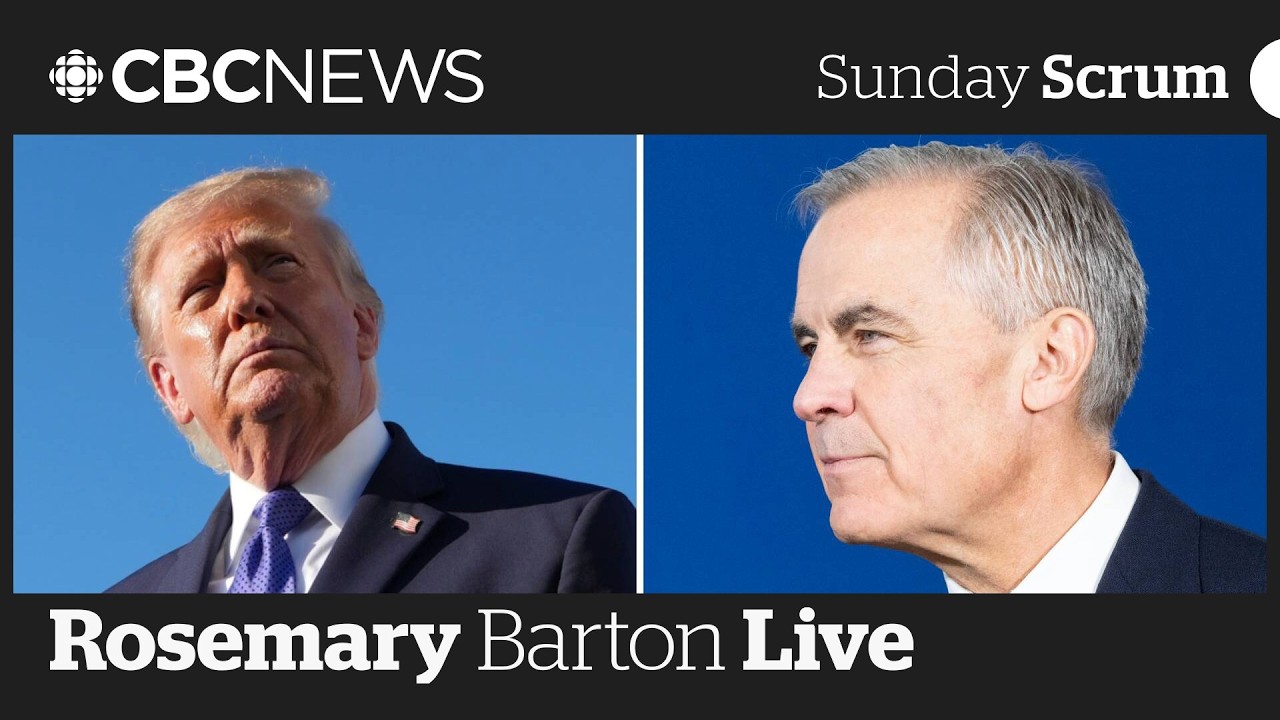 Sunday Scrum | Carney speaks with Trump ahead of budget day
Things we can learn from the video
Press to jump
- 1:58Wherry questions whether resumed Carney-Trump talks are producing substantive trade progress.
- 3:32Russo argues that steel and aluminum tariffs complicate the prospect of a bilateral deal.
- 5:50Tait describes the pressure of preparing Canada's budget amid unpredictable U.S. trade decisions.
- 8:08The panel considers Poilievre's demands for relief on fuel and living costs.
- 9:29Discussion turns to proposed EU associate membership and what a closer European partnership could deliver.
- 14:05Tait outlines Western Canadian concerns about moving trade priorities away from North American integration.
Preparing Canada's federal budget means making economic plans without knowing what Washington will do next. That is the pressure Carrie Tait identifies in the Canadian Broadcasting Corporation's CBC News discussion, following Prime Minister Mark Carney's report of a "good conversation" with U.S. President Donald Trump about trade.
Host David Common brings together Tait of The Globe and Mail, Aaron Wherry and The Economist's Rob Russo for Sunday Scrum. Their discussion moves beyond the diplomatic language to ask what renewed talks can actually deliver before Finance Minister François-Philippe Champagne tables his budget on November 5.
Wherry questions whether contact between the leaders amounts to substantive progress. Russo is more skeptical of Trump's interest in reaching an agreement, arguing that tariffs on Canadian steel and aluminum remain difficult to reconcile with talk of a bilateral deal. These are the panelists' assessments, not an announcement of a negotiated outcome.
Tait sees a reason to engage if Trump is willing to negotiate, but stresses the difficulty of building a budget around decisions Canada cannot control. "We can't predict and can't control a lot of our future, and I think that's got to be an incredible pressure," she says.
Domestic pressure comes from Opposition Leader Pierre Poilievre. An outdoor press-event clip shows him blaming Carney for higher grocery, gas and housing costs. The panel then considers his demands for tax relief on fuel and living expenses, and whether the government will adopt them.
The final part examines Canada's pursuit of closer European Union ties, including proposed "associate member" status. Wherry argues that what the partnership achieves matters more than its label. Russo describes a long-term undertaking rather than a quick substitute for American trade, while Tait brings in Western Canadian concerns about shifting away from North American economic integration. The discussion leaves the budget facing both tasks: managing immediate uncertainty and financing a less U.S.-dependent future.
Canada’s prime minister and Liberal Party leader since 2025. An economist, he previously led the Bank of Canada and the Bank of England.
More on Wikipedia ›A Liberal politician who has served as Canada’s minister of finance and national revenue since 2025.
More on Wikipedia ›Leader of Canada’s Conservative Party and the Official Opposition since 2022. He has represented Battle River—Crowfoot in Parliament since August 2025.
More on Wikipedia ›Published on Trari
Where next?


- Channel
- CBC News
- Subscribers
- 4,780,000
- Channel views, last 7 days
- 14,102,311
- Channel views, pace per day
- 2,197,308 (on a normal day: 2,217,619)
- Video published
- November 1, 2026
- Video views so far
- 84,383 (less than a day online)
- Video views, pace per day
- 150,242
The numbers
The Sunday Scrum discussion drew about 84,000 views since yesterday.

💡 Test your knowledge
Who is due to table the Canadian federal budget discussed by the panel?
The broadcast identifies Finance Minister François-Philippe Champagne as presenting the budget on November 5.