
 United States
 United Kingdom
 Canada
 Australia
 New Zealand
 Ireland
Polar vortex disruption does not guarantee UK snow, BBC explains
Simon King reports unusually early weakening of Arctic winds, but says its effects could take weeks to reach the weather below.
 BBC News
Story of
Why this story? One of BBC News's most watched videos since yesterday, with 498,443 views.
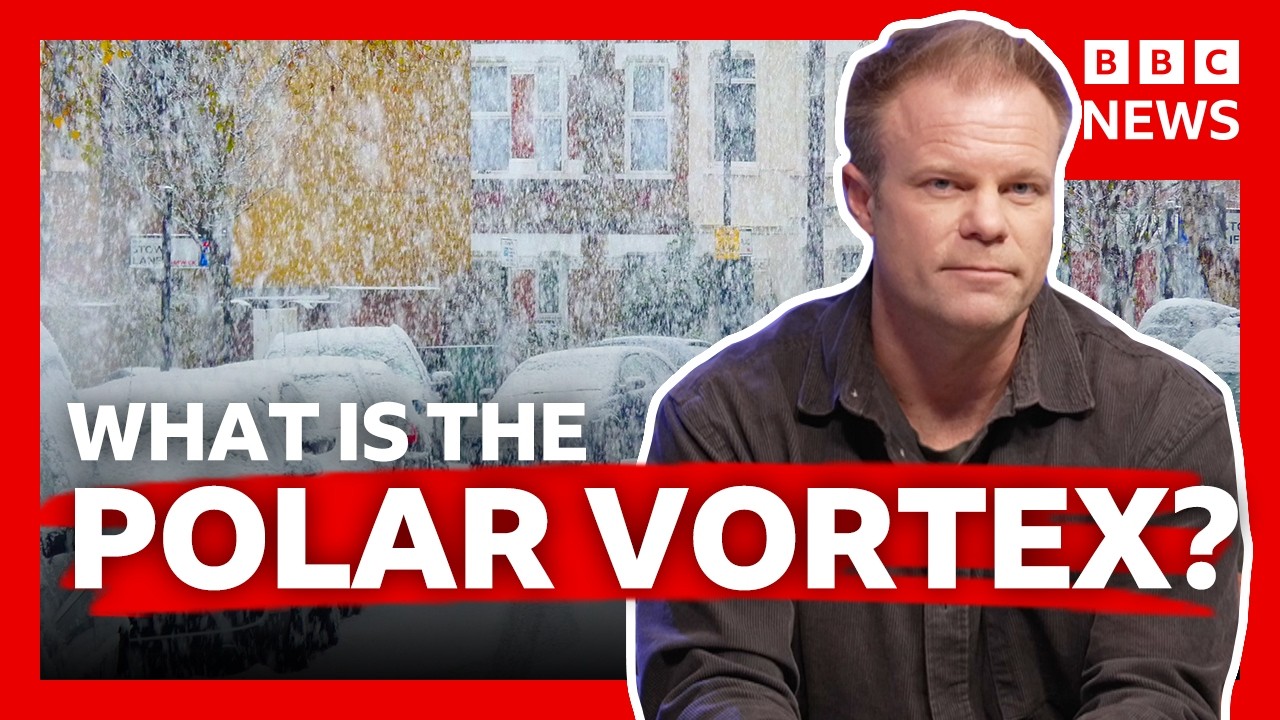 What is a polar vortex and how can you prepare? | BBC News
Things we can learn from the video
Press to jump
- 0:32Strong westerly winds high above the Arctic help contain cold air near the pole.
- 1:57King reports exceptionally early weakening and splitting of the polar vortex in November.
- 3:08Stratospheric changes can take four to six weeks to affect the jet stream below.
- 5:36A disrupted vortex can contribute to UK snow, but does not guarantee it.
- 7:00King explains how El Niño interacts with atmospheric waves and complicates the seasonal outlook.
- 8:07Preparation advice includes emergency food and water, with King stressing there is no need to panic.
Cold air escaping the Arctic is not the same as a snow forecast for Britain. In BBC News's polar vortex explainer, weather presenter Simon King reports an unusually early disruption high above the North Pole, while explaining why its consequences remain uncertain.
The vortex's strong westerly winds normally help contain cold Arctic air. King compares them to a fence. Atmospheric disturbances can warm the stratosphere and weaken those winds, potentially changing the circulation much farther below.
According to King's report, November's disruption has weakened the winds and split the vortex exceptionally early in the season. But this is not a storm travelling towards Britain: he explains that changes in the stratosphere can take four to six weeks to filter down to the jet stream.
Even then, snow is not assured. Blocking high-pressure systems can help bring cold air towards the UK, as King illustrates by recalling the 2018 Beast from the East. He also describes a competing influence from what the report calls an ongoing super El Niño, making the seasonal outlook harder to resolve.
The explainer drew roughly half a million views since yesterday, the largest audience over that period among BBC News's uploads from the past two days.
Its preparation section is deliberately restrained. "There's no need to panic right now," King says. He points to UK government advice about keeping emergency food and water, rather than treating a change in Arctic winds as a promise of severe weather.
Published on Trari
Where next?


 Is this your channel?For the channel's owners and team: a ready picture and text for your audience
Share the story with your audience. Everything is ready:
For an Instagram story or a WhatsApp status
For a community post or your channel's description
- Channel
- BBC News
- Subscribers
- 20,200,000
- Channel views, last 7 days
- 38,975,799
- Channel views, pace per day
- 5,386,078 (on a normal day: 5,274,692)
- Video published
- November 6, 2026
- Video views so far
- 631,683 (2 days online)
- Video views, pace per day
- 498,510 (on a normal day: 335,765)
The numbers
The polar vortex explainer was BBC News's most-watched new upload since yesterday.

💡 Test your knowledge
In which year did the UK's "Beast from the East" cold spell occur?
King recalls the 2018 Beast from the East when explaining how atmospheric disruption can contribute to UK snow.