
Fire ants build a living lifeboat on BBC Earth
David Attenborough's insect compilation joins a new Blue Planet III trailer among six uploads.
 BBC Earth
Story of
Why this story? The channel's weekly summary: what went up this week, what is drawing views now, and where the channel stands among similar channels.
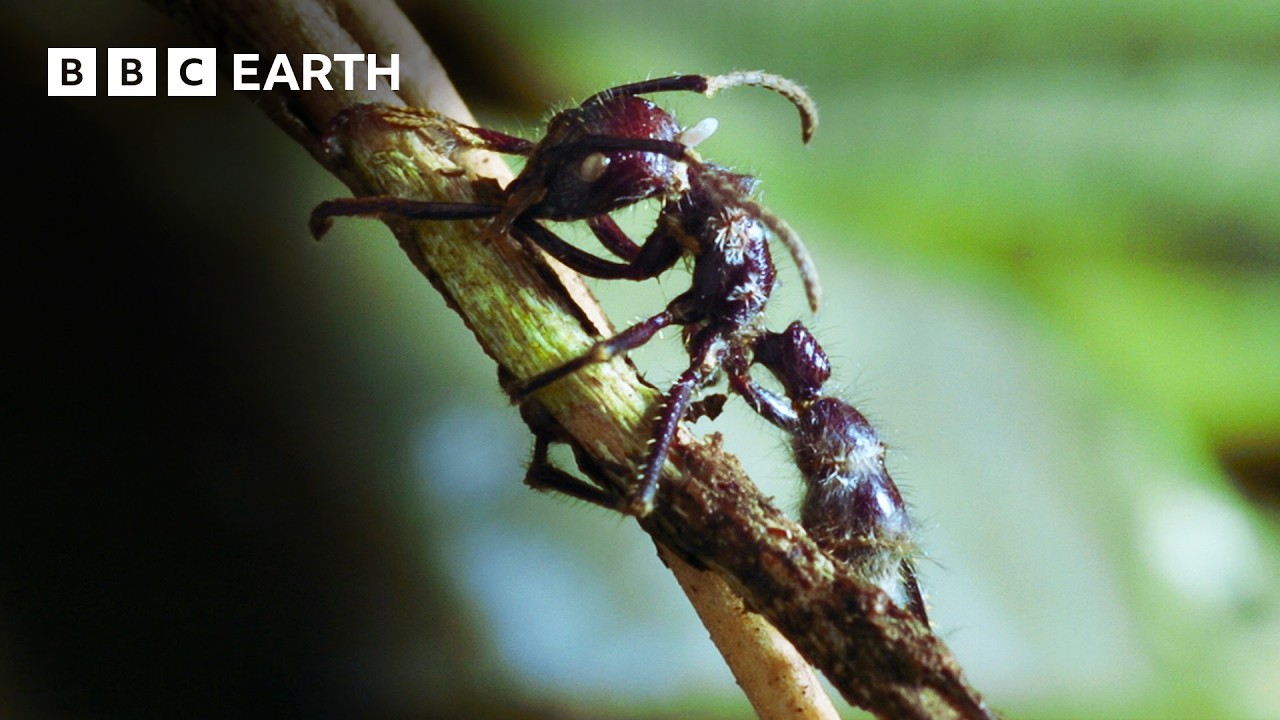 Nature's Tiny Terrors | BBC Earth
Things we can learn from the video
Press to jump
- 0:18Desert locust hoppers advance across dry landscapes, consuming vegetation as conditions support rapid growth.
- 3:29Fire ants evacuate larvae and link their bodies into a floating raft as floodwater rises.
- 8:15Hawaiian carnivorous inchworms use notches in leaves as ambush positions for catching insects.
- 10:33Attenborough explains insects' ecological importance and introduces a Priam's birdwing butterfly.
- 30:43Male orchid bees collect fragrant oils from orchids to create scents that attract mates.
- 36:06Giant cliff bees produce coordinated shimmering waves to deter hornets before local climbers harvest honeycomb.
Small creatures, elaborate survival plans. In "Nature's Tiny Terrors | BBC Earth," fire ants respond to rising water by moving their larvae and locking their bodies together into a floating raft. It's a striking example of cooperation in a compilation that also finds room for locust swarms and ambush-hunting Hawaiian inchworms.
The upload was BBC Earth's most-watched new release of the week, reaching roughly 336,000 views. Its title promises menace, but David Attenborough supplies a gentler interlude with a Priam's birdwing butterfly: "Butterflies lift the heart." Viewers discuss the ant raft, the locusts' appetite and the contrast between tiny bodies and formidable survival tools.
There was plenty beyond insects across the six uploads. Esther Bonney, co-founder of Nurture Nature, explains how native planting supports local wildlife. A four-hour compilation offers an extended nature watch, while "Blue Planet III Official Trailer" introduces more stories beneath the ocean's surface.
The newest Attenborough compilation, "Two Hours of Nature's Majestic Creatures Narrated by Sir David Attenborough | 4K UHD | BBC Earth," currently draws the most daily views among the channel's active videos. Its subjects include venomous man o' war tentacles and the sword-billed hummingbird's nectar-reaching beak. Just behind it is the previous week's "Extraordinary Big Cat Moments | BBC Earth," with "Nature's Tiny Terrors | BBC Earth" also remaining busy.
BBC Earth added about eight million views over the week, almost exactly matching WIRED's weekly addition, while National Geographic had a larger week. Subscribers held steady, and BBC Earth's current daily viewing is below its usual pace. For now, the freshest viewing momentum belongs to that long Attenborough journey from drifting ocean predators to remarkably specialized birds.
Published on Trari
Where next?


What viewers say
That fire ant raft is pure genius – like a living, breathing life jacket made by the smallest wild animals!
@animalessalvajes_ESSee it on YouTubeSome of nature’s scariest creatures are the ones you could accidentally step over.
@UntamedSignaSee it on YouTubeEvolution’s version of a bug superhero team
@WildScope360-n7jSee it on YouTube
7 more comments
This documentary reminds me how even the tiniest creatures have epic stories—thank you to the whole team for showing us that nature’s drama isn’t just on the big scale but in the minutiae as well.
@WildSphere-p5ySee it on YouTubeThe visuals are stunning, but what impressed me most was the storytelling. You can really feel the tension and emotion in every encounter.
@wildnaturedocumentaryusSee it on YouTubeIt’s fascinating how the most vibrant and beautiful creatures in the forest are often the most deadly. Nature's warning colors are no joke.
@WildDocs88See it on YouTubeThese tiny creatures are exactly why I love and fear nature at the same time! How can something so small be so unbelievably powerful? 😳
@HarpyEagle_NSSee it on YouTubeSeeing how locusts’ development speeds up with good conditions reminds me that life always finds a way to seize opportunity.
@TierweltDoku-i2vSee it on YouTubeThis proves that every creature has its own strengths. You don't need to be big or powerful to earn your place in nature. Absolutely fascinating! 👏
@wildzoneusSee it on YouTubeI’d rather face a full-grown lion on the savanna than some of these tiny insects. At least you can see a lion coming!
@gaiadocsENSee it on YouTube
Public comments from the video's page on YouTube
 Is this your channel?For the channel's owners and team: a ready picture, text and badge for your audience
Share the story with your audience. Everything is ready:
For an Instagram story or a WhatsApp status
For a community post or your channel's description
For your website

You may use the picture, the badge, and link it to this story.
The videos drawing views on BBC Earth right now
 The surprising power of native plants 🪻 #BBCEarth #FixingThePlanet #…163,876 views · 2026-10-15
 4 Hours of Spectacular Nature Scenes | 4K UHD | BBC Earth70,213 views · 2026-10-16
 Two Hours of Nature’s Majestic Creatures Narrated by Sir David Attenb…32,760 views · 2026-10-21
 Can This Baby Caribou Outrun An Arctic Wolf? | 20 Years of Planet Ear…30,206 views · 2026-10-16
 Blue Planet III Official Trailer5,001 views · 2026-10-21
 Extraordinary Big Cat Moments | BBC Earth387,679 views
- Channel
- BBC Earth
- Subscribers
- 14,600,000
- Channel views, last 7 days
- 8,223,699
- Videos published this week
- 6
- Video published
- October 15, 2026
- Video views so far
- 336,009
- Views on its first day
- 69,823
The numbers
Here's BBC Earth's week in views, subscribers and new uploads.

💡 Test your knowledge
Where does BBC Earth's compilation find carnivorous inchworms ambushing insects?
The compilation shows carnivorous inchworms hunting among Hawaiian ferns.