
Erdoğan defends Libya maritime deal as panel weighs Egypt opening
The Turkish discussion centers on competing Mediterranean boundary claims and the prospect of further negotiations with Cairo.
 Turkey
Why this story? One of A Haber's most watched videos since yesterday, with 16,388 views.
A Haber: A Turkish news channel on air since 2011, owned by the Turkuvaz media group, which is close to President Erdogan's government. 1.5M subscribers and 1.6B views.
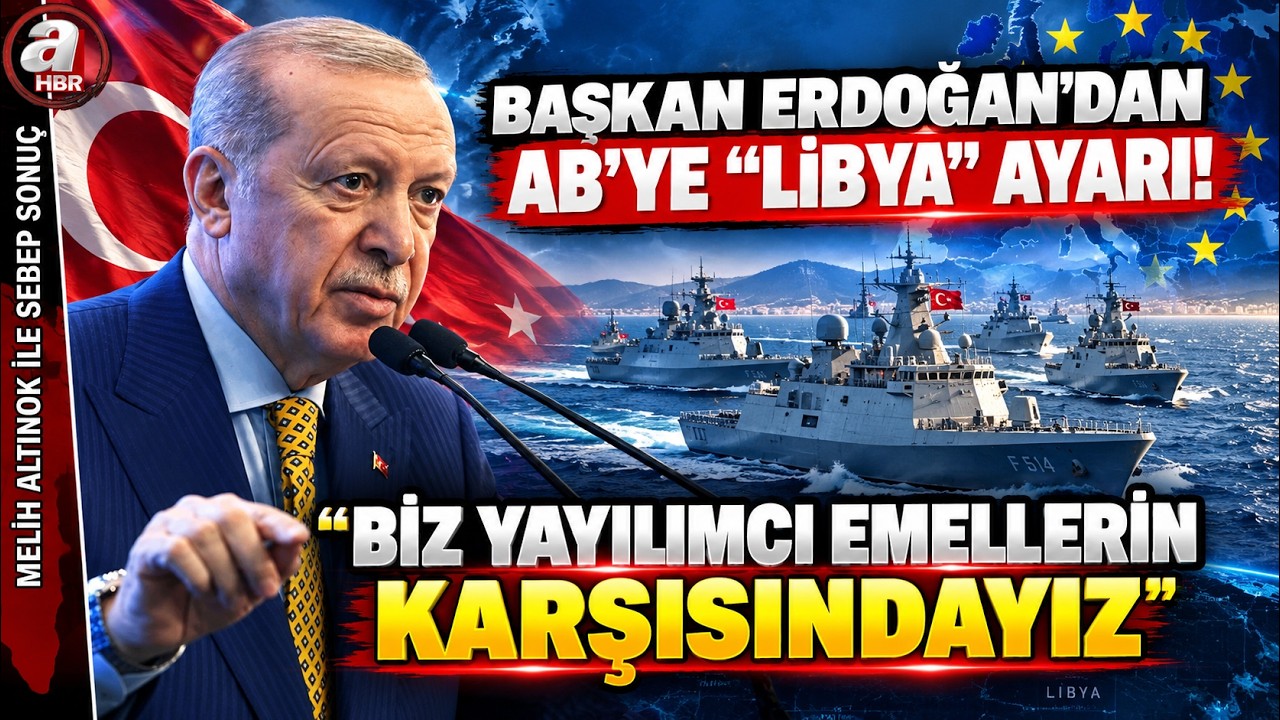 Başkan Erdoğan'dan AB'ye "Libya" Ayarı! | A Haber
Things we can learn from the video
Press to jump
- 0:35Erdoğan says Turkey's Eastern Mediterranean policy is clear and is not intended to score points against others.
- 2:48Orallı uses a studio map to argue that Turkey has overcome restrictive maritime claims.
- 4:00Orallı defends the Libya agreement and challenges the Greece-Egypt boundary arrangement concerning Crete.
- 7:02The discussion considers Russia's involvement in Libya, Wagner and Haftar's shifting position.
- 7:42Sohtaoğlu describes Egypt's slow bureaucracy and considers future maritime negotiations, including prospects along the 28th meridian.
Turkey's maritime agreement with Libya remains central to Ankara's position in the Eastern Mediterranean, while negotiations with Egypt could offer another diplomatic opening: those are the main arguments in a discussion broadcast by Turkey's A Haber.
The segment, from Melih Altınok's program "Sebep Sonuç," begins with footage of President Recep Tayyip Erdoğan's cabinet-meeting remarks. Erdoğan says Turkey's Mediterranean policy is clear and is not about scoring a goal against someone else. He also delivers a separate domestic message, saying the country cannot be surrendered to the streets, following the host's introduction about European protests.
The maritime argument takes shape at the studio's interactive map. Academic and legal expert Levent Ersin Orallı presents the 2019 Turkey-Libya agreement as a way of overcoming boundaries that, in his account, would severely restrict Turkey's maritime reach. He contrasts it with the so-called Seville Map, a depiction of maritime zones that Ankara rejects. His description of Turkey escaping those constraints is an argument about competing claims, not the lifting of an established legal boundary.
Orallı then challenges the Greece-Egypt maritime agreement and the treatment of Crete, arguing that Greece is not an archipelagic state. The underlying dispute concerns how coastlines and islands should affect the division of maritime areas and seabed rights. The broadcast presents the Turkish legal position rather than a negotiated resolution of those disagreements.
Altınok broadens the discussion to changing regional relationships, including Russia's involvement in Libya, the Wagner group and eastern Libyan military leader Khalifa Haftar. Middle East specialist Mete Sohtaoğlu then turns to Egypt, describing its bureaucracy as slow-moving and discussing possible developments along the 28th meridian in 2027.
The closing exchange recalls earlier Turkish defense-ministry proposals about the maritime area Egypt might gain through an agreement with Ankara. Sohtaoğlu points toward further diplomacy; the segment does not announce a new Turkey-Egypt boundary agreement.
Turkey’s president since 2014 and previously its prime minister from 2003 to 2014. He co-founded the Justice and Development Party (AKP).
More on Wikipedia ›Commander of the Tobruk-based Libyan National Army (LNA) and the de facto ruler of eastern Libya since early 2017.
More on Wikipedia ›Published on Trari
Where next?


- Channel
- A Haber
- Subscribers
- 1,480,000
- Video published
- October 26, 2026
- Video views so far
- 16,388 (less than a day online)
- Video views, pace per day
- 30,321
The numbers
The discussion drew about 16,000 views since yesterday.

💡 Test your knowledge
Which city did Recep Tayyip Erdoğan serve as mayor before becoming prime minister?
Erdoğan served as mayor of Istanbul from 1994 to 1998.