
Israel's skilled-worker exodus adds another stake to its election
A Japanese election special examines why some Israelis are considering leaving, alongside Netanyahu's durable support and the obstacles to replacing him.
 JapanStory of
Why this story? One of TBS NEWS DIG Powered by JNN's most watched videos since yesterday, with 137,728 views.
TBS NEWS DIG Powered by JNN: The news channel of JNN, a Japanese news network led by TBS. 3.4M subscribers and 5.7B views.
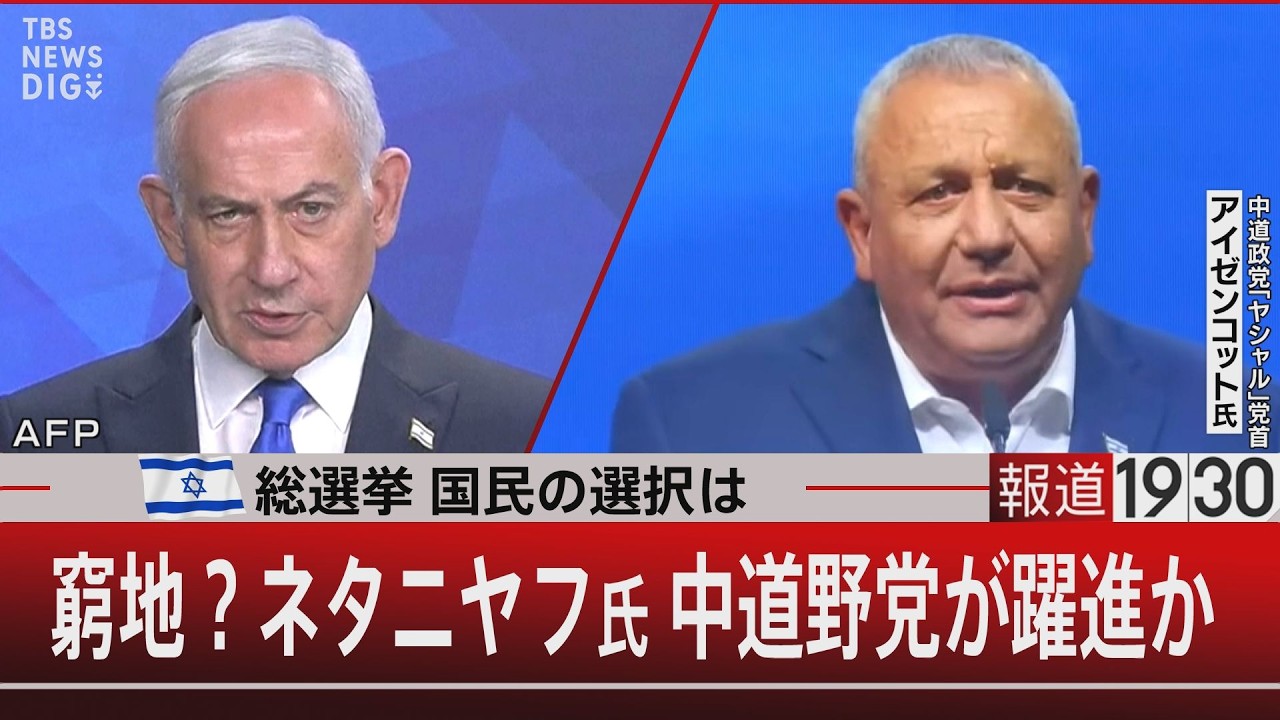 イスラエル総選挙 国民の選択は窮地?ネタニヤフ氏 中道野党が躍進か【10月27日(火) #報道1930】
Things we can learn from the video
Press to jump
- 14:15Kazuto Suzuki argues that trust in Netanyahu and security leadership matter more than policy differences in this election.
- 20:08A political timeline explains repeated elections and Netanyahu's survival through coalition breakdowns.
- 34:22Jerusalem market interviews connect enduring Netanyahu support with historical inequalities and Mizrahi grievances.
- 43:38The panel examines how reluctance to partner with Arab-majority parties could prevent a governing majority.
- 51:56Israelis considering emigration describe war fatigue and social tensions, with Greece and Cyprus among possible destinations.
- 54:21Economist Esteban Klor warns that skilled-worker departures threaten the country's technology sector and economic foundations.
For Israelis considering a move abroad, the election raises a question beyond who becomes prime minister: whether they still see a future at home.
That concern closes an extended election special from Japan's TBS NEWS DIG Powered by JNN, the Japan News Network. Its BS-TBS program, Hodo 1930, follows political divisions from coalition negotiations to households weighing emigration after prolonged war and social tension.
Jerusalem-based video producer Matan Gladshtein describes exhaustion with living amid war and is considering leaving. The report identifies Greece and Cyprus as possible destinations for emigrants and describes resentment over preferential treatment for ultra-Orthodox communities. Hebrew University economist Esteban Klor warns that losing highly skilled workers, particularly from technology industries, threatens Israel's economic foundations.
The program connects those decisions to an election it presents as a judgment on Benjamin Netanyahu's leadership after the Hamas-led attacks of October 2023. His principal challenger, Yashar leader Gadi Eisenkot, is a former military chief of staff. University of Tokyo international politics professor Kazuto Suzuki argues that the central question is confidence in Netanyahu and who is better equipped to provide security, rather than a sharply defined policy contest.
Campaign footage contrasts Eisenkot's appeals for a change of government with Netanyahu's emphasis on confronting Iran and an endorsement from US President Donald Trump. Reporting from a Tel Aviv polling station, correspondent Satoshi Masuo describes unusually high early turnout.
The broadcast's seat forecasts leave both main blocs short of a majority. Suzuki and fellow commentator Shinsuke Tsutsumi examine Netanyahu's record of surviving fragmented parliaments through bargaining and alliances. Journalist Taichi Soga recalls the failed power-sharing arrangement with Benny Gantz in 2020, arguing that Netanyahu used the budget impasse to bring about another election.
But arithmetic alone does not explain his support. Interviews in a Jerusalem market explore loyalty among Mizrahi Jews, whose family origins lie in the Middle East and North Africa. The report links that loyalty to historical inequalities and grievances, while also examining controversy over a pro-Netanyahu television host's derogatory remarks about Eisenkot's Moroccan background.
Arab-majority parties could hold the balance, the panel says, but resistance to governing alongside them could obstruct a coalition and produce another election. Soga also raises the possibility that renewed tension with Iran could give Netanyahu an argument for a unity government. The closing emigration report shows the personal decisions unfolding alongside that political uncertainty.
Leader of Israel's Yashar party and Netanyahu's main challenger in the 2026 election. He headed the Israeli military from 2015 to 2019 and served in the unity government from 2023 to 2024.
More on Wikipedia ›Published on Trari
Where next?



- Channel
- TBS NEWS DIG Powered by JNN
- Subscribers
- 3,420,000
- Video published
- October 27, 2026
- Video views so far
- 137,728 (less than a day online)
- Video views, pace per day
- 188,588
The numbers
The election special drew about 138,000 views since yesterday.
