
Saudi analyst sees Tehran talks as last chance to avert strikes
Hamoud al-Ruwais interprets the military and security delegations' visit as a warning to Iran, while Riyadh describes an effort to reduce tensions.
 Arab worldStory of
Why this story? One of سكاي نيوز عربية's most watched videos since yesterday, with 24,703 views.
سكاي نيوز عربية: An Arabic news channel broadcasting from Abu Dhabi since 2012. 7.4M subscribers and 3.9B views.
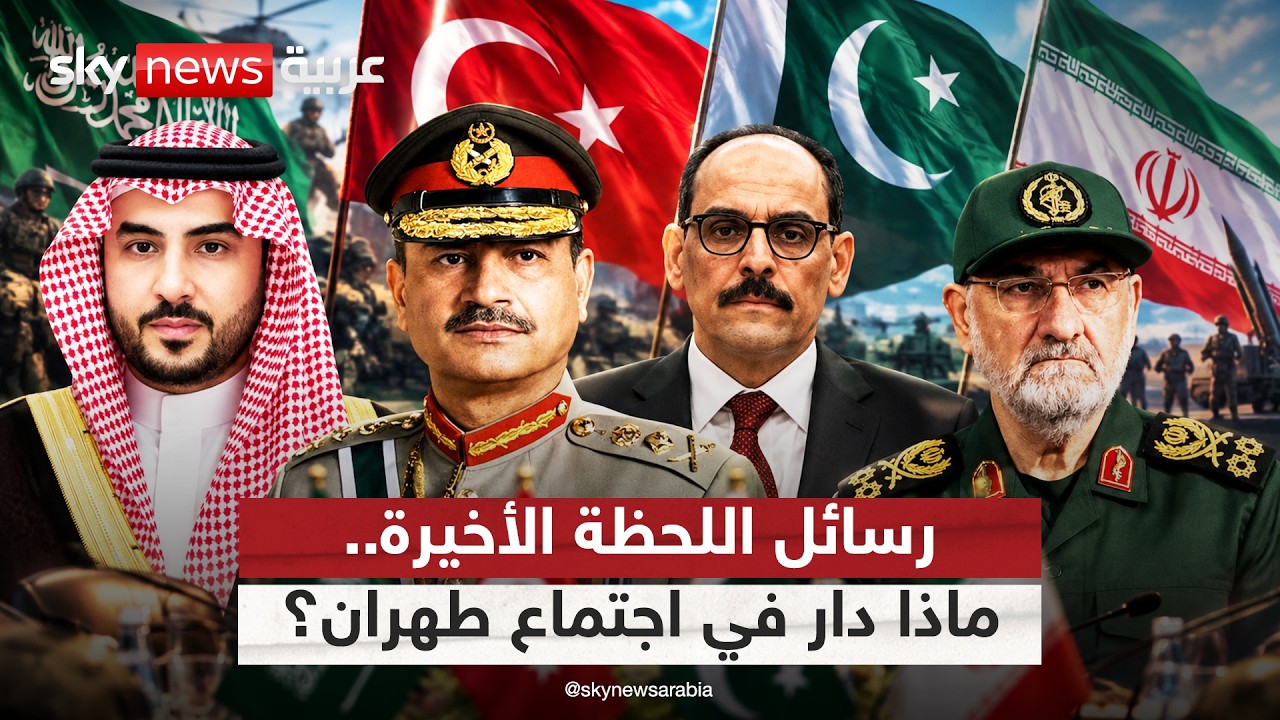 ماذا بحثت وفود السعودية وتركيا وباكستان الأمنية والعسكرية في إيران؟ | #التاسعة
Things we can learn from the video
Press to jump
- 1:00Pezeshkian signals readiness for deeper regional cooperation; Riyadh describes the talks as an effort to reduce tensions.
- 3:40Al-Ruwais compares the delegations' mission with attempts to avert war before the liberation of Kuwait in 1991.
- 5:15He interprets the visit as a final warning before possible US military action, rather than announcing a confirmed strike.
- 6:40The discussion examines American demands concerning Iran's nuclear program and the surrender of uranium.
- 11:19Al-Ruwais argues that continued Houthi attacks prevent Iranian appeals for cooperation from rebuilding Saudi trust.
The presence of military and security delegations, rather than diplomats alone, is central to Saudi political researcher Hamoud al-Ruwais's reading of the Tehran talks: he sees an attempt to persuade Iran to change course before possible American strikes.
Speaking from Cairo on United Arab Emirates-based Sky News Arabia, al-Ruwais describes the visit by Saudi, Turkish and Pakistani representatives as a final opportunity to contain escalation. That is his assessment, not an announcement of an American attack.
The report first sets out the public positions. Saudi Arabia says the discussions aim to reduce tensions. Iranian President Masoud Pezeshkian says Tehran is prepared to deepen regional cooperation and resolve differences. The bulletin also carries reports that Washington is reviewing plans to strike Iranian targets and that Houthi missiles have been intercepted.
Al-Ruwais draws a comparison with the delegations that traveled to Baghdad before the 1991 war to liberate Kuwait. In his interpretation, the visitors to Tehran are similarly trying to communicate the seriousness of an approaching confrontation and offer a way out. The discussion turns to American demands concerning Iran's nuclear program, including the surrender of uranium, which he presents as a central obstacle to avoiding further military action.
The interview then tests Pezeshkian's appeal for regional unity against the question of trust. Al-Ruwais places it in a longer history of Iranian regional initiatives, reaching back to the Doha summit in 2007. He argues that declarations of cooperation cannot repair relations with Gulf states while Houthi attacks on Saudi Arabia continue. For him, the test of the Tehran meeting is a change in conduct, not another statement of regional solidarity.
Iran’s president since 2024, Pezeshkian is a politician and heart surgeon associated with the country’s reformist faction.
More on Wikipedia ›Published on Trari
Where next?



- Channel
- سكاي نيوز عربية
- Subscribers
- 7,400,000
- Video published
- October 26, 2026
- Video views so far
- 24,703 (less than a day online)
- Video views, pace per day
- 45,057
The numbers
The report and interview drew about 25,000 views since yesterday.
