
Eisenkot's inquiry pledge marks a divide after Israeli polls close
The election-night report contrasts a promised independent October 7 investigation with security policies it describes as hawkish on both sides.
 SpainStory of
Why this story? One of RTVE Noticias's most watched videos since yesterday, with 18,768 views.
RTVE Noticias: The news division of RTVE, Spain's public broadcaster. 2.7M subscribers and 2B views.
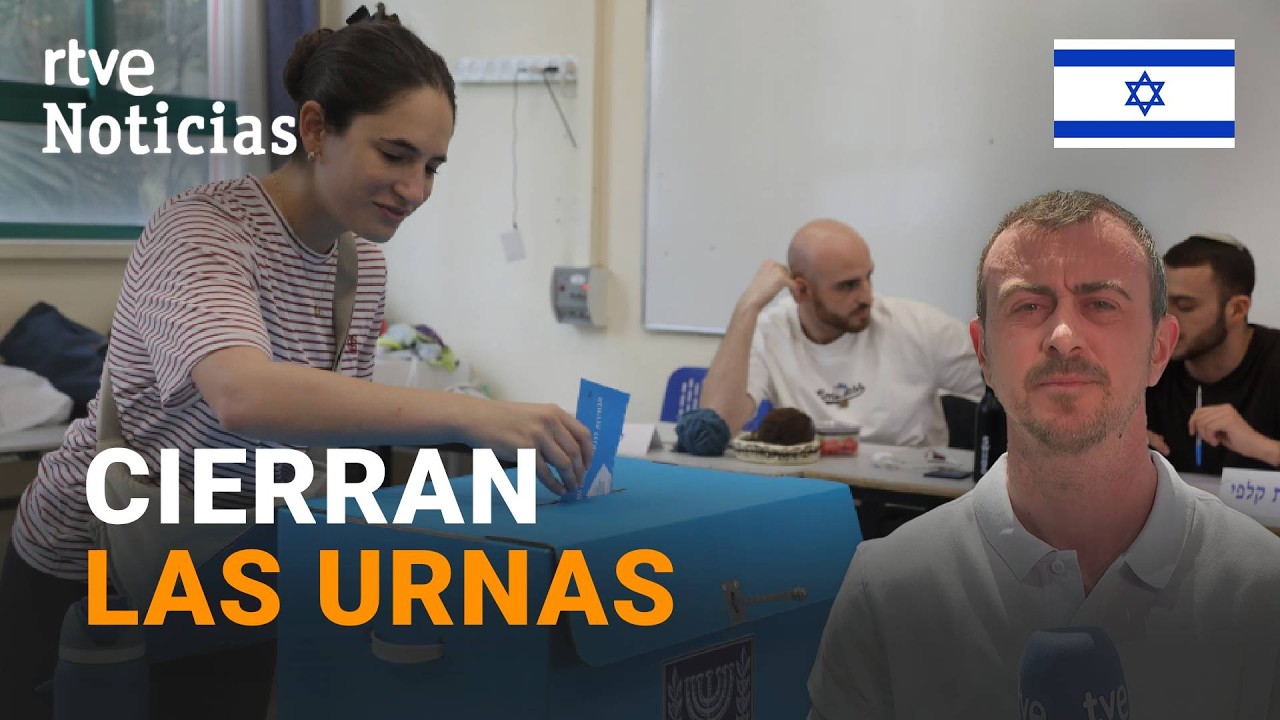 Elecciones en Israel | Los colegios electorales cierran tras una jornada con participación récord
Things we can learn from the video
Press to jump
- 0:22Initial exit polls put Likud ahead of Eisenkot's Yashar as an individual party.
- 0:52The opposition bloc could be larger, leaving Arab parties pivotal to forming a majority.
- 1:24Eisenkot promises an independent investigation into October 7, a distinction emphasized in the candidate comparison.
- 2:05The report describes Eisenkot's security outlook as hawkish despite his criticism of West Bank settlers.
- 2:58Campdelacreu offers possible Netanyahu responses to deadlock, including opposition defections; none is presented as a confirmed plan.
Gadi Eisenkot's promise to establish an independent investigation into the October 7 attacks is one of the clearest distinctions drawn between him and Benjamin Netanyahu in an election-night report from Spain's public broadcaster, Radiotelevisión Española (RTVE Noticias).
Reporting from Jerusalem after polling stations closed, correspondent Marc Campdelacreu says the first exit polls put Netanyahu's Likud ahead of Eisenkot's Yashar as an individual party. But the combined opposition could exceed Netanyahu's bloc, leaving Arab parties pivotal to assembling a governing majority. These are preliminary projections, not a final result or an agreement to form a government.
Eisenkot, a former Israeli military chief, has pledged an independent commission examining October 7. In a recorded contribution, Arab and Islamic studies professor Ignacio Álvarez Ossorio discusses the political consequences and investigations that could follow if Eisenkot forms a government.
The report nevertheless cautions against treating the choice as one between a hawk and a dove. It describes both candidates as hawkish, examines Eisenkot's military background and his association with the Dahiya doctrine of overwhelming military force, and contrasts his criticism of Israeli settlers in the occupied West Bank with his view of Iran as a threat. The distinction it presents is therefore not simply between a hard-line incumbent and a conciliatory alternative.
Asked what happens if neither bloc can assemble sufficient support, Campdelacreu outlines three possible Netanyahu responses: questioning the election's legitimacy, seeking defectors from the opposition, or escalating military tensions with Iran. These are the correspondent's scenarios, not confirmed decisions or evidence that any such course is underway.
At the close of the broadcast, the central uncertainty remains parliamentary: leading the largest party would not, by itself, guarantee Netanyahu enough support to continue governing.
Leader of Israel's Yashar party and Netanyahu's main challenger in the 2026 election. He headed the Israeli military from 2015 to 2019 and served as a minister without portfolio from 2023 to 2024.
More on Wikipedia ›A major right-wing Israeli political party founded in 1973. Its 1977 election victory ended the left's hold on power.
More on Wikipedia ›Published on Trari
Where next?


- Channel
- RTVE Noticias
- Subscribers
- 2,690,000
- Video published
- October 27, 2026
- Video views so far
- 18,768 (less than a day online)
- Video views, pace per day
- 38,987
The numbers
The election-night report drew about 19,000 views since yesterday, placing it among Spain's most-watched new news videos.

💡 Test your knowledge
From which city does Marc Campdelacreu deliver this election-night report?
Campdelacreu reports live from Jerusalem as the first exit polls emerge.