
 United States
 United Kingdom
 Canada
 Australia
 New Zealand
 Ireland
Max Afterburner explains Mach tuck in Florida Learjet analysis
His explanation of a high-speed nose-down tendency comes late in the video, with the crash's cause still undetermined.
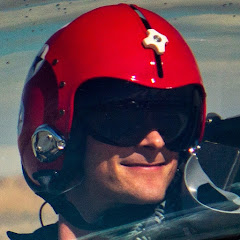 Max Afterburner
Story of
Why this story? 989,829 views so far, and here is what is inside it.
 The Deadly Trap That May Have Caught This Learjet
Things we can learn from the video
Press to jump
- 0:41A flight-path reconstruction places the Learjet near a convective storm core at cruising altitude.
- 5:24An NTSB briefing confirms nine fatalities and discusses indications of aircraft breakup before impact.
- 6:37Ryan rejects suggestions that pilots can safely fly through intense red weather-radar returns.
- 8:09Crew radio calls document icing, turbulence, a rapid descent and an overspeed condition.
- 11:33The title's proposed mechanism is Mach tuck: a high-speed nose-down tendency that can overwhelm elevator control.
The "trap" in "The Deadly Trap That May Have Caught This Learjet" is an aerodynamic effect, not an investigative finding. Max Afterburner examines how Mach tuck can push a jet's nose downward at high speed, and why recovering from that dive can become difficult.
The distinction matters: the NTSB has not determined what caused the fatal Florida Learjet crash or said that Mach tuck played a role. Ryan, the former F-15E combat pilot and Thunderbirds pilot behind Max Afterburner, presents it as a possible explanation to examine, not a settled answer.
Before reaching that discussion, he reconstructs the flight through radar imagery, a flight-path animation and the crew's communications with Miami Center. The Bahamas-bound Learjet encountered icing and turbulence before the crew reported a rapid descent and an overspeed condition. Nine people died when it crashed in Greenacres.
Ryan also plays the NTSB's statement that there is evidence of some aircraft breakup before impact. Alongside the flight reconstruction, he makes a direct point about storm avoidance, rejecting suggestions that flying through intense red weather-radar returns could be acceptable: "Don't ever fly through something like that."
The title's central explanation arrives around twelve minutes in. Ryan gives the Learjet 60's maximum operating speed as Mach 0.81, then explains how a high-speed dive can produce a nose-down tendency strong enough to overwhelm elevator control. His analysis connects the reported overspeed to a possible aerodynamic mechanism while leaving the cause for investigators to establish.
The National Transportation Safety Board is an independent US federal agency that investigates aviation accidents and other civil transportation accidents.
More on Wikipedia ›An air traffic control center in Miami-Dade County, Florida, formally called the Miami Air Route Traffic Control Center.
More on Wikipedia ›A city in Palm Beach County, Florida, within the Miami metropolitan area.
More on Wikipedia ›Published on Trari
Where next?



 Is this your channel?For the channel's owners and team: a ready picture and text for your audience
Share the story with your audience. Everything is ready:
For an Instagram story or a WhatsApp status
For a community post or your channel's description
- Channel
- Max Afterburner
- Subscribers
- 992,000 ▲ 9,000 this week
- Channel views, last 7 days
- 11,230,500
- Channel views, pace per day
- 969,319 (on a normal day: 1,533,095)
- Video published
- November 3, 2026
- Video views so far
- 989,829 (less than a day online)
- Video views, pace per day
- 1,192,873
The numbers
The analysis has drawn nearly a million views. Its audience size is ordinary for this channel; the explanation inside the video is the story.
