
 United States
 United Kingdom
 Canada
 Australia
 New Zealand
 Ireland
Andrew Neil predicts a Trump "bloody nose", then more unpredictability
Times Radio's election-eve analysis pairs Neil's warning with Katherine Thompson's argument that Congress's strongest restraint lies in its control of spending.
 Times Radio
Story of
Why this story? The video opened at a pace of 161,399 views a day, 16 times a normal first day on this channel (9,856).
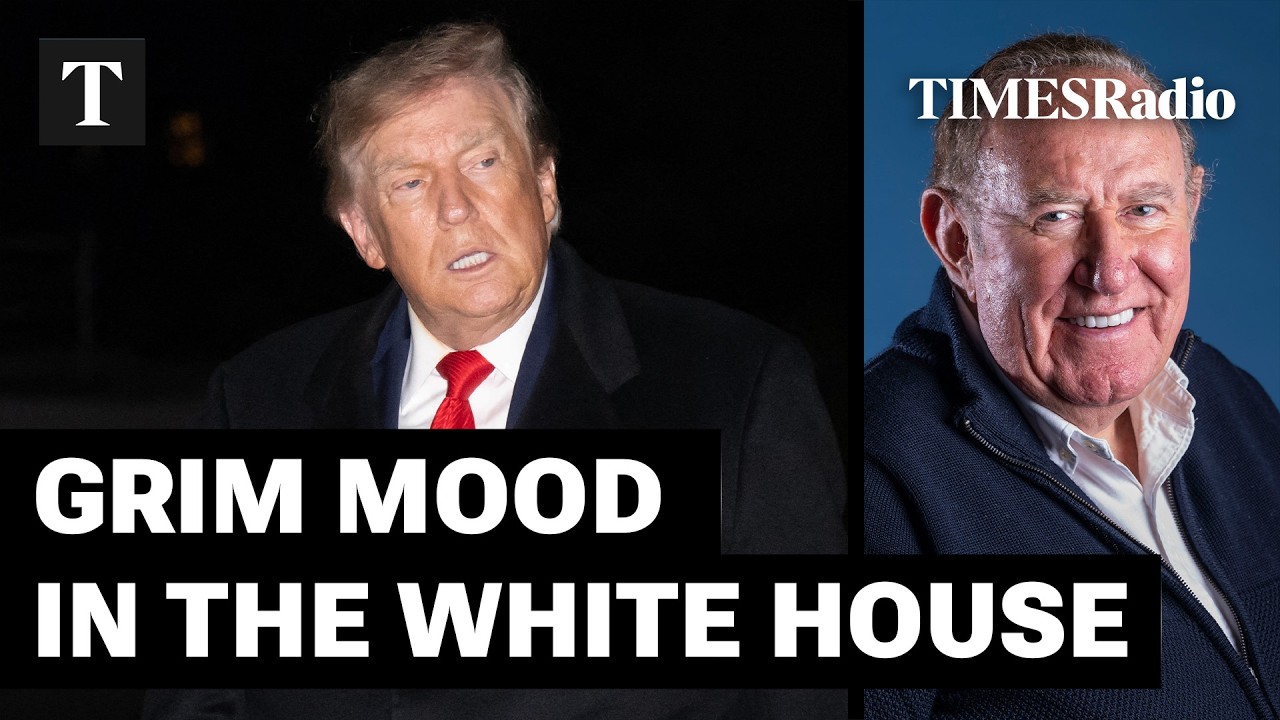 Trump Headed For A Bloody Nose In Midterms Promising More Political Lash-Outs | Andrew Neil
Things we can learn from the video
Press to jump
- 0:00Neil predicts a difficult midterm result for Trump, then warns that a setback could produce more unpredictable policy.
- 3:04Neil examines Iran, Cuba and Russia, including Putin's proposed US-Russia-China conference.
- 6:03Thompson questions the objectives and costs behind calls for further military action against Iran.
- 7:33Thompson argues that Congress's spending authority offers stronger leverage than the War Powers Resolution.
- 10:31Neil and Thompson connect fuel prices, inflation and living costs to Trump's electoral difficulties.
Congress can send a message about military action, but controlling the money is what gives it leverage. That is former Pentagon official Katherine Thompson's central argument as Andrew Neil asks what a difficult midterm result could mean for Donald Trump's foreign policy.
Speaking from New York on Times Radio, Neil predicts a Republican setback and warns against expecting a calmer presidency afterwards. His concern is that losing control of Congress could prompt more unpredictable decisions abroad, rather than greater restraint at home.
The segment has drawn about 110,000 views in half a day, already far beyond the roughly 10,000 a regular Times Radio upload usually receives across its first day.
Thompson, who served at the Pentagon under Trump, brings the discussion to the practical questions behind calls to "finish the job" in Iran: what is the objective, and what would achieving it cost? She argues that the War Powers Resolution lacks sufficient force to restrain Trump, while Congress retains a more concrete tool through funding. "The thing that Congress really does hold power over, though, is power of the purse," she says.
Neil also connects foreign policy to household budgets, highlighting fuel and heating costs. Thompson points to inflation and living expenses as sources of declining voter support.
Other Times Radio election discussions are drawing unusually large audiences too, including Katy Balls and Gerard Baker's examination of a possible Democratic Congress and Frank Luntz's assessment of voters living pay cheque to pay cheque. Neil's interview brings those electoral and economic questions back to the potential costs of further military action.
Published on Trari
Where next?


 Is this your channel?For the channel's owners and team: a ready picture and text for your audience
Share the story with your audience. Everything is ready:
For an Instagram story or a WhatsApp status
For a community post or your channel's description
- Channel
- Times Radio
- Subscribers
- 1,320,000
- Channel views, last 7 days
- 4,989,298
- Channel views, pace per day
- 339,181 (on a normal day: 933,448)
- Video published
- November 2, 2026
- Video views so far
- 111,417 (less than a day online)
- Video views, pace per day
- 161,399
The numbers
Neil's analysis passed the channel's usual full-day audience within its first half-day. Several other midterm discussions also drew unusually large early audiences.

💡 Test your knowledge
Which city is Andrew Neil broadcasting from in this segment?
Neil appears live from New York in the Times Radio segment.