
 United States
 United Kingdom
 Canada
 Australia
 New Zealand
 Ireland
Dr. Eric Berg DC's peptide guide turns to supply-chain risks
His explainer separates short amino-acid chains from steroids, examines GLP-1 drugs and BPC-157, and asks what is actually inside the vial.
 Dr. Eric Berg DC
Story of
Why this story? 933,109 views so far, and here is what is inside it.
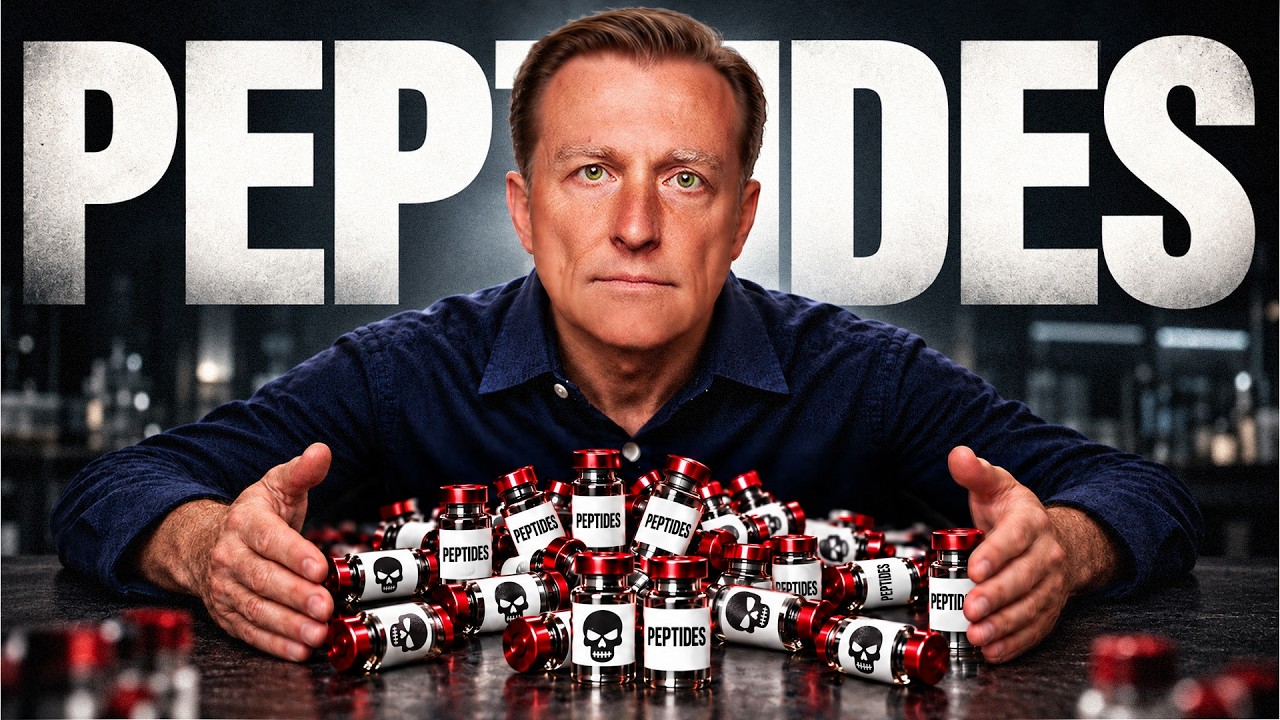 Everything You Need to Know About Peptides
Things we can learn from the video
Press to jump
- 0:36Berg defines peptides as short amino-acid chains and distinguishes them from proteins and cholesterol-based steroids.
- 2:00His lighting analogy contrasts amplifying existing signals with the prolonged action of certain GLP-1 medications.
- 4:00He describes BPC-157 research into tendon repair and gut problems, noting limited human evidence.
- 7:18Berg identifies sourcing concerns including incorrect amino-acid sequences, endotoxins and heavy metals.
- 10:26He recommends exercise, optimized sleep and fasting as ways to support natural growth-hormone signaling.
A powder, an injection and a weight-loss medication can all carry the word "peptide." Dr. Eric Berg DC starts by untangling that label before turning to a more practical question: how much can someone know about the product they are getting?
"Everything You Need to Know About Peptides" has drawn roughly 933,000 views in its first week. Berg, a chiropractor who focuses on health education, explains peptides as short chains of amino acids that can act as biological signals. They are not steroids, he notes: steroids are made from cholesterol.
His central teaching device is household lighting. He compares amplifying an existing signal, using sermorelin as an example, to adjusting a dimmer switch. He then likens the prolonged action of certain GLP-1 medications to installing a lamp that stays on. That comparison leads into his discussion of appetite suppression and potential side effects, including gastrointestinal problems and muscle loss.
BPC-157 gets a separate examination. Berg describes research into tendon repair and gut problems, while acknowledging that human research remains limited. The distinction between animal findings and human evidence is an important part of what this section holds, rather than simply a list of promised benefits.
The guide becomes most concrete when it reaches manufacturing. Berg describes testing problems involving incorrect amino-acid sequences, bacterial endotoxins and heavy metals. His safety discussion therefore extends beyond what a particular peptide is intended to do to whether a product contains what its label says.
He closes by returning to familiar territory for his channel: sleep, exercise and fasting, which he presents as ways to support the body's own growth-hormone signaling.
Published on Trari
Where next?



 Is this your channel?For the channel's owners and team: a ready picture and text for your audience
Share the story with your audience. Everything is ready:
For an Instagram story or a WhatsApp status
For a community post or your channel's description
- Channel
- Dr. Eric Berg DC
- Subscribers
- 15,100,000
- Channel views, last 7 days
- 18,359,046
- Channel views, pace per day
- 4,059,844 (on a normal day: 2,811,993)
- Video published
- October 24, 2026
- Video views so far
- 933,109 (7 days online)
- Video views, pace per day
- 125,016 (on a normal day: 105,755)
The numbers
The peptide explainer's first-week views sit alongside the channel's broader viewing totals below.
