
 United States
 United Kingdom
 Canada
 Australia
 New Zealand
 Ireland
Lucy Worsley examines the Lincoln story behind an emancipation monument
BBC Timestamp's Civil War compilation distinguishes opposition to slavery from support for racial equality, with help from historian Edna Greene Medford.
 BBC Timestamp
Story of
Why this story? 985,743 views so far, and here is what is inside it.
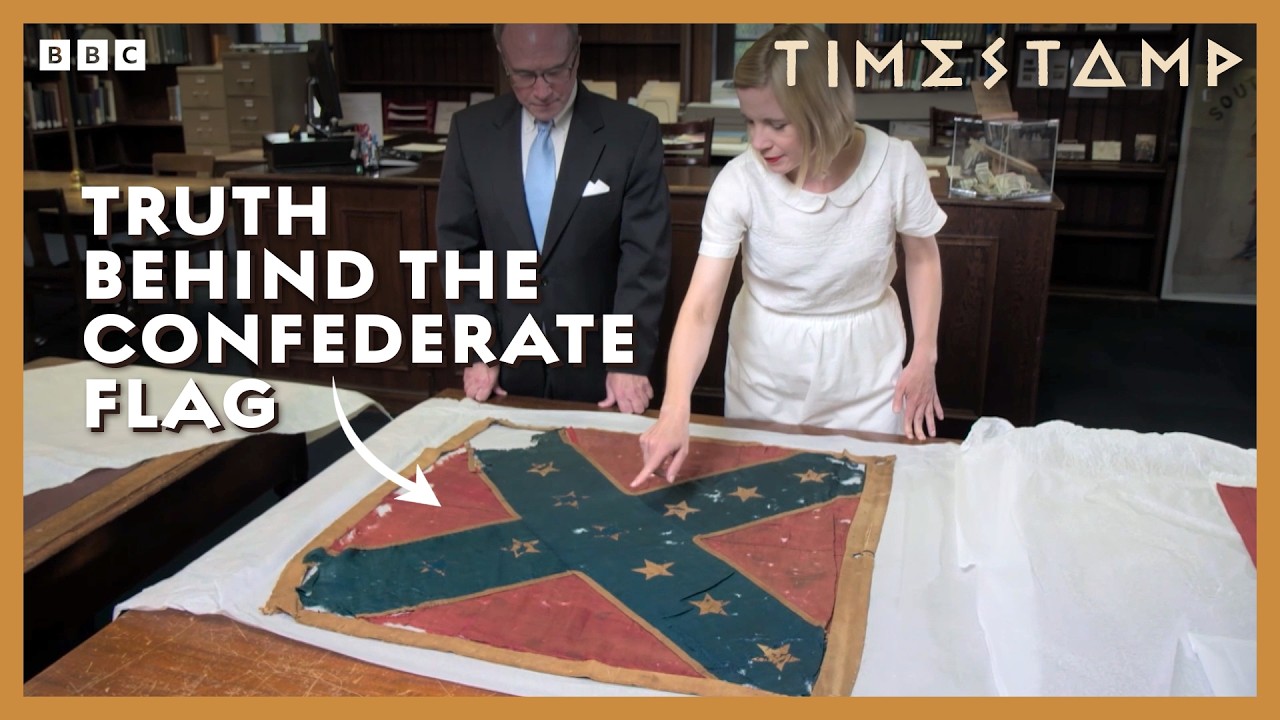 What You Weren't Taught About The American Civil War | BBC Timestamp
Things we can learn from the video
Press to jump
- 0:05Groce explains how deeply slavery underpinned the nineteenth-century American economy.
- 2:59The Confederate national flag's resemblance to the US flag helps explain the adoption of a separate battle flag.
- 3:40The battle flag includes stars for Kentucky and Missouri, although neither state formally seceded.
- 6:03Charlotte Scott's contribution introduces the Emancipation Memorial and the question of how emancipation should be represented.
- 6:37Medford examines Douglass's critique of Lincoln and the controversy surrounding the memorial's kneeling figure.
- 8:26Lincoln's 1858 words illustrate Medford's distinction between opposing slavery and supporting racial equality.
The kneeling figure at Washington's Emancipation Memorial complicates a familiar image of Abraham Lincoln as liberator. Lucy Worsley's visit asks whose understanding of freedom the monument preserves.
BBC Timestamp's "What You Weren't Taught About The American Civil War | BBC Timestamp" brings together clips from American History's Biggest Fibs with Lucy Worsley (2019). Approaching a million views, the compilation moves from slavery's economic foundations to the ways Lincoln was remembered after his assassination.
Dr W. Todd Groce of the Georgia Historical Society begins with slavery's central place in the American economy. Later, Confederate flags supply a revealing distinction: the "Stars and Bars" national flag looked sufficiently like the United States flag to cause battlefield confusion, prompting a separate military design. Groce explains that the battle flag's stars included Kentucky and Missouri, although neither formally seceded.
The final section turns from flags to a monument. Worsley traces the Emancipation Memorial's beginnings to money contributed by Charlotte Scott, a formerly enslaved woman, before Howard University's Professor Edna Greene Medford examines Frederick Douglass's criticism of Lincoln and the memorial's kneeling figure.
Medford draws a distinction that gives the compilation its central point: "Lincoln was an anti-slavery man, but he was no abolitionist before the Civil War." She then reads from his 1858 debate statement rejecting racial equality. The segment separates beliefs often bundled together in the familiar emancipation story: opposing slavery did not necessarily mean accepting Black Americans as equals.
Published on Trari
Where next?



 Is this your channel?For the channel's owners and team: a ready picture and text for your audience
Share the story with your audience. Everything is ready:
For an Instagram story or a WhatsApp status
For a community post or your channel's description
- Channel
- BBC Timestamp
- Subscribers
- 963,000 ▲ 2,000 this week
- Channel views, last 7 days
- 1,821,501
- Channel views, pace per day
- 578,937 (on a normal day: 354,352)
- Video published
- October 30, 2026
- Video views so far
- 985,743 (4 days online)
- Video views, pace per day
- 364,161 (on a normal day: 213,340)
The numbers
The Civil War compilation is approaching a million views after four days.
