
UK emergency supplies campaign sends shoppers looking for radios
Retailers report rising sales as ministers urge households to prepare for three days of disruption from extreme weather or cyberattacks.
 United KingdomStory of
No. 36 on the daily chartNo. 10 on the News chart
Why this story? One of BBC News's most watched videos since yesterday, with 236,879 views.
BBC News: The news channel of the BBC, Britain's public broadcaster, and one of the best-known news organisations in the world. 20M subscribers and 7.5B views.
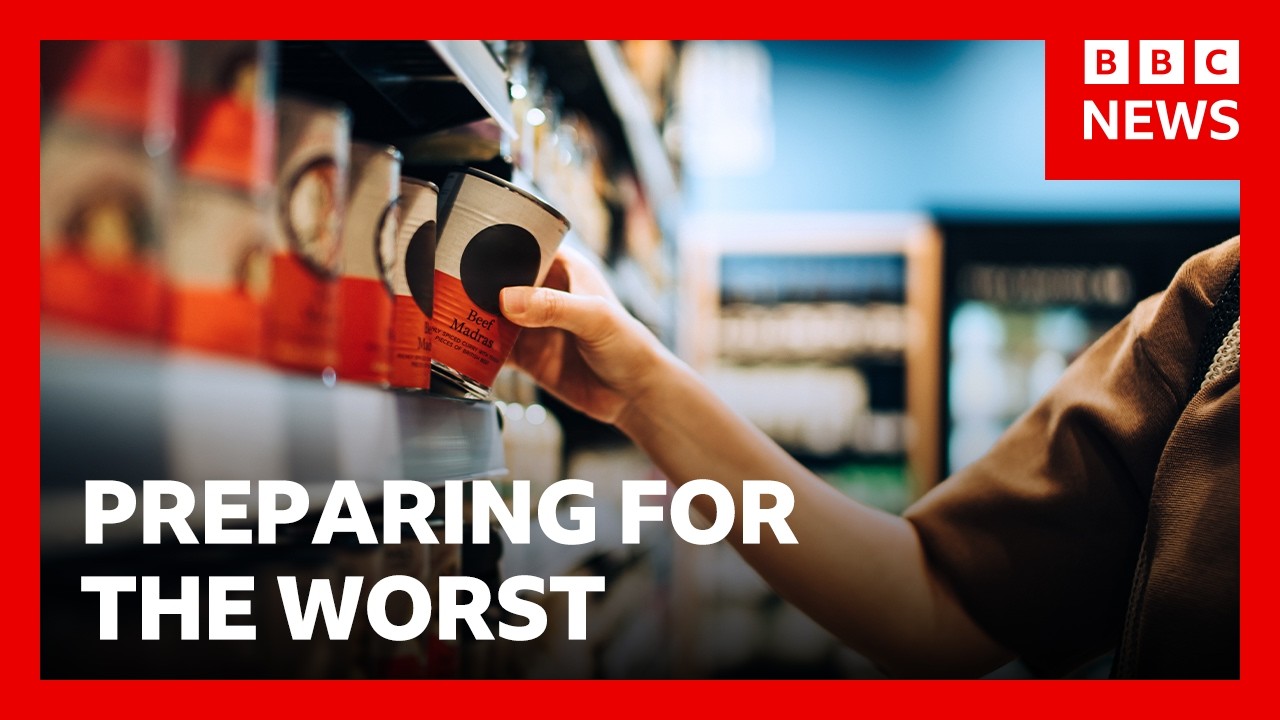 Why is the UK telling people to stockpile? | BBC News
Things we can learn from the video
Press to jump
- 1:23The report identifies cyberattacks on infrastructure and extreme weather as reasons for stronger household preparedness.
- 2:49Government advice recommends three days of food, water and medication, plus cash, blankets and battery-powered radios.
- 3:11Sarah Malloy shows stored supplies and vegetable beds, emphasizing practical skills as well as equipment.
- 4:10Retailers report increased purchases of flashlights, canned food and radios.
- 5:35Street interviewees contrast existing preparations with concerns about affording extra supplies.
- 6:35Jarvis says the campaign aligns Britain with emergency preparedness approaches used elsewhere in Europe.
Wind-up radios, canned food and flashlights are attracting renewed interest as the UK government asks households to prepare for emergencies. But street interviews reveal a practical objection to keeping extra supplies: some people are already struggling to afford their ordinary groceries.
BBC News, the United Kingdom's British Broadcasting Corporation news service, examines the advice in "Why is the UK telling people to stockpile? | BBC News". The government's "Be Ready" campaign recommends keeping three days of food, water and medication, alongside cash, blankets and a battery-powered radio.
The report identifies two main concerns: extreme weather knocking out electricity, and hostile states disrupting infrastructure through cyberattacks. Correspondent Daniel Sandford describes a growing risk to electricity supplies and other infrastructure. Newsnight political editor Nick Watt says a cyberattack originating from Russia is a particular government concern, rather than reporting that such an attack is imminent.
Security minister Dan Jarvis defends the campaign in Parliament, pointing to people left without power over the preceding weekend. He argues that the initiative brings Britain into line with emergency preparedness practices already established across much of Europe.
Retailers describe a noticeable response. Maplin reports that flashlight purchases have nearly quadrupled, while Iceland reports increased sales of canned products and Robert Dyas reports a rise in radio purchases. A business owner says many inquiries have been about wind-up radios; water filters and equipment that works without mains electricity are also attracting interest.
The report visits prepper Sarah Malloy, who shows stored food, large water containers, spices and vegetable beds. Her emphasis extends beyond buying equipment: "Knowledge weighs nothing. Learn some skills."
Outside, the responses are less uniform. Some interviewees have already put aside bottled water. Others question how households facing high living costs can afford an additional reserve, making affordability a central difficulty in turning the government's advice into everyday preparation.
A British politician and former Army officer who serves as the UK's security minister. He is a member of the Labour and Co-operative Party.
More on Wikipedia ›Published on Trari
Where next?


- Channel
- BBC News
- Subscribers
- 20,200,000
- Channel views, last 7 days
- 36,902,543
- Channel views, pace per day
- 3,706,092 (on a normal day: 4,842,932)
- Video published
- October 27, 2026
- Video views so far
- 236,879 (less than a day online)
- Video views, pace per day
- 505,784
The numbers
The explainer drew about 237,000 views since yesterday.

💡 Test your knowledge
Which minister defends the preparedness campaign in Parliament in this report?
Security minister Dan Jarvis says the campaign brings Britain into line with preparedness practices elsewhere in Europe.