
Wolfers challenges Trump's promise of cheaper oil after the midterms
The economist argues that an election cannot undo an energy supply shock, and that Australian rate rises would not fix the same problem.
 AustraliaStory of
Why this story? One of ABC News (Australia)'s most watched videos since yesterday, with 58,838 views.
ABC News (Australia): The news division of the ABC, Australia's public broadcaster. 2.6M subscribers and 1.7B views.
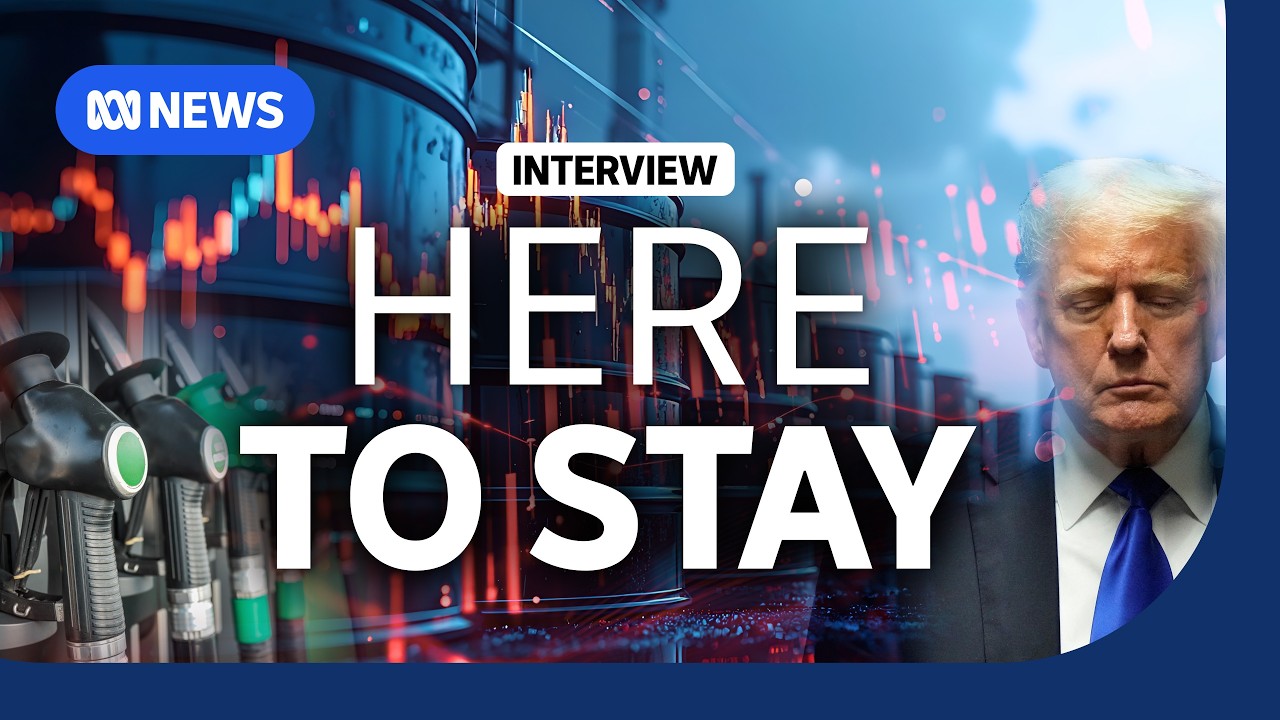 Why Trump can't promise high oil prices will fall after the midterms | The Business | ABC NEWS
Things we can learn from the video
Press to jump
- 0:39Wolfers questions Warsh's mixed messaging on interest rates and inflation control.
- 2:05Fed decisions should follow economic conditions, Wolfers argues, rather than calculations about their election impact.
- 4:46Wolfers argues that trade conflict with Canada is hurting the U.S. economy.
- 7:15An election cannot reverse oil supply shocks, Wolfers says, challenging Trump's promise of cheaper fuel afterward.
- 8:10Australian rate rises cannot lower global oil prices, underpinning Wolfers's case for looking through the energy shock.
- 11:29Wolfers identifies AI disruption, political dysfunction, fiscal imbalances and unexpected shocks as his principal economic worries.
Donald Trump has no switch he can flip to bring fuel prices down after the U.S. midterm elections, economist Justin Wolfers argues. His reasoning is political as well as economic: if the president could deliver cheaper gasoline, he would have every incentive to do it before voters cast their ballots.
Speaking to Elysse Morgan on The Business, from Australia's Australian Broadcasting Corporation (ABC), the Platypus Economics economist and University of Michigan professor challenges Trump's promise that oil prices will fall immediately after the election. Wolfers links expensive oil to supply disruptions and conflict in the Middle East, warning that higher prices could persist.
The promised explanation arrives about seven minutes into an interview that begins with the Federal Reserve's October decision to hold interest rates. Wolfers questions what he sees as mixed messages from Fed Chair Kevin Warsh about lowering rates while controlling inflation. He argues that the central bank should make its decisions on economic grounds rather than attempt to manage their political appearance before the election.
Wolfers also criticizes Trump's trade policies, saying the U.S. economy would be better off without a trade war with Canada.
For Australian viewers, the interview turns the oil-price argument into a question about mortgage costs. ABC reports annual inflation of 4.3 percent, with Treasurer Jim Chalmers describing the Iran war as an accelerant. Wolfers says there is a serious case for the Reserve Bank of Australia to look through the energy shock rather than respond with higher interest rates: raising borrowing costs in Australia cannot lower the global price of oil.
Morgan then raises New Zealand's decision to hold rates, broadening the comparison between central banks facing external shocks.
Wolfers closes by identifying AI disruption, U.S. political dysfunction, fiscal imbalances and unpredictable shocks as concerns. His caution is about the limits of forecasting, too: recessions, he says, often begin with something unexpected rather than the danger everyone already sees coming.
An Australian-American economist and public policy scholar.
More on Wikipedia ›The central banking system of the United States. Its structure gives it independence from political interference.
More on Wikipedia ›An American financier and lawyer who has chaired the Federal Reserve since 2026. He previously served on its Board of Governors from 2006 to 2011.
More on Wikipedia ›Australia's treasurer since 2022 and a Labor Party politician. He has represented the Queensland seat of Rankin in Parliament since 2013.
More on Wikipedia ›Published on Trari
Where next?



- Channel
- ABC News (Australia)
- Subscribers
- 2,630,000
- Channel views, last 7 days
- 7,352,616
- Channel views, pace per day
- 1,165,362 (on a normal day: 1,136,288)
- Video published
- October 29, 2026
- Video views so far
- 58,838 (less than a day online)
- Video views, pace per day
- 63,185
The numbers
The interview drew about 59,000 views since yesterday, placing it among Australia's most watched new news videos.

💡 Test your knowledge
At which university is Justin Wolfers a professor of economics?
The interview's description identifies Wolfers as a University of Michigan economics professor.