
Zahorodniy sees strikes on Russian industry as leverage for talks
The Ukrainian political strategist links reported drone attacks to negotiating pressure, then warns about Russia's use of social media abroad.
 Ukraine
Why this story? One of 24 Канал's most watched videos since yesterday, with 206,557 views.
24 Канал: A Ukrainian news channel from Lviv, on air since 2006. 9.1M subscribers and 18B views.
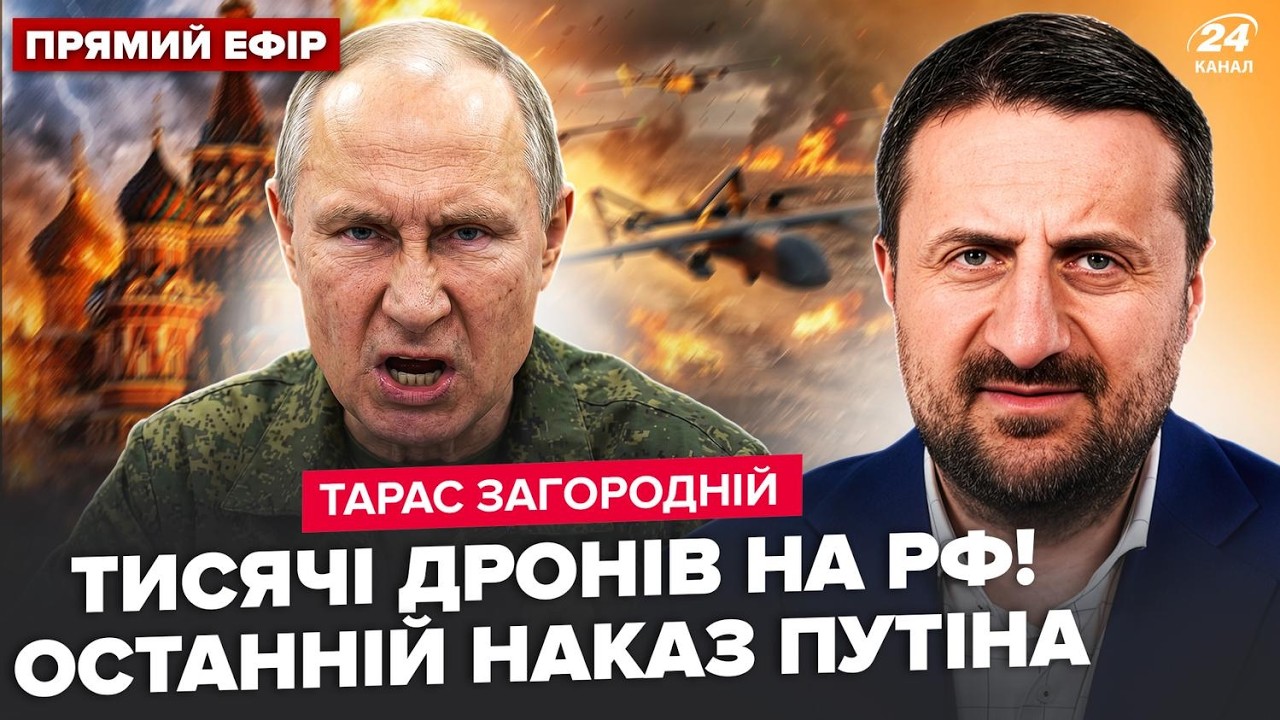 🔥ЗАГОРОДНІЙ: Москва і Башкортостан ЛЮТО ВИБУХАЮТЬ! Путін віддав ДИВНИЙ НАКАЗ. Меланія ЗАВЕРШУЄ "СВО"
Things we can learn from the video
Press to jump
- 0:00Uzlova reports a Russian strike on Dnipro's railway station; Zahorodniy argues negotiations will not themselves stop attacks.
- 3:00Zahorodniy argues that the Kremlin is stretching out diplomacy until the U.S. elections.
- 7:42Reported drone attacks on Moscow and Bashkortostan lead into his argument that industrial strikes create negotiating leverage.
- 9:24Ushakov's remarks about excluding Europeans prompt discussion of Europe's diplomatic role and dependence on Russian energy.
- 14:52Uzlova cites Blumenthal's letter about a Russian-fuel tanker heading toward the United States.
- 20:00Putin's social-media remarks prompt Zahorodniy's warning about Russian bot networks and efforts to destabilize other countries.
Reported drone attacks on Russian industrial sites provide the central argument in Taras Zahorodniy's discussion of Ukraine's negotiating position: damaging production can create pressure that diplomacy alone does not.
Speaking with host Iryna Uzlova on Ukraine's Channel 24 (24 Канал), the political strategist examines reports of overnight attacks on Moscow and Bashkortostan on October 29. The broadcaster reports airport disruptions around Moscow and smoke above a chemical plant in Bashkortostan, a Russian republic near the Ural Mountains.
Zahorodniy focuses on the strategic significance of chemical and industrial facilities, including those in Sterlitamak. He presents attacks on such enterprises as a way to build bargaining leverage. The discussion does not establish the extent of damage to the reported targets.
The interview begins with Uzlova reporting a Russian strike on the railway station in Dnipro, Ukraine. Zahorodniy argues that Moscow is trying to prolong the diplomatic process until the U.S. elections and that continued discussion should not be mistaken for an end to attacks.
Europe's place in any settlement becomes another point of contention. Uzlova raises remarks by Yuri Ushakov, Putin's foreign-policy aide, about excluding Europeans from the negotiating table. Zahorodniy questions European governments' reliability and connects that skepticism to their energy dependence on Russia. The exchange moves into European gas prices and the political influence that energy supplies can confer.
On Iran, Zahorodniy argues that the oil market does not face a major supply shortage, as the pair consider how conflict could affect prices and U.S. policy. Uzlova also cites a letter from Richard Blumenthal, the Democratic senator from Connecticut, concerning a tanker carrying Russian fuel toward the United States. Later, the conversation turns to Bolsonaro, Latin American politics and China's influence in the region.
The closing substantive exchange concerns information control. Uzlova plays archival footage of Putin discussing restrictions on social media in connection with events in France. Zahorodniy interprets the remarks as a signal that Russia could use those platforms to destabilize Western countries. He warns that Russian bot networks can reorganize and should not be underestimated, while noting that political upheavals occurred long before the internet.
Russian diplomat who has advised the president on foreign policy since 2012. He previously served as Russia's ambassador to the United States.
More on Wikipedia ›Democratic U.S. senator from Connecticut who has served in the Senate since 2011. He previously served as Connecticut's attorney general.
More on Wikipedia ›Published on Trari
Where next?


- Channel
- 24 Канал
- Subscribers
- 9,120,000
- Channel views, pace per day
- 10,507,874 (on a normal day: 5,413,350)
- Video published
- October 29, 2026
- Video views so far
- 206,557 (less than a day online)
- Video views, pace per day
- 236,608
The numbers
The interview drew about 207,000 views since yesterday, placing it among Ukraine's most watched news videos during that period.
