
 United States
 United Kingdom
 Canada
 Australia
 New Zealand
 Ireland
Washington Week's Hayes questions Vance's presumed path to 2028
The post-midterm panel examines Republican unease over Stephen Miller's appointment and why the party's next nomination may be far from settled.
 Washington Week PBS
Story of
Why this story? The video opened at a pace of 277,762 views a day, 62 times a normal first day on this channel (4,482).
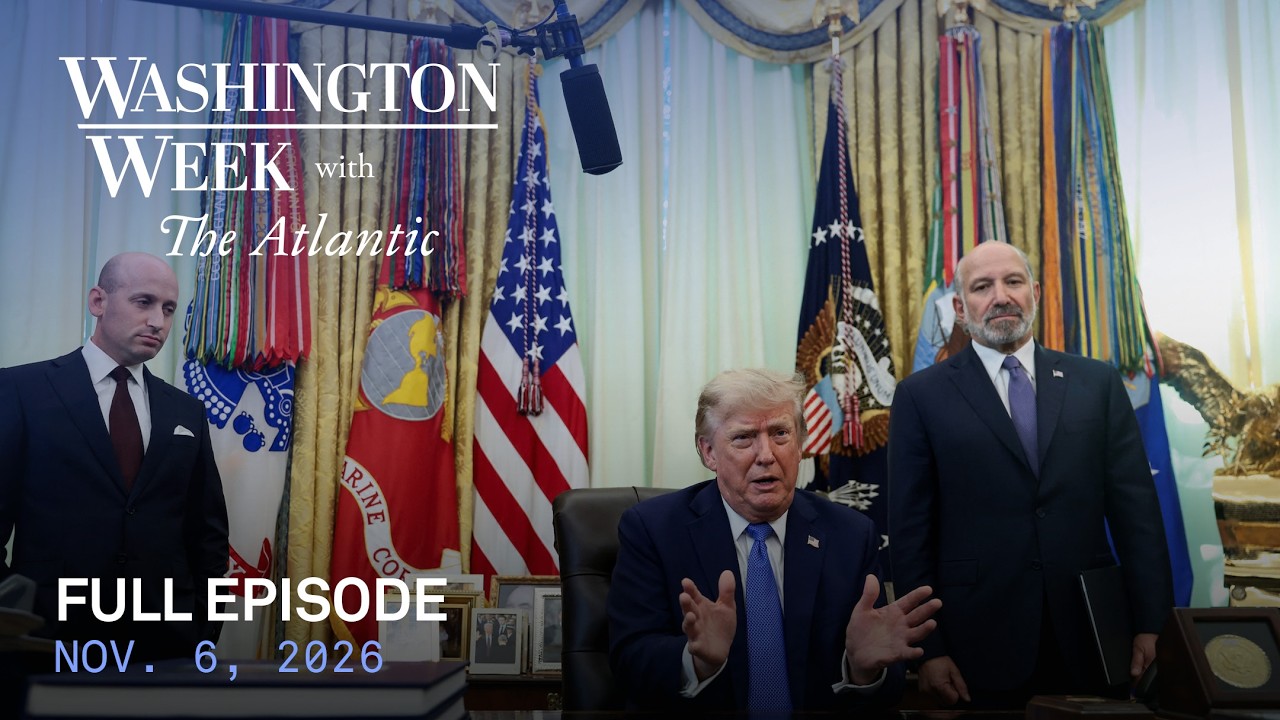 Washington Week with The Atlantic full episode, Nov. 6, 2026
Things we can learn from the video
Press to jump
- 3:40Baker argues that choosing Miller signals confrontation rather than conciliation after the Republican election defeats.
- 5:31Caldwell reports Republican anxiety over Miller's selection and explains Wiles' move to political operations.
- 11:03The panel contrasts Trump's response to defeat with those of George W. Bush and Barack Obama.
- 14:20Discussion turns to Democrats' options on healthcare, tariffs and oversight of the executive branch.
- 21:40Hayes expects Republican governors to distance themselves from Trump ahead of the presidential primaries.
- 22:36Hayes argues that Vance is not guaranteed the 2028 nomination and anticipates a crowded primary field.
Stephen Hayes isn't treating JD Vance as the inevitable next Republican presidential nominee. On Washington Week with The Atlantic, The Dispatch editor argues that the vice president could face a crowded primary, with Republican governors finding more room to distance themselves from Donald Trump after the party's midterm defeats.
That discussion comes late in an episode largely devoted to Trump's response to losing: replacing Susie Wiles with Stephen Miller as White House chief of staff. Moderator Jeffrey Goldberg's panel asks whether the appointment points toward accommodation with a Democratic Congress or a more confrontational presidency.
Peter Baker of The New York Times gives a direct answer: "Stephen Miller is not the person you would pick for Chief of Staff if conciliation was on your mind." Leigh Ann Caldwell of Puck reports anxiety among congressional Republicans about the choice, while Radio Atlantic's Adam Harris describes Miller as an expression of ideological commitment to the MAGA agenda.
The full episode drew roughly 278,000 views in its first day, far beyond the channel's usual opening. A separate excerpt, "Trump doubles down on MAGA agenda with Miller pick", also attracted an unusually large first-day audience.
But the panel's question extends beyond the White House reshuffle. Hayes expects governors including Ron DeSantis, Brian Kemp and Glenn Youngkin to separate themselves further from Trump ahead of the next presidential primaries. His argument is that a Republican electoral defeat does not simply leave Vance next in line.
The Republican vice president of the United States. He previously represented Ohio in the US Senate from 2023 to 2025.
More on Wikipedia ›A Republican political consultant and lobbyist who served as White House chief of staff from 2025 to 2026. She was the first woman to hold the job.
More on Wikipedia ›An American political adviser who served as a senior adviser and director of speechwriting during Trump's first administration, from 2017 to 2021.
More on Wikipedia ›Published on Trari
Where next?



 Is this your channel?For the channel's owners and team: a ready picture and text for your audience
Share the story with your audience. Everything is ready:
For an Instagram story or a WhatsApp status
For a community post or your channel's description
- Channel
- Washington Week PBS
- Subscribers
- 248,000 ▲ 1,000 this week
- Channel views, last 7 days
- 762,053
- Channel views, pace per day
- 388,470 (on a normal day: 106,256)
- Video published
- November 7, 2026
- Video views so far
- 305,429 (less than a day online)
- Video views, pace per day
- 285,185
The numbers
The full post-election episode had a much larger first day than Washington Week PBS's usual regular upload. Its Miller-focused excerpt also drew an unusually strong start.

💡 Test your knowledge
Which newspaper does panelist Peter Baker represent?
Baker appears on the panel as chief White House correspondent for The New York Times.