
 United States
 United Kingdom
 Canada
 Australia
 New Zealand
 Ireland
Tucker Carlson blames abandoned "America First" promises for Republican losses
His post-midterm commentary challenges explanations that minimize Iran and connects foreign-policy choices to household economic pain.
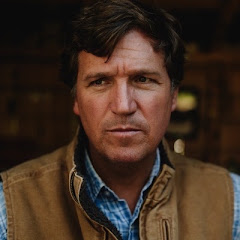 Tucker Carlson
Story of
Why this story? One of the most watched videos since yesterday, with 1,255,045 views.
 Well That Was a Disaster…
Things we can learn from the video
Press to jump
- 1:50Carlson interprets Republican losses as voter backlash against the Trump administration's first two years.
- 6:05He links Abbott's weakened support in Texas partly to controversy over energy-consuming data centers.
- 8:18He accuses Fox News anchors of pushing Trump toward war with Iran and alienating voters.
- 35:27Levin and Shapiro minimize Iran's electoral importance in a clip; Carlson disputes their explanation.
- 40:20Carlson reads Vance's diagnosis, including foreign wars, inflation and neglect of "America First."
- 44:54A Rebellion PAC ad contrasts foreign-war spending with domestic needs; Carlson argues that its economic message worked.
Tucker Carlson isn't treating the Republican losses as a messaging problem. In "Well That Was a Disaster…", he argues that voters rejected an administration that promised to put their interests first, then pursued priorities they had not voted for.
"All of this was a response to the first two years of the Trump administration," he says. The upload drew roughly 1.3 million views since yesterday, with first-day comments arriving at nearly five times the usual volume for the channel's long videos and streams.
At his desk, Carlson builds his case around Democratic gains in states including Ohio and Texas. He links Greg Abbott's loss of support partly to controversy over electricity-hungry data centers, placing that argument alongside his broader contention that Republican leaders failed to take household costs seriously.
Iran becomes the central disagreement. Carlson accuses Fox News personalities of encouraging Trump toward war and rejects the idea that the conflict was marginal to voters. He plays Mark Levin and Ben Shapiro discussing its limited importance, then reads a JD Vance post identifying foreign wars, inflation and departures from "America First" among the reasons for defeat. These are competing political explanations, rather than a settled account of why individual voters changed their minds.
Carlson also reaches across the usual partisan divide for an example of effective campaigning: an ad produced by Cenk Uygur's Rebellion PAC supporting Abdul El-Sayed against Mike Rogers in Michigan. It is a paid political advertisement, and Carlson argues that its contrast between spending abroad and economic needs at home made a powerful electoral case.
Amid the political verdicts, he makes a more personal distinction. Family and relationships, he reminds viewers, matter more to a satisfying life than the daily turns of political drama. His criticism of Republican leadership is uncompromising; his instruction to viewers is not to let it consume everything else.
Republican governor of Texas since 2015. He previously served as the state's attorney general and as a justice on its Supreme Court.
More on Wikipedia ›Vice president of the United States and a Republican. He represented Ohio in the U.S. Senate from 2023 to 2025.
More on Wikipedia ›Published on Trari
Where next?



 Is this your channel?For the channel's owners and team: a ready picture and text for your audience
Share the story with your audience. Everything is ready:
For an Instagram story or a WhatsApp status
For a community post or your channel's description
- Channel
- Tucker Carlson
- Subscribers
- 5,790,000 ▲ 10,000 this week
- Channel views, last 7 days
- 14,962,352
- Channel views, pace per day
- 1,363,347 (on a normal day: 2,066,997)
- Video published
- November 5, 2026
- Video views so far
- 1,298,314 (less than a day online)
- Video views, pace per day
- 1,255,595
The numbers
The upload drew a large audience, and its first-day comment section was substantially busier than usual for Carlson's long-form releases.

💡 Test your knowledge
Marc Short, whose interview Carlson plays, served as chief of staff to which vice president?
The Bloomberg clip identifies Short as the former chief of staff to Mike Pence.