
Likud's fraud allegations target Arab parties' role in coalition talks
Edmund Heaphy's election report examines how Netanyahu's accusations could complicate the opposition's search for a governing majority.
 Ireland
Why this story? One of RTÉ News's most watched videos since yesterday, with 9,356 views.
RTÉ News: The news division of RTÉ, Ireland's public broadcaster. 255K subscribers and 181M views.
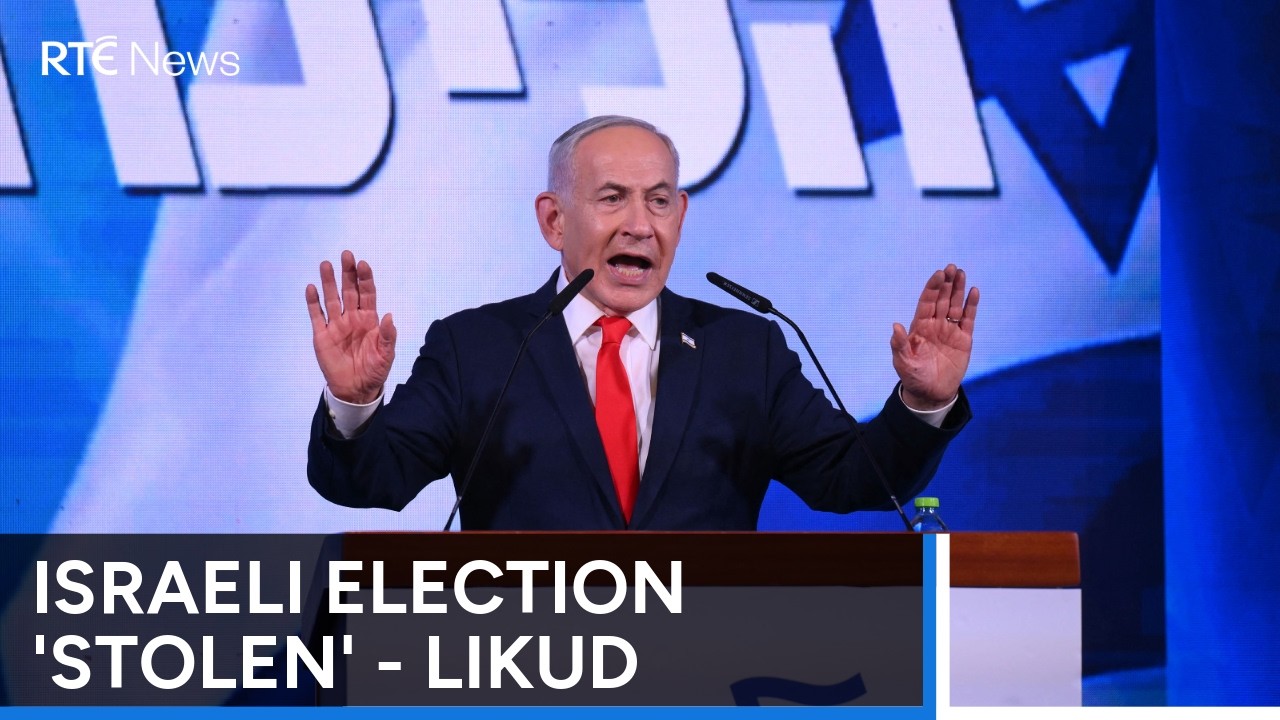 Netanyahu's Likud accuses Arab parties of stealing Israeli election | RTÉ News
Things we can learn from the video
Press to jump
- 0:34Neither main bloc has a majority; Arab parties' projected seats could be decisive in forming an alternative.
- 1:37Netanyahu and Eisenkot each frame the election outcome favorably in speeches to supporters.
- 2:44Professor Udi Sommer credits Netanyahu's survival while questioning whether Eisenkot could hold a fragile coalition together.
- 3:03Herzog will choose who gets the government-forming mandate; Netanyahu remains caretaker prime minister.
- 3:25Heaphy reports Likud's fraud allegations and interprets them as an effort to stigmatize reliance on Arab parties.
Likud's accusations against Arab parties concern more than the vote count. In Edmund Heaphy's account from Tel Aviv, they are also an effort to make opposition cooperation with those parties politically unacceptable.
Reporting for Ireland's public broadcaster, Raidió Teilifís Éireann's RTÉ News, Heaphy says Benjamin Netanyahu's party is accusing Arab parties of voter fraud and bribery. Those remain Likud's allegations. Heaphy describes the political strategy this way: "He is trying to make it politically toxic for any opposition bloc to rely on the Arab parties."
The report places Netanyahu's bloc at around 53 seats, opposition leader Gadi Eisenkot's bloc at around 48, and Arab parties at around 19. Neither principal bloc has a majority by itself, but the Arab parties could change the arithmetic.
"Now if you include those Arab parties, there's a very clear majority in the next parliament against Benjamin Netanyahu," Heaphy says. A majority opposed to Netanyahu, however, is not necessarily a coalition able to govern together.
Footage shows Netanyahu and Eisenkot each presenting the outcome favorably to supporters. On the streets of Tel Aviv, one voter expresses shock that Netanyahu secured so much support after October 7. Tel Aviv University professor Udi Sommer offers a different assessment of Netanyahu's political survival: "So he managed, it seems, not to lose the elections." Sommer also questions whether Eisenkot could keep a fragile coalition together.
With counting continuing, President Isaac Herzog must decide who receives the mandate to try to form a government. Netanyahu remains caretaker prime minister in the meantime, and the report anticipates weeks of negotiations.
A major right-wing political party in Israel, founded in 1973 as an alliance of several right-wing parties.
More on Wikipedia ›An Israeli politician and former military chief who leads the Yashar party. He was Benjamin Netanyahu’s main challenger in the 2026 election.
More on Wikipedia ›An Israeli politician who has held the presidency since 2021.
More on Wikipedia ›Published on Trari
Where next?


- Channel
- RTÉ News
- Subscribers
- 255,000 ▲ 1,000 this week
- Channel views, last 7 days
- 1,786,864
- Channel views, pace per day
- 290,629 (on a normal day: 315,354)
- Video published
- October 28, 2026
- Video views so far
- 9,356 (less than a day online)
- Video views, pace per day
- 15,848
The numbers
The report drew roughly 9,400 views since yesterday, placing it among Ireland's most-watched new news videos.
