
 United States
 United Kingdom
 Canada
 Australia
 New Zealand
 Ireland
Mentour Now! explains why carbon-fiber airliners are harder to recycle
Ben Watts follows retired jets from valuable spare parts to a stubborn problem: recovering carbon fibers is not the same as finding a profitable use for them.
 Mentour Now!
Story of
Why this story? 1,090,887 views so far, and here is what is inside it.
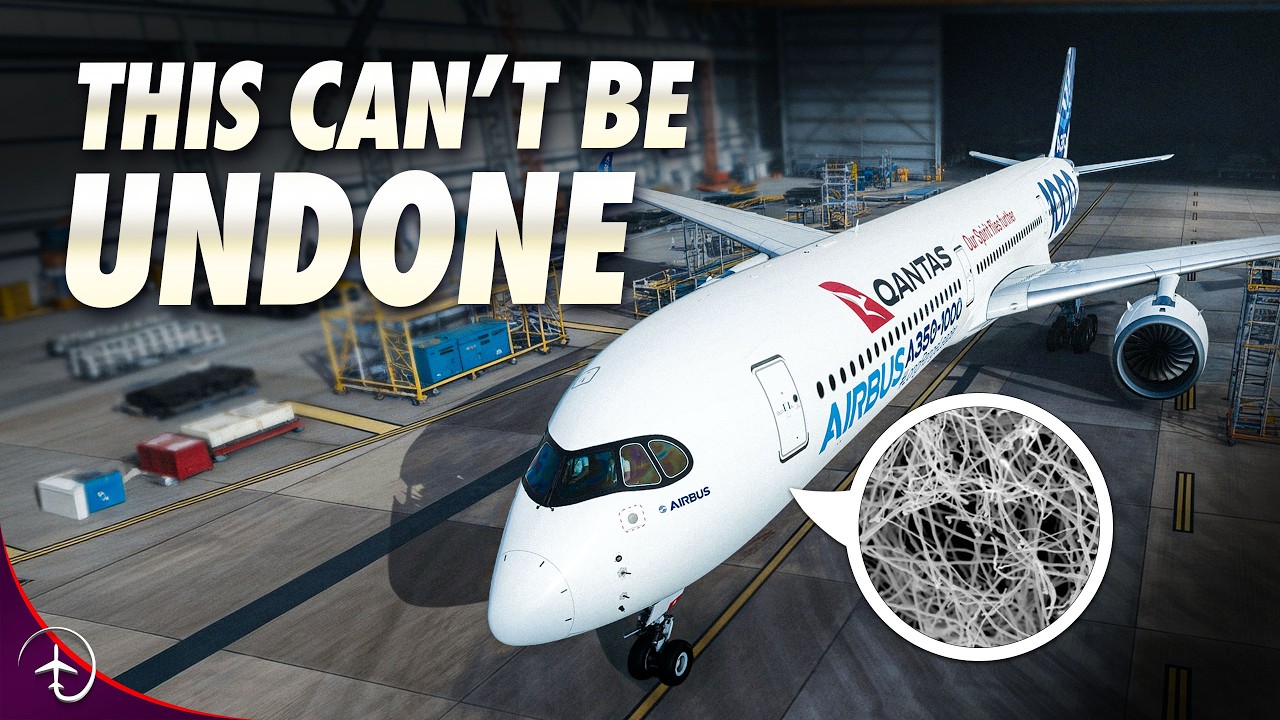 Aviation’s Next BIG Problem Is Already Here...
Things we can learn from the video
Press to jump
- 2:47Retired aircraft yield valuable engines, avionics, landing gear and cabin components before their structures are processed.
- 4:59Traditional aluminum airframes are separated, shredded and melted into recycled metal.
- 9:46The 787 and A350's carbon-fiber structures introduce a harder recycling task than conventional metal airframes.
- 14:00Thermoset resin permanently hardens during manufacturing, preventing straightforward melting and reshaping.
- 16:36Grinding, pyrolysis and solvolysis can recover carbon fibers, but each method has drawbacks.
- 20:43Technical recyclability is not enough: recovered material needs a market that justifies processing costs.
Melting isn't an option. The resin holding a modern airliner's carbon-fiber structure together cannot simply be heated and reshaped like aluminum, and that complicates what happens after its final flight.
In Mentour Now!'s "Aviation's Next BIG Problem Is Already Here...", presenter Ben Watts examines the disposal question behind the Boeing 787 and Airbus A350's lightweight construction. Materials that help save fuel in service become considerably less convenient in the scrapyard.
First, he explains why an aircraft graveyard is not just a parking lot of abandoned machines. Retired jets are systematically stripped of valuable engines, avionics, landing gear and cabin equipment. Traditional aluminum structures can then be separated, shredded and melted into recycled metal.
Carbon-fiber reinforced plastic presents a different task. Around the fourteen-minute mark, Watts reaches the central obstacle: its thermoset resin permanently hardens during manufacturing. Recovering the fibers requires processes such as grinding, heat treatment or chemical treatment, each with drawbacks. The episode includes a paid sponsor segment before returning to the materials question.
The decisive point is economic, not simply technical. As Watts puts it: "Namely, that making a material technically recyclable does not guarantee that recycling it will make economic sense." Wind-turbine blades offer a parallel: useful composite structures can become expensive disposal problems.
Watts also qualifies the title's warning. Engines, equipment and metals still have recoverable value, and most 787s and A350s are far from the end of their normal working lives. The unresolved question is what reclaimed carbon fibers can become, and whether that product will be worth enough to pay for recovering them.
Published on Trari
Where next?


What viewers say
One thing I remember seeing in the early 1980's was putting the fuselage on a truck chassis to create a motorhome .
@BR549COLSee it on YouTubeMy favorite use of old airplane parts was all the combustion liners and turbine frames used as background props in old sci-fi shows like Star Trek
@ZergZfTwSee it on YouTube14:14 It's not just "typical thermoplastics" get pliable when heated, all of them do. Becoming pliable when heated is the defining trait that makes them a thermoplastic. That's one of the major differences to the aforementioned thermoset polymers.
@Outis-d3cSee it on YouTube
2 more comments
What a brilliant episode! I’ve always wondered what happens to aircraft once they’re permanently grounded.
Thank you Mentour team!@vbp101See it on YouTubeExcellent synopsis with infographics, good job…I shall recycle this report🤓
@islandmonusviSee it on YouTube
Public comments from the video's page on YouTube
 Is this your channel?For the channel's owners and team: a ready picture and text for your audience
Share the story with your audience. Everything is ready:
For an Instagram story or a WhatsApp status
For a community post or your channel's description
- Channel
- Mentour Now!
- Subscribers
- 646,000 ▲ 1,000 this week
- Channel views, last 7 days
- 1,514,374
- Channel views, pace per day
- 63,623 (on a normal day: 190,875)
- Video published
- October 19, 2026
- Video views so far
- 1,090,887 (7 days online)
- Video views, pace per day
- 24,960 (on a normal day: 303,295)
The numbers
The aircraft-recycling explainer has drawn about 1.1 million views in its first week.

💡 Test your knowledge
What name does Boeing use for its 787 airliner?
Boeing markets the 787 family as the Dreamliner.