
 United States
 United Kingdom
 Canada
 Australia
 New Zealand
 Ireland
Harry Sisson makes the economic case for immigration on Jubilee
His Surrounded appearance tests whether economic growth is enough to settle a border-policy argument, before turning to political violence and public health.
 Jubilee
Story of
Why this story? 863,622 views so far, and here is what is inside it.
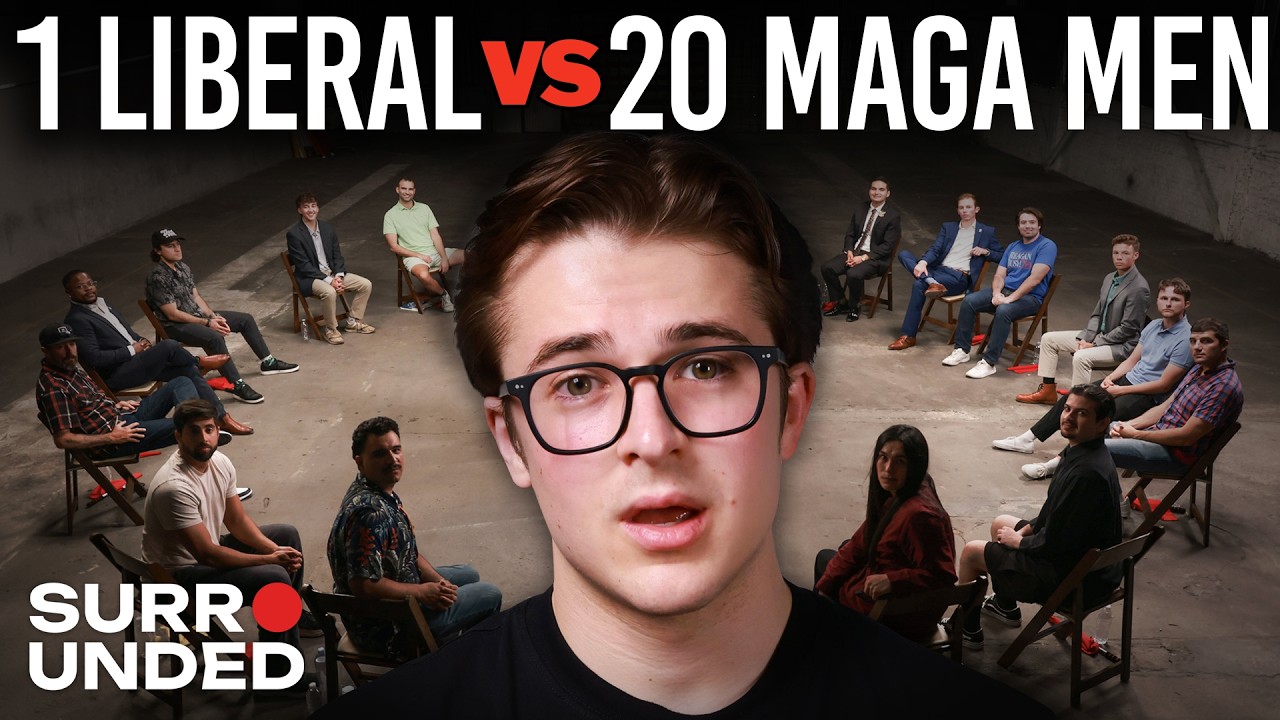 1 Liberal Man vs 20 MAGA Conservatives (ft. Harry Sisson) | Surrounded
Things we can learn from the video
Press to jump
- 1:03Sisson cites projected economic growth from immigration; Carson questions pressures on housing, homelessness and healthcare.
- 6:48Max accepts immigration's overall benefits but questions its scale and whether GDP adequately measures border-policy success.
- 20:04Gerard and Sisson debate how humanitarian asylum obligations should weigh against economic contributions.
- 24:51Sisson argues Trump normalizes political violence; participants counter with attacks on Republicans and arguments about media rhetoric.
- 41:39Sisson links administration policy to poorer health; participants emphasize cultural habits and question research spending and pandemic restrictions.
- The final chapter asks whether Democrats prioritize opposing Trump over proposing solutions.
Max agrees that immigration brings benefits. What he questions is whether a growing economy tells the whole story about a successful border policy. That distinction gives Harry Sisson's opening argument on Jubilee a more specific test than a simple disagreement over immigration.
The Democratic commentator enters Surrounded arguing that immigration strengthens America, citing Congressional Budget Office projections of economic growth. Carson challenges him over pressures on housing and healthcare; Max asks about scale and the limits of GDP as a measure; Jorge disputes the balance between undocumented immigrants' costs and tax contributions.
"I think we as a country should be encouraging immigration, not discouraging," Sisson says. The exchanges also reach a question economics cannot settle on its own: how humanitarian obligations should influence asylum policy.
Host Parris Rose oversees a format in which the surrounding participants can vote a speaker out of the opposite chair. Both Carson and Max are replaced within the opening stretch, so agreement on one point does not necessarily buy a longer conversation.
The episode then turns to Sisson's argument that Trump has normalized political violence. Participants counter with examples of violence against Republicans and disputes over media rhetoric, while Sisson points to Trump's statements and January 6 pardons. In the health section, he emphasizes vaccination rates and research funding; his counterparts question the role of government policy, spending and pandemic restrictions.
The episode has drawn about 864,000 views in three days. Its closing chapter reverses the direction of scrutiny, asking whether Democrats are more interested in opposing Trump than developing solutions.
Published on Trari
Where next?


 Is this your channel?For the channel's owners and team: a ready picture and text for your audience
Share the story with your audience. Everything is ready:
For an Instagram story or a WhatsApp status
For a community post or your channel's description
- Channel
- Jubilee
- Subscribers
- 11,000,000
- Channel views, last 7 days
- 9,292,265
- Channel views, pace per day
- 714,608 (on a normal day: 1,356,907)
- Video published
- November 1, 2026
- Video views so far
- 863,622 (3 days online)
- Video views, pace per day
- 183,232 (on a normal day: 352,036)
The numbers
Here is the audience for Sisson's episode, alongside Jubilee's broader channel figures.

💡 Test your knowledge
What does ICE stand for in the immigration-policy discussion?
ICE is U.S. Immigration and Customs Enforcement, the federal agency whose work includes immigration-law enforcement.