
 United States
 United Kingdom
 Canada
 Australia
 New Zealand
 Ireland
Joe Rogan and Peter McCullough revisit pandemic dissent and mandates
The returning guest links crisis-era certainty to public fear of ambiguity, then broadens his argument to the history of vaccination.
 PowerfulJRE
Story of
Why this story? 891,624 views so far, and here is what is inside it.
 Joe Rogan Experience #2576 - Dr. Peter McCullough
Things we can learn from the video
Press to jump
- 0:13Rogan recalls the backlash surrounding McCullough's earlier appearance and welcomes him back.
- 6:37Rogan questions professional discipline over alternative COVID-19 treatments; McCullough objects to institutional reprisals against dissent.
- 16:33Asked about an intentional release, McCullough says he believes the virus escaped accidentally through poor containment.
- 28:44McCullough argues that difficulty tolerating ambiguity makes rigid explanations attractive during crises.
- 32:38McCullough introduces his book's argument that vaccination has become ideological, then turns to historical inoculation campaigns.
"You were the first guy that got me canceled, I think. About COVID." Joe Rogan welcomes Peter McCullough back by recalling the backlash to their earlier conversation, setting the direction for another extended examination of pandemic policy.
The cardiologist and author argues that emergency conditions changed the relationship between medical authorities and dissenting doctors. Rogan asks about professional discipline over alternative COVID-19 treatments; McCullough's broader objection concerns the power institutions have to punish disagreement. Their discussion repeatedly returns to mandates, legal liability and whether officials acknowledged mistakes.
One of McCullough's central explanations is psychological rather than medical: uncertainty becomes especially difficult to tolerate during a crisis. "Human beings have a terrible time with ambiguity," he says, arguing that this makes a single, rigid explanation attractive.
Rogan also asks whether the virus was released intentionally. McCullough says he believes it escaped accidentally, attributing that to poor containment. He presents this as his explanation, not a finding established in the interview.
The conversation then widens beyond COVID-19. Introducing "Vaccines: Mythology, Ideology, and Reality," his book with John Leake, McCullough argues that vaccination has acquired an ideological status. He reaches back to Boston's smallpox epidemic and early inoculation efforts to frame that argument historically.
The episode includes paid advertising breaks. It has drawn roughly 892,000 views in four days, but its substance, rather than an unusual audience surge, is the reason to look inside this return visit.
Published on Trari
Where next?

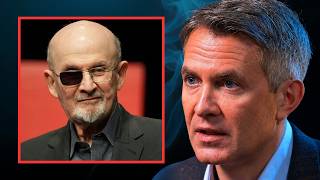

 Is this your channel?For the channel's owners and team: a ready picture and text for your audience
Share the story with your audience. Everything is ready:
For an Instagram story or a WhatsApp status
For a community post or your channel's description
- Channel
- PowerfulJRE
- Subscribers
- 21,200,000
- Channel views, last 7 days
- 12,523,373
- Channel views, pace per day
- 2,357,947 (on a normal day: 1,520,461)
- Video published
- November 4, 2026
- Video views so far
- 891,624 (4 days online)
- Video views, pace per day
- 56,287 (on a normal day: 322,099)
The numbers
The episode's views sit alongside the broader activity on PowerfulJRE. This is a substantial audience, not an exceptional surge for the channel.
