
Ireland's envoy points to chips and AI beyond Canada-EU title
John Concannon says the ambition for closer cooperation remains intact as negotiators debate what to call the partnership.
 Canada
Why this story? One of CBC News's most watched videos since yesterday, with 33,379 views.
CBC News: The news division of the CBC, Canada's public broadcaster. 4.8M subscribers and 3.4B views.
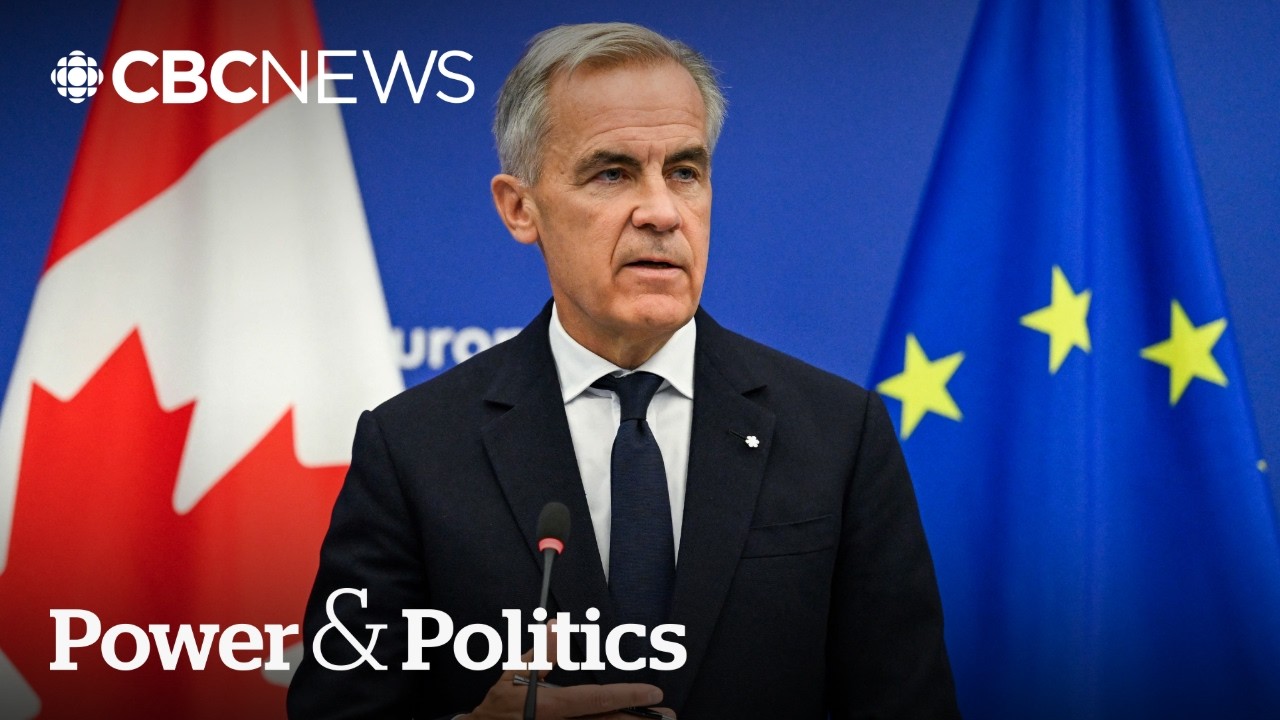 Is the EU still looking to make Canada an 'associate member'? | Power & Politics
Things we can learn from the video
Press to jump
- 0:33Carney says the relationship's effect on Canadians matters more than its name.
- 1:32Concannon says terminology remains under discussion, but both sides have high ambitions for closer alignment.
- 3:18Cochrane asks what tangible cooperation would deliver, citing CETA ratification delays and critical minerals.
- 4:00Concannon points to ministerial visits and investments involving AI and semiconductors.
- 7:57Concannon rejects sovereignty-loss concerns and describes the summit as focused on practical mutual gains.
Artificial intelligence, semiconductors and investment are among the practical areas Ireland's ambassador to Canada points to when asked what a closer Canadian-European relationship would deliver beyond a diplomatic title.
John Concannon's interview with David Cochrane on Canada's Canadian Broadcasting Corporation news service, CBC News, shifts the discussion from disputed summit wording to the substance behind it. Ahead of a Canada-EU summit in Montreal, he says both sides want deeper strategic cooperation, even while the terminology remains under discussion.
The broadcast presents conflicting signals: European Commission President Ursula von der Leyen has spoken of bringing Canada closer as an "associate member," while sources cited in the program say the joint statement will use softer language. Cochrane raises reports of objections from EU countries, including Germany.
"There's no debate about the ambition within Europe, the European Union, to build a really closer, positive link," Concannon says. He does not announce an agreed designation.
Cochrane presses him on where Canadians would see tangible results, citing delays in fully ratifying the Canada-EU trade agreement, CETA, and opportunities involving critical minerals. Concannon points to ministerial visits and investment activity in AI and semiconductors as examples of practical collaboration.
The interview also addresses whether closer alignment would require Canada to surrender decision-making authority or accept regulatory concessions from Brussels. Concannon rejects the suggestion that the summit is about losing sovereignty, describing its purpose as mutual gains in trade and cooperation.
An earlier clip gives Prime Minister Mark Carney's test for the negotiations: "It doesn't matter about specific names or nomenclature. What matters is the difference that it will make to lives of Canadians." The interview identifies areas for that cooperation, but offers no completed summit agreement.
German politician who has led the European Commission since 2019. She was re-elected to the post in July 2024.
More on Wikipedia ›Canada's prime minister and Liberal Party leader since 2025. He previously headed the Bank of Canada and the Bank of England.
More on Wikipedia ›Published on Trari
Where next?



- Channel
- CBC News
- Subscribers
- 4,780,000
- Channel views, last 7 days
- 13,824,377
- Channel views, pace per day
- 1,300,630 (on a normal day: 2,414,330)
- Video published
- October 28, 2026
- Video views so far
- 33,379 (less than a day online)
The numbers
The interview drew about 33,000 views since yesterday, placing it among Canada's most-watched news uploads over that period.

💡 Test your knowledge
What does CETA, the Canada-EU trade agreement, stand for?
CETA is the Comprehensive Economic and Trade Agreement between Canada and the European Union.