
 United States
 United Kingdom
 Canada
 Australia
 New Zealand
 Ireland
BBC Earth Science's underground particle hunt approaches three million views
A second new upload takes the physics lesson above ground, exploring Catalonia's towering human formations.
 BBC Earth Science
Story of
No. 86 on the daily chartNo. 6 on the Science chart
Why this story? The channel's weekly summary: what went up this week, what is drawing views now, and where the channel stands among similar channels.
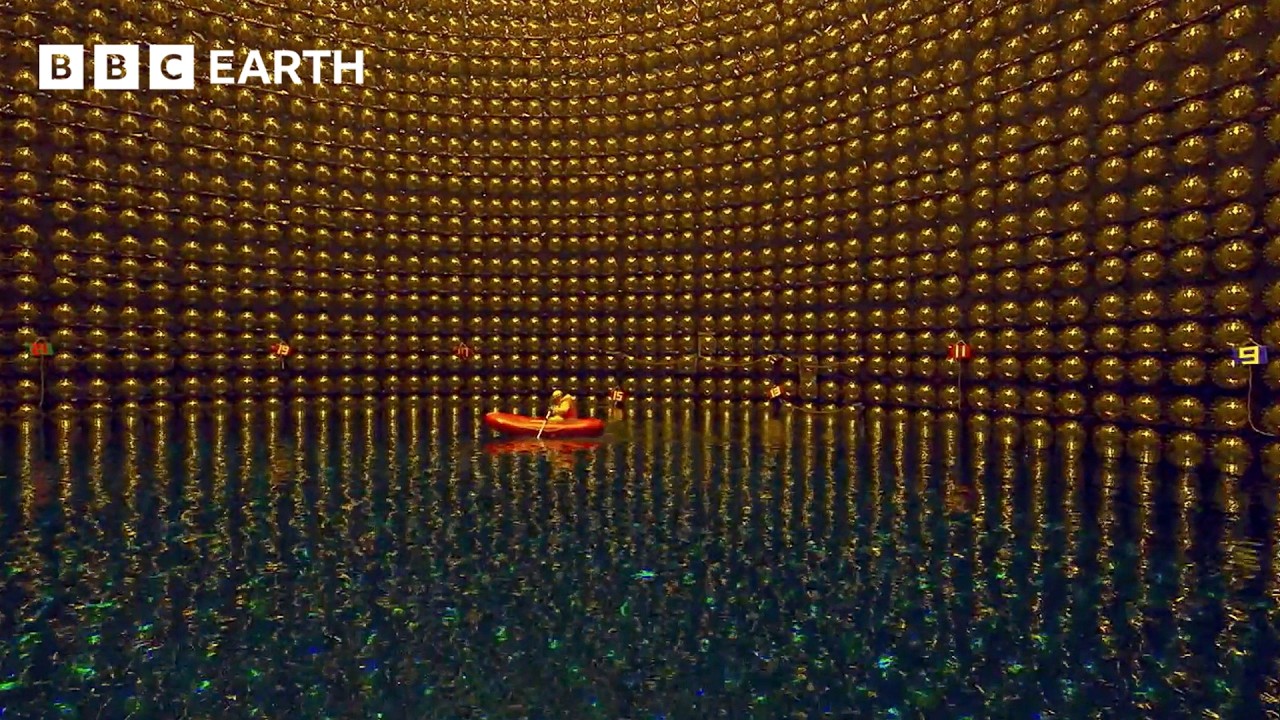 Inside Japan’s Giant Neutrino Detector | BBC Earth Science
BBC Earth Science posted two very different demonstrations of what physics can reveal: a vast underground search for elusive particles, and people balancing on other people's shoulders.
"Inside Japan's Giant Neutrino Detector | BBC Earth Science" has reached nearly three million views and is the channel's strongest daily draw. Taken from Science's Greatest Mysteries (2022), it follows physicist Teppei Katori through Super-Kamiokande and the T2K experiment. Tiny flashes in ultra-pure water help researchers compare how neutrinos and antineutrinos change type, looking for clues to why our universe contains so much more matter than antimatter.
The scale of the installation has its own appeal. Viewers compare its sensor-lined chamber to science-fiction scenery, while others recognise echoes of the game Abiotic Factor. Katori's enthusiasm gives that immense machine a human point of entry.
The other new upload, "How Giant Human Towers Beat The Laws Of Physics | BBC Earth Science", draws on Forces of Nature (2016). Its subject is Catalonia's castells: human towers whose remarkable height depends on weight distribution and balance, rather than any actual exemption from gravity. It has drawn a much smaller audience than the detector visit.
Across the channel, weekly views passed five million and subscribers grew by roughly ten thousand. Daily viewing is well above its usual level. Beyond the Observable Universe also had a substantial week among nearby science channels, while Chris Boden recorded a similar subscriber gain.
An older fire-breathing wildfire robot upload remains another active draw, giving BBC Earth Science's particle hunters and tower builders some mechanical company.
Published on Trari
Where next?


What viewers say
Always love how this facility looks. Sci-fi aura but actually real.
@johnlucas6683See it on YouTubeSuch a beautiful machine! Looks like a surreal sci-fi movie set.
@joecaljapanSee it on YouTubeI love how much this guy loves his job
@sabresisterSee it on YouTube
6 more comments
Now I want to go and re-play Abiotic Factor (which has the player pass through a chamber like this)!
@BarnabyBarnabasSee it on YouTubeEach sensor is huge! unravelling mysteries of the universe by those created of the universe!
@KingsoupturboSee it on YouTubeAbsolutely beautiful installation. It could be an art exhibit if wasnt so useful to science!
@OutlawStarK9See it on YouTubeIt's a place where science and art meet, wow what a machine <3
@mrilla4382See it on YouTubeThese are the kinds of projects that push the bounds of humanity
@nafnaf0See it on YouTubeSeeing a fun guy like that doing cutting edge science will get more young people willing to try getting into science. ❤
@BobaklivesSee it on YouTube
Public comments from the video's page on YouTube
 Is this your channel?For the channel's owners and team: a ready picture and text for your audience
Share the story with your audience. Everything is ready:
For an Instagram story or a WhatsApp status
For a community post or your channel's description
The videos drawing views on BBC Earth Science right now


- Channel
- BBC Earth Science
- Subscribers
- 1,830,000 ▲ 10,000 this week
- Channel views, last 7 days
- 5,210,915
- Videos published this week
- 2
- Video published
- October 28, 2026
- Video views so far
- 2,893,375
- Views on its first day
- 168,240
The numbers
Here is BBC Earth Science's week in views and subscribers.

💡 Test your knowledge
What fills the giant chamber used to detect neutrinos in BBC Earth Science's new video?
Neutrino interactions in the detector's ultra-pure water produce tiny flashes that its light sensors can register.