
 United States
 United Kingdom
 Canada
 Australia
 New Zealand
 Ireland
VLC's slow startup puts Windows under The Infographics Show's microscope
The animated essay traces a plugin-cache problem to Microsoft Defender, then asks who gets blamed when an operating system disrupts an independent app.
 The Infographics Show
Story of
Why this story? One of the most watched videos since yesterday, with 483,977 views.
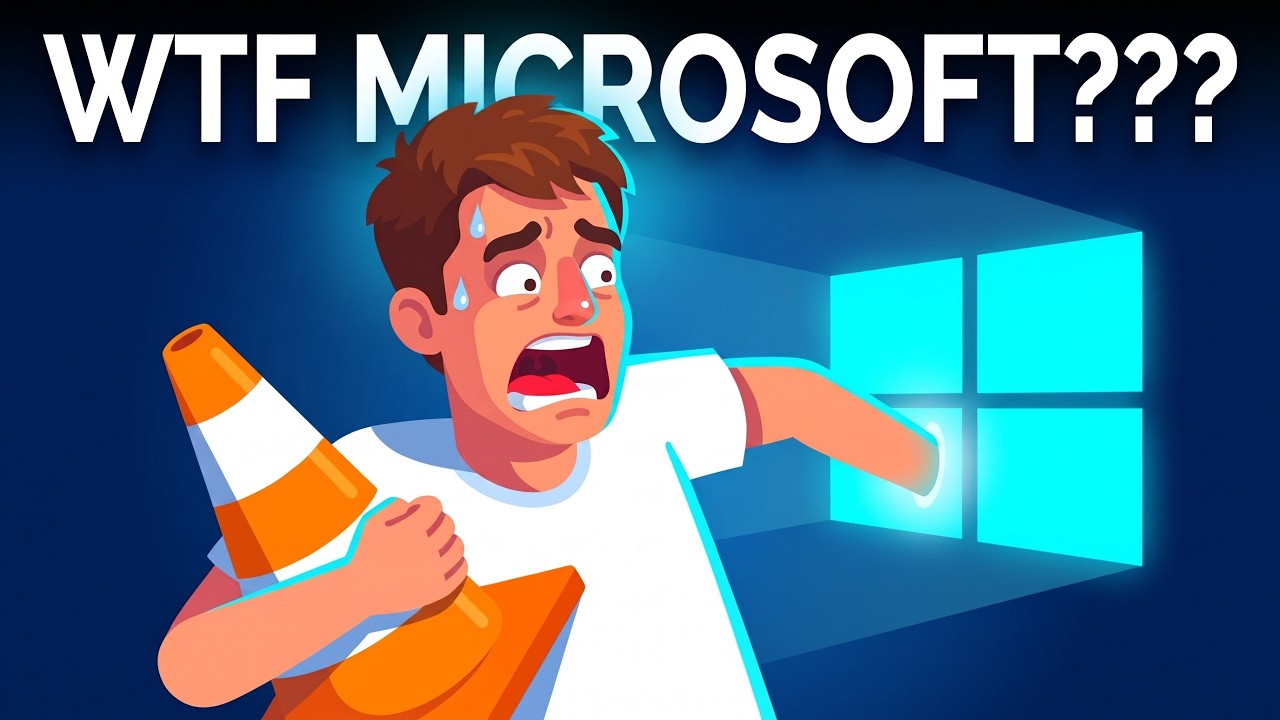 VLC Took 33 Seconds To Load, So Developers Investigated Windows.
Things we can learn from the video
Press to jump
- 0:36The essay introduces reports of VLC taking up to 33 seconds to open an MP3 on Windows 11.
- 1:52VideoLAN attributes the delay to Defender quarantining VLC's plugin cache, forcing repeated startup scans.
- 5:18The narrator contrasts Windows slowdown reports with the same VLC build opening immediately on Linux.
- 8:52European app-choice rules frame the discussion of Microsoft's control over defaults and software removal.
- 13:20The conclusion argues that volunteer developers bear the burden of fixing disruptions caused by Windows updates.
Click an MP3, wait, and wonder why a familiar media player has suddenly become so sluggish. The Infographics Show turns that everyday irritation into an investigation of Windows, with VLC's reported half-minute startup delay as its starting point.
Uploaded today, the Josh Risser-narrated essay has drawn roughly 484,000 views in its opening twelve hours. Its central distinction is simple: an app that looks slow may be waiting on something outside its control.
The video recounts programmer Jonathan Blow's public criticism of VLC's performance and his switch to Microsoft Media Player. It then presents VideoLAN's explanation: Microsoft Defender had quarantined VLC's plugin cache, forcing the player to rescan its plugins at startup. In other words, work normally saved for reuse had to happen again.
The essay also describes reports of similar delays on Windows while the identical VLC build opened immediately on Linux. Paint.NET supplies another example of an independent developer having to explain a disruption the video attributes to Defender. These are animated illustrations and narrated accounts, not footage of the developers being interviewed.
From there, the argument broadens to Microsoft's overlapping roles as operating-system maker, security provider and supplier of competing apps. The narration uses the language of sabotage, but the description explicitly says there is no proof Microsoft intentionally targeted VLC. The channel's larger contention is that independent developers can suffer regardless of intent: users see their app misbehaving, not the security process behind it.
Several viewers discuss their own Windows-versus-Linux experiences; one recalls assuming their PC was simply being difficult. That small uncertainty is the essay's most relatable point: before abandoning a familiar player, it helps to know which part of the computer is actually making it wait.
Published on Trari
Where next?



 Is this your channel?For the channel's owners and team: a ready picture and text for your audience
Share the story with your audience. Everything is ready:
For an Instagram story or a WhatsApp status
For a community post or your channel's description
- Channel
- The Infographics Show
- Subscribers
- 15,500,000
- Channel views, last 7 days
- 18,499,976
- Channel views, pace per day
- 2,177,998 (on a normal day: 2,156,591)
- Video published
- November 6, 2026
- Video views so far
- 22,297 (less than a day online)
The numbers
The new VLC essay has attracted a substantial audience in its first hours. The channel's overall daily viewing remains close to its usual level.

💡 Test your knowledge
Which puzzle-platform game was created by Jonathan Blow?
Jonathan Blow created Braid, the puzzle-platformer built around manipulating time.