
 United States
 United Kingdom
 Canada
 Australia
 New Zealand
 Ireland
Urwin describes "extraordinary" evidence behind Russell Brand investigation
The Sunday Times reporter tells Times Radio how medical records, legal checks and the women's consent shaped the reporting.
 Times Radio
Story of
Why this story? The video opened at a pace of 139,504 views a day, 13 times a normal first day on this channel (10,418).
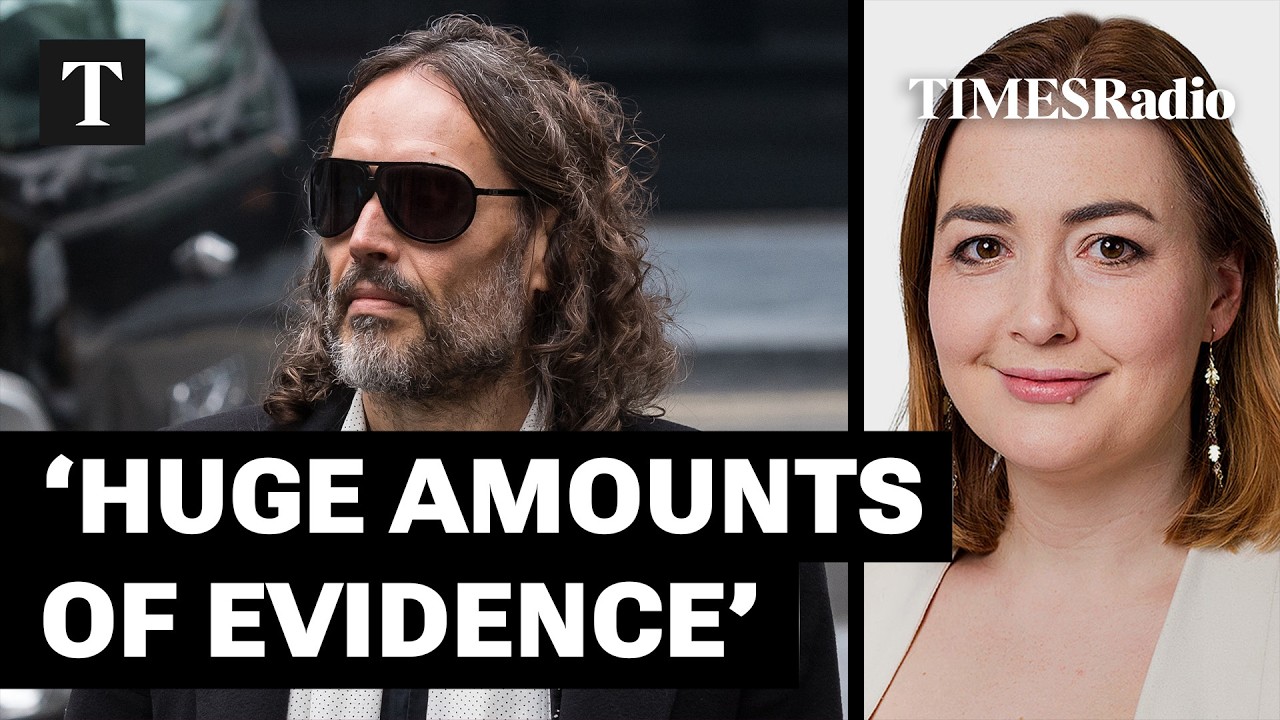 One Of Russell Brand’s Victims Had An 'Extraordinary' Amount Of Evidence | Rosamund Urwin
Things we can learn from the video
Press to jump
- 0:54Urwin says a judge rejected the defence's accusations of contempt and attempts to pervert justice by reporters.
- 3:40Newspaper investigations undergo strict legal checks before publication, Urwin explains.
- 4:05The evidence promised in the title includes a woman's clinic visit and therapy records.
- 5:12Urwin says journalists lacked the women's permission to approach police, and publication encouraged others to come forward.
- 6:17Urwin distinguishes the journalists' investigation from the jury's decision, saying the jury found Brand guilty.
A clinic visit the next day and therapy notes were among the records one woman brought to the journalists investigating Russell Brand, Rosamund Urwin tells Times Radio.
Urwin, who led The Sunday Times's four-year investigation, describes the woman as having "extraordinary amounts of evidence". Speaking to Rosie Wright and Calum Macdonald, she explains the work behind publishing the allegations, including the legal scrutiny that investigative reporting must undergo.
The interview has drawn more than 125,000 views in 19 hours, far above the channel's usual first-day audience for a regular video. But its central question is about the reporting itself: what journalists could establish, and what they had permission to do.
Asked why the journalists did not first approach police, Urwin gives a direct answer: "We didn't have the women's permission to go to the police." She says publication encouraged other women to come forward.
Urwin also discusses the defence's unsuccessful pre-trial challenge, saying a judge rejected accusations that reporters had committed contempt of court and tried to pervert justice. She describes avoiding contempt as a constant concern in her work.
On the courtroom outcome, she draws a distinction between the newspaper's investigation and the jury's responsibility: "the jury decided Russell Brand was guilty. We didn't." The interview returns to why women might choose to speak to journalists before approaching police, with Wright recalling an earlier discussion of that question with Metropolitan Police Commissioner Sir Mark Rowley.
English comedian, actor and media personality whose films include Forgetting Sarah Marshall and Get Him to the Greek. He has also hosted radio shows and podcasts.
More on Wikipedia ›British Sunday newspaper founded in 1821. It is published by Times Newspapers, which also publishes The Times and is part of News Corp.
More on Wikipedia ›Published on Trari
Where next?


 Is this your channel?For the channel's owners and team: a ready picture and text for your audience
Share the story with your audience. Everything is ready:
For an Instagram story or a WhatsApp status
For a community post or your channel's description
- Channel
- Times Radio
- Subscribers
- 1,320,000
- Channel views, last 7 days
- 7,794,977
- Channel views, pace per day
- 486,030 (on a normal day: 1,077,677)
- Video published
- November 8, 2026
- Video views so far
- 125,153 (less than a day online)
- Video views, pace per day
- 139,504
The numbers
The interview drew far more views than a usual Times Radio upload, with comments also arriving well above its typical first-day total.
